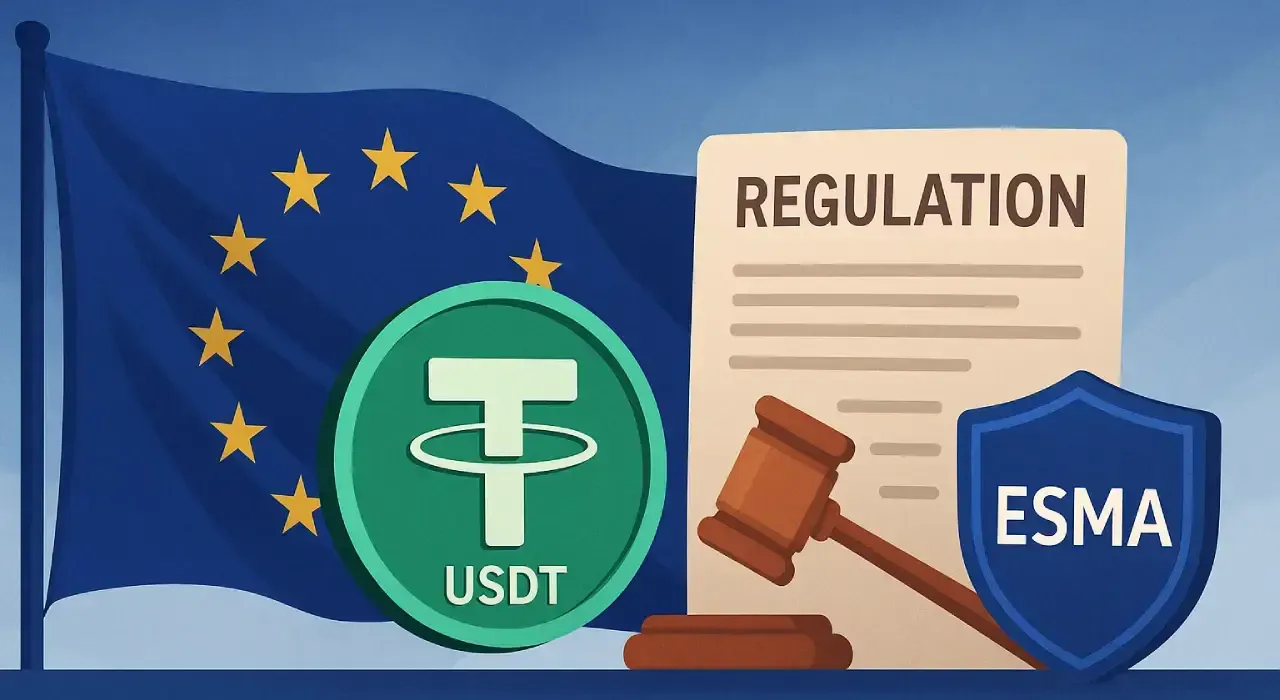
New rules on disclosure and reserve management may reshape Tether’s operations.
The Arrival of MiCA
The European Union has taken a decisive step in digital asset regulation through the Markets in Crypto-Assets framework, commonly referred to as MiCA. This framework aims to establish clear rules for stablecoins, exchanges, and digital asset service providers across all EU member states. For Tether, the world’s largest stablecoin, MiCA represents both a challenge and an opportunity.
Why MiCA Matters
MiCA is the first comprehensive regulatory framework of its kind in a major economic bloc. It sets rules for reserve disclosure, consumer protection, and licensing requirements. Stablecoin issuers that want to operate in Europe will be required to publish detailed information about reserve composition, undergo stress testing, and comply with anti-money laundering obligations.
For researchers and regulators, MiCA provides clarity in a space that has long been defined by uncertainty. For Tether, it forces a choice between compliance and potential restrictions on access to one of the world’s largest financial markets.
Tether’s Current Model
Tether issues attestations about its reserves but has not provided full independent audits. Its operations are based offshore, outside of direct EU oversight. While this model has allowed Tether to grow quickly and flexibly, it conflicts with MiCA’s requirement for transparency and accountability.
MiCA may therefore force Tether to adapt significantly. Either it increases the depth of its disclosures and meets the framework’s standards, or it risks facing restrictions from European regulators and exchanges.
The Potential Impact on European Markets
USDT plays a major role in crypto trading across Europe. On exchanges accessible to European citizens, USDT is often the most liquid trading pair. If Tether does not meet MiCA’s requirements, exchanges may be required to delist it or limit access to comply with local law.
This could have ripple effects. Traders may migrate to alternative stablecoins such as USDC, which already emphasizes regulatory compliance. Decentralized finance platforms in Europe may also need to adjust collateral structures if USDT becomes less available.
Supporters of MiCA’s Approach
Supporters argue that MiCA will strengthen consumer protection and financial stability. They believe that requiring issuers like Tether to disclose reserves in detail and undergo stress tests will reduce the risks of sudden collapses or redemption crises.
They also contend that clear regulation will legitimize the stablecoin sector, allowing responsible actors to thrive while forcing less transparent issuers to either adapt or leave the market.
Critics’ Concerns
Critics warn that overly strict requirements could limit innovation. They argue that Tether’s dominance is partly due to its flexibility and speed, qualities that might be compromised if it faces the same obligations as traditional banks. There is also concern that excessive regulation could drive European users toward less transparent alternatives available outside official channels.
Another question is enforcement. Even with MiCA in place, ensuring compliance across hundreds of platforms will be difficult. Offshore issuers like Tether may continue to reach European users through peer-to-peer networks that are harder to regulate.
Tether’s Possible Strategies
Tether may respond to MiCA in several ways. It could choose to comply fully, providing more detailed disclosures and engaging with European regulators. This would strengthen its legitimacy but require significant adjustments.
Alternatively, Tether could focus on regions with lighter regulatory frameworks, reducing its European footprint while maintaining dominance in Asia, Latin America, and Africa. A middle path may also be possible, where Tether complies selectively while continuing to operate globally from offshore jurisdictions.
The Broader Implications
MiCA’s impact will not be limited to Tether. It will set the standard for how other jurisdictions design their stablecoin frameworks. If successful, it could become a model for the United States and parts of Asia. If implementation proves difficult, it may highlight the challenges of regulating global digital assets.
For USDT, the outcome will determine whether it maintains its role as a global standard or cedes ground to competitors that embrace compliance more readily.
Conclusion
Europe’s MiCA regulation is a turning point for stablecoins. It demands higher transparency and accountability than the industry has ever seen. For Tether, it poses a direct challenge to its existing operating model but also offers a chance to secure legitimacy in a regulated environment.
Whether Tether adapts or withdraws, the message from Europe is clear: stablecoins can no longer operate outside the reach of formal oversight. The future of USDT in the EU will reveal how the largest stablecoin responds when faced with rules it can no longer ignore.