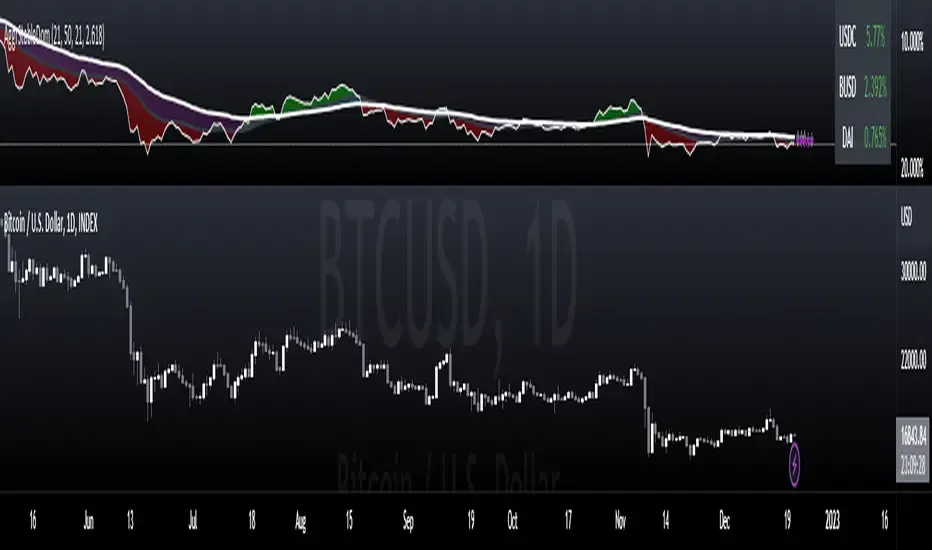
The stablecoin dominance index is rising sharply in 2025, signaling important changes in market behavior and trader sentiment. This metric tracks the share of stablecoins relative to the broader crypto market and often serves as an early indicator of liquidity trends. As the index climbs, analysts are closely evaluating what the shift means for short term price action and long term market stability.
Stablecoins have become the backbone of modern crypto markets, powering everything from spot trading to derivatives and DeFi activity. Their growing share of total market capitalization reflects an environment where participants prioritize liquidity, risk management and capital efficiency. Understanding this surge helps traders anticipate potential market turning points.
Why the Stablecoin Dominance Index Is Rising
The most important driver of stablecoin dominance is the increasing preference among traders to hold liquidity in stable assets during uncertain market conditions. When volatility spikes or macro trends appear unclear, traders often rotate into stablecoins to protect capital and prepare for new opportunities. This liquidity buildup strengthens the broader market by stabilizing order books and improving execution.
High frequency trading firms contribute significantly to rising dominance because they rely on stablecoins for rapid settlement between exchanges. Their automated strategies generate continuous inflows and outflows that boost stablecoin demand. This creates a reliable base of liquidity that supports daily trading activity across the entire crypto ecosystem.
Institutional participation is also influencing dominance levels. Many financial firms treat stablecoins as operational cash for on chain settlement and internal transfers. Their consistent usage increases circulating supply and raises stablecoins’ share of the market. The growth in regulated on ramps further amplifies this trend by making fiat to stablecoin conversions more accessible worldwide.
What Rising Dominance Means for Market Cycles
A climbing stablecoin dominance index often signals that the market is building energy for its next major move. When large amounts of capital remain parked in stablecoins, it suggests traders are waiting for clear entry points before reentering volatile assets. This buildup can precede strong market recoveries once sentiment improves.
However, rising dominance can also indicate caution as traders reduce exposure to riskier assets. Analysts monitor this metric closely during macro uncertainty because it helps identify when markets are transitioning between phases of risk on and risk off behavior. High dominance levels typically align with consolidation periods where price movement is more controlled.
As dominance rises, liquidity conditions improve across exchanges. This supports smoother trades with lower slippage, particularly for mid cap and emerging tokens. With more stablecoin liquidity on standby, markets become more resilient to sudden price swings and liquidation cascades.
DeFi’s Role in Accelerating Dominance Growth
DeFi platforms rely heavily on stablecoins for lending, borrowing and liquidity provision which makes them major contributors to dominance expansion. As protocols attract more users seeking yield and collateral stability, stablecoin deposits increase. This growth boosts on chain transaction volume and reinforces stablecoins’ influence across decentralized markets.
Stablecoins are also essential for cross chain liquidity networks that link multiple blockchains. As users move assets between networks to find better fees or yield opportunities, stablecoins act as the primary bridge currency. This constant movement adds to the dominance index and strengthens stablecoins’ position as the default medium of exchange in DeFi.
Another influential trend is the rise of institutional DeFi participation. Funds and trading firms deploy capital into lending platforms and liquidity pools using stablecoins because they offer predictable performance. This activity locks large amounts of stable assets into smart contracts, increasing their share of the overall crypto landscape.
How Traders Can Use Dominance Metrics Strategically
The stablecoin dominance index is becoming a valuable tool for assessing market timing and sentiment. When dominance rises rapidly, it may signal that traders are taking profits or preparing for potential volatility. Observing whether the index stabilizes, climbs further or reverses can offer insights into upcoming market behavior.
A sustained increase in dominance often presents opportunities for accumulation during quieter market phases. Traders may interpret this as a period where capital is waiting on the sidelines and poised to reenter upon favorable conditions. Conversely, a sudden drop in dominance may suggest renewed bullish momentum as stablecoin liquidity flows back into risk assets.
Short term traders also use dominance metrics to gauge liquidity depth before executing larger positions. Higher stablecoin share generally means more reliable liquidity, making markets safer for high volume trades. This helps reduce execution risk and supports more efficient trading strategies.
Conclusion
The surge in the stablecoin dominance index is reshaping how traders interpret market sentiment and liquidity conditions. Rising dominance reflects growing caution, deeper liquidity and expanding use of stablecoins across trading and DeFi ecosystems. As this metric becomes more influential, traders who understand its signals will be better positioned to navigate evolving market cycles in 2025.