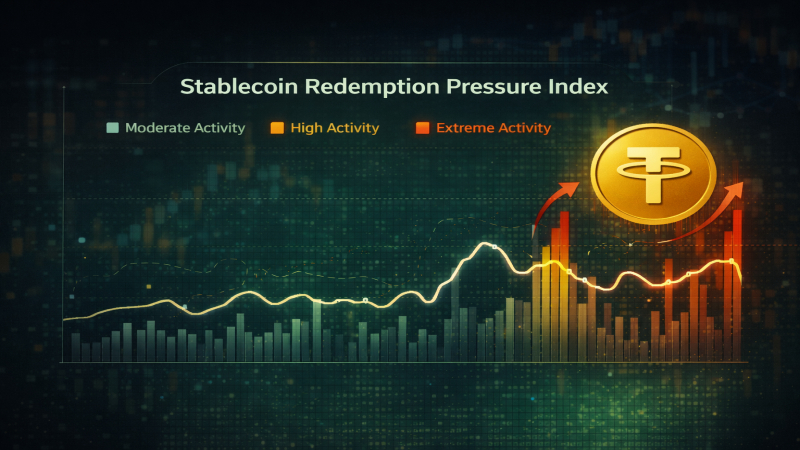
Stablecoin confidence is often discussed in abstract terms, but actual behavior tells a clearer story. One of the most direct indicators of user confidence is redemption activity. The stablecoin redemption pressure index tracks how frequently and at what scale stablecoins are redeemed rather than circulated or redeployed. This metric provides insight into how market participants respond to changing conditions.
Redemptions are not inherently negative. In many cases, they reflect normal liquidity management rather than stress. For USDT, redemption patterns help distinguish between routine capital movement and genuine shifts in confidence. The index offers a structured way to interpret these signals without relying on speculation.
Understanding Redemption Pressure in Stablecoin Markets
Redemption pressure refers to the demand to convert stablecoins back into underlying value or remove them from circulation. When redemption activity increases sharply, it often coincides with broader market adjustments. These adjustments may include risk reduction, portfolio rebalancing, or changes in trading strategy.
For USDT, redemption pressure tends to fluctuate with market cycles. During periods of heightened uncertainty, some participants reduce exposure by redeeming stablecoins, while others increase usage for defensive positioning. The index captures net behavior rather than isolated actions.
Moderate redemption activity is a sign of a functioning system. It shows that conversion mechanisms are accessible and responsive. Persistent extreme pressure, however, would warrant closer attention from analysts and regulators.
What Rising Redemptions Actually Signal
An increase in redemptions does not automatically indicate declining trust. In many instances, rising redemption pressure reflects profit realization or capital migration to traditional financial systems. These actions are common during periods of macro tightening or reduced trading activity.
The redemption pressure index helps separate panic driven behavior from orderly exits. Gradual increases in redemptions suggest deliberate decision making rather than abrupt loss of confidence. USDT redemption patterns have historically aligned more closely with liquidity cycles than with isolated controversies.
The index also shows that redemption activity often stabilizes quickly. Once portfolios are adjusted, redemption rates tend to normalize, indicating that confidence remains intact at a functional level.
Redemptions Versus Circulation and Usage
Redemption pressure must be viewed alongside circulation and transaction data. High redemption volumes can occur alongside strong on chain and exchange usage. This overlap suggests that while some participants exit, others increase activity simultaneously.
USDT often continues to circulate actively even during redemption spikes. This dynamic reflects the diversity of its user base and use cases. Traders, institutions, and cross border users respond differently to the same market signals.
The index highlights that confidence is not monolithic. It varies across segments, and redemption data captures only one dimension of this complex ecosystem.
Why the Redemption Pressure Index Matters
The stablecoin redemption pressure index provides transparency into how trust is expressed through action. It allows observers to move beyond narratives and focus on measurable behavior.
For researchers, the index offers a tool to assess resilience and responsiveness within stablecoin systems. For regulators, it provides insight into liquidity management and systemic stability without relying on price metrics alone.
USDT’s redemption behavior demonstrates that confidence is dynamic. It adjusts to conditions rather than disappearing under stress. Monitoring this index helps contextualize short term fluctuations within longer term usage trends.
Conclusion
The stablecoin redemption pressure index shows that redemptions reveal how users manage liquidity rather than simply how they feel about trust. For USDT, redemption activity reflects market cycles, not constant confidence erosion. Tracking this index provides a balanced view of stability rooted in real behavior.