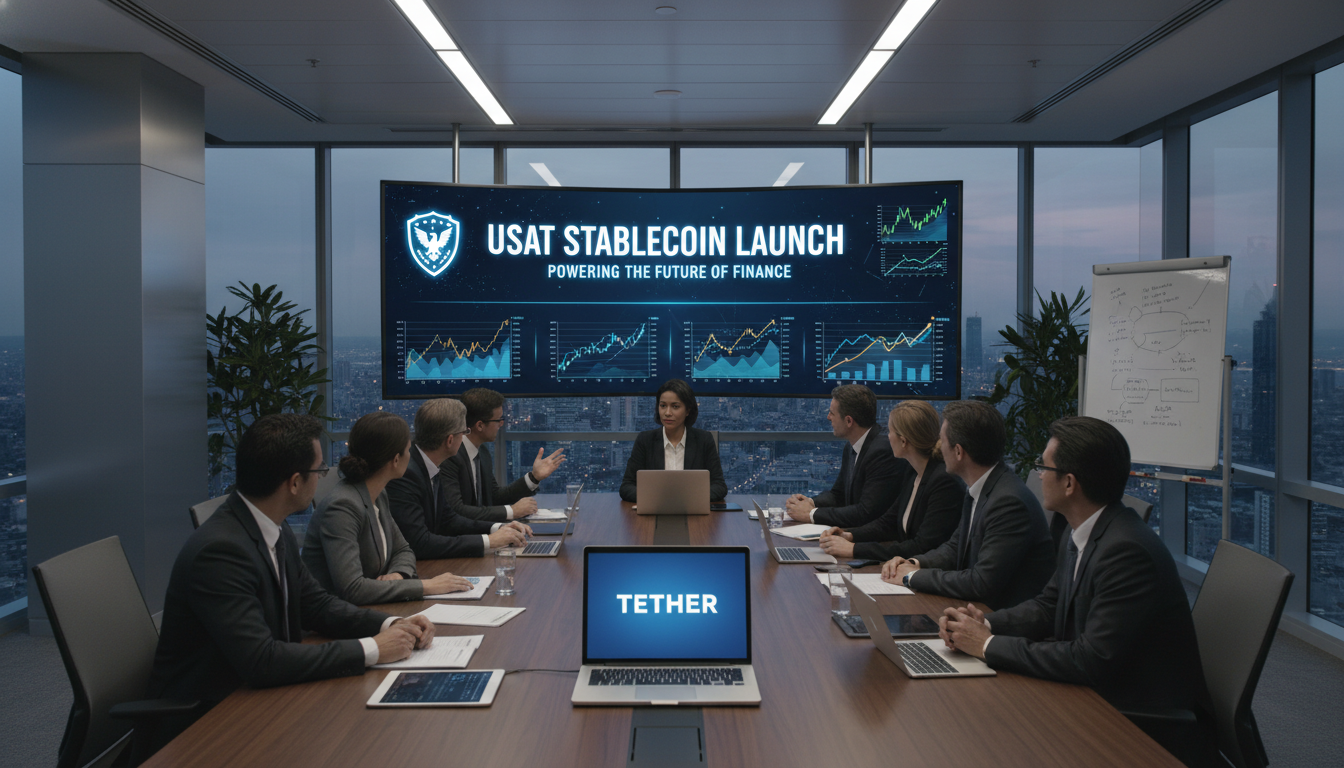
Tether Unveils USAT Stablecoin
Tether has launched a dollar-pegged stablecoin explicitly aimed at U.S. users and partners, framing this initiative as a compliance-driven expansion. In a statement released today, the company announced that the USAT stablecoin is crafted to enhance regulated distribution channels and improve on-chain reporting mechanisms. This release outlined how issuances, redemptions, and reserve disclosures are designed to align with U.S. regulatory expectations while maintaining settlement speeds comparable to existing tokens. Market analysts are closely monitoring whether USAT will function separately from other Tether products and the timeline for operational onramps to support it. Additionally, the announcement set a framework for ongoing updates regarding licensing, custody, and the processes for attesting reserves over time.
Bo Hines Takes the Helm for U.S. Operations
Tether has appointed Bo Hines to lead its U.S. business, describing him as a former White House advisor equipped to forge critical connections across finance, policy, and payments sectors. This appointment arrives at a time when lawmakers are actively discussing statutory regulations, positioning Tether as a player seeking a sustainable presence rather than a piecemeal approach. In a live briefing today, Tether emphasized that U.S. operations will focus on partnering with bank-grade entities and establishing transparent redemption processes, along with regular product updates for counterparties. The company also linked this launch to the growing industry demand for compliant infrastructure, directing attention to how stablecoin firms are pursuing LATAM remittance growth for context on cross-border usage. Still, Tether has not disclosed a start date for its new state-level licensing.
Regulatory Implications for Stablecoins
This move coincides with ongoing negotiations over stablecoin regulation in Congress and among state regulatory bodies, with Tether demonstrating its willingness to operate under tighter constraints. The company asserted that its U.S. framework will prioritize verifiable reserves, risk controls, and reporting that can withstand scrutiny from both counterparties and regulatory officials. Traders are watching closely whether this framework reflects the provisions currently under discussion in the Clarity Act, particularly as highlighted by CoinDesk in its report on how Circle and Coinbase have positively influenced crypto stock sentiment amid Clarity Act progress. Although Tether did not mention a specific regulatory bill, it claims that the USAT stablecoin is engineered to comply with emerging requirements. Compliance scrutiny remains focused on attestations, redemption rights, and the oversight of U.S. intermediaries.
Initial Market Response to USAT
Initial pricing and liquidity metrics suggest a readiness in the market, rather than outright enthusiasm. Market desks are monitoring listings, spreads, and redemption accessibility as the first significant tests. Several market makers shared with CoinDesk that regulatory momentum has been pivotal in shaping crypto equity feelings, influencing expectations for new stablecoin initiatives. In today’s trading, participants delved into reserve composition and transparency rhythms, especially following recent discussions regarding Tether’s asset accumulation, notably in Tether nearing $20B in gold assets while slowing its accumulation. In live chatrooms, analysts emphasized that the successful adoption of USAT is contingent upon large exchanges and payment processors integrating it seamlessly. The immediate takeaway from the announcement revolves around which rails and partners will become operational first, rather than market capitalization.
Looking Ahead: The Future of USAT
The future success of USAT depends significantly on distribution agreements, regulatory approvals, and Tether’s ability to ensure reliable U.S. redemptions during periods of market volatility. The company promises ongoing updates covering reserve reporting, compliance measures, and handling operational incidents. Observers anticipate that key future milestones will involve custody arrangements, transaction monitoring guidelines, and clarity regarding which blockchain platforms will facilitate transfers upon launch. Tether also indicated that Bo Hines will concentrate on outreach to institutional players, including payment firms and broker-dealers in need of reliable settlement options. Ultimately, the industry will evaluate this effort based on tangible outcomes, such as banking access, thorough attestations, and consistent pricing during market stress. Should these elements fall into place, USAT could emerge not just as another token but as a benchmark for compliance in the U.S. market.