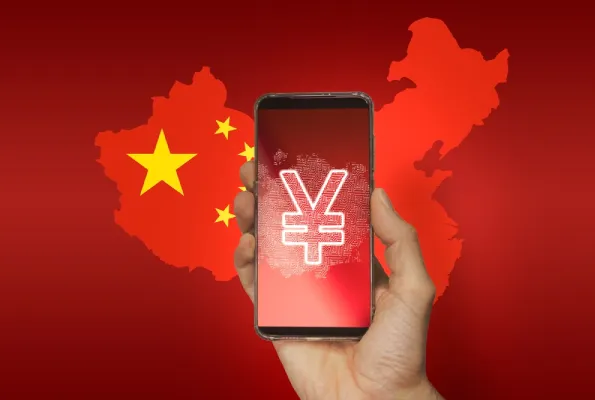
Asia is rapidly emerging as the global epicenter of digital payment innovation. From China’s state-backed digital yuan to privately issued stablecoins like Tether’s USDT, the region is witnessing a convergence between public and private digital money systems. This dual-track approach is reshaping the future of commerce, remittances, and cross-border trade across some of the world’s fastest-growing economies.
While Tether’s USDT provides global liquidity and access to U.S. dollar value, China’s digital yuan (e-CNY) offers a sovereign digital alternative backed by central bank oversight. Their coexistence within Asia’s expanding payment networks demonstrates how decentralized and centralized finance models can complement one another,driving efficiency, inclusion, and financial resilience.
Tether’s Expanding Footprint in Asian Finance
Tether’s USDT has become one of the most widely used stablecoins in Asia, serving as the digital liquidity layer for regional crypto markets, online businesses, and remittance corridors. Its widespread adoption in countries like the Philippines, Thailand, Indonesia, and Vietnam reflects growing demand for stable, dollar-pegged assets amid volatile local currencies and limited access to global banking infrastructure.
Businesses and individuals increasingly rely on USDT for real-time payments, trade settlements, and savings. Freelancers across Southeast Asia use it to receive international payments instantly, while small enterprises use blockchain-based stablecoins to bypass high remittance fees. USDT’s presence across multiple networks, Ethereum, Tron, and Solana, makes it accessible even in regions with limited fintech infrastructure.
This growing utility extends beyond the crypto sector. Fintech companies and payment processors are integrating Tether’s stablecoin into digital wallets and merchant apps, effectively turning USDT into a regional digital cash equivalent. For users, it offers a blend of the dollar’s stability and blockchain’s efficiency, a combination increasingly recognized as essential for Asia’s digital economy.
The Digital Yuan’s Expanding Reach
China’s central bank digital currency (CBDC), the digital yuan, has entered a new stage of cross-border experimentation. Initially launched for domestic retail use, it is now being tested in international trade pilots through Hong Kong, Singapore, and Belt and Road Initiative partner countries. These programs aim to reduce reliance on dollar-based clearing systems and enable faster, more transparent settlements.
The People’s Bank of China (PBOC) envisions the digital yuan as a programmable and interoperable financial instrument that can integrate with foreign payment systems. Its blockchain-inspired architecture enables instant transactions with built-in compliance, identity verification, and traceability, features designed to ensure both efficiency and oversight.
Regional projects such as the mBridge initiative, led by the PBOC in collaboration with the Bank for International Settlements, are testing multi-currency settlement networks that include the e-CNY. These developments are expanding China’s digital currency influence beyond its borders while positioning the digital yuan as a potential settlement tool for regional trade.
Public-Private Synergy in Digital Payments
Rather than competing, the digital yuan and private stablecoins like USDT are increasingly coexisting within the same financial ecosystems. Each serves distinct but complementary roles. The digital yuan anchors monetary sovereignty and compliance within China’s borders, while USDT offers international liquidity and cross-chain interoperability. Together, they form a dual framework that bridges domestic and global finance.
In practice, fintech platforms and payment gateways are beginning to connect both systems. Traders and businesses operating between China and other Asian economies often convert between e-CNY and USDT for settlement flexibility. Blockchain-based bridges and custodial networks now enable direct swaps between regulated CBDCs and stablecoins, allowing funds to flow seamlessly across jurisdictions.
This interoperability creates a hybrid financial model, one that allows central banks to retain control over monetary policy while leveraging the innovation and reach of private stablecoin networks. For the broader Asian economy, it represents a pragmatic balance between sovereignty and globalization, innovation and regulation.
Regulatory Cooperation and Technological Convergence
Asia’s regulatory landscape is evolving in tandem with technological progress. Singapore and Hong Kong have established comprehensive frameworks for stablecoin oversight, emphasizing transparency, full reserve backing, and compliance with anti-money-laundering rules. These jurisdictions are positioning themselves as digital finance hubs where both private stablecoins and CBDCs can coexist under clear legal standards.
Meanwhile, China’s influence is extending through collaborative digital currency experiments with central banks across Asia and the Middle East. These projects aim to standardize cross-border payment protocols, creating a common foundation for interoperability between CBDCs and compliant stablecoins.
Technology providers are also driving convergence. Layer 2 blockchain solutions, cross-chain oracles, and AI-powered settlement systems are enabling smart payment flows that automatically choose the most efficient route, whether through a centralized CBDC network or a decentralized stablecoin bridge. These innovations are making real-time, low-cost payments a practical reality across Asia’s digital economy.
The Broader Economic Impact
The coexistence of Tether’s USDT and the digital yuan is reshaping trade and finance across Asia. By offering complementary payment rails, they reduce friction in regional commerce and empower countries to diversify their financial infrastructure. Businesses gain flexibility to transact in either global or local digital currencies, depending on their operational and regulatory needs.
For consumers, the result is greater financial inclusion. Access to digital dollars and national digital currencies through mobile wallets enables secure participation in global markets without requiring traditional bank accounts. For policymakers, the challenge is to balance innovation with stability, ensuring that the rise of digital assets strengthens rather than fragments monetary systems.
The combination of Tether’s liquidity network and China’s sovereign digital currency experiments is laying the groundwork for Asia’s new financial architecture, one where private efficiency and public trust converge.
Conclusion
Asia’s digital payment boom is redefining how money moves, connects, and empowers economies. The synergy between Tether’s USDT and the digital yuan demonstrates that competition between private and public digital currencies is giving way to cooperation. Together, they form a resilient ecosystem that bridges borders, currencies, and financial systems.As blockchain infrastructure and regulatory clarity continue to advance, Asia is set to lead the next wave of global payment innovation. The region’s success in harmonizing stablecoins and CBDCs could become the blueprint for the world’s transition to fully digital, interoperable finance.