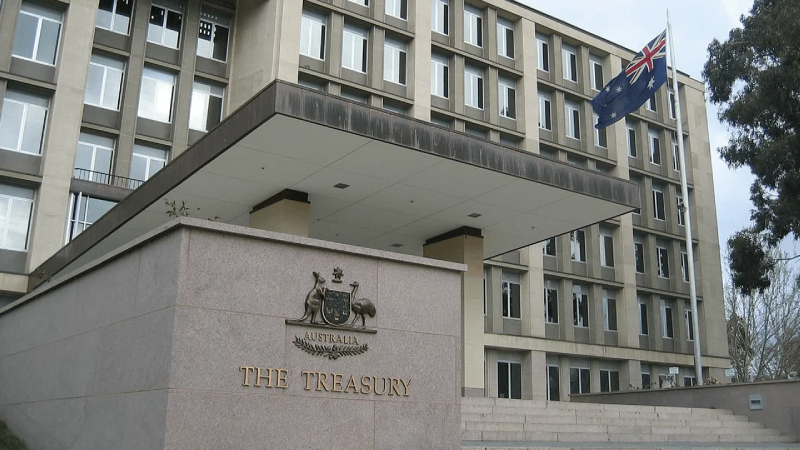
Australia is moving closer to implementing a comprehensive regulatory framework for the digital asset sector as lawmakers support new legislation designed to bring cryptocurrency platforms under formal financial supervision. The Senate Economics Legislation Committee has backed the Corporations Amendment Digital Assets Framework Bill 2025, a proposal aimed at introducing clearer oversight for crypto exchanges and tokenized asset custody services. The legislation signals the government’s intention to replace what officials describe as the early unregulated phase of the crypto market with a structured regulatory system that aligns digital finance with traditional financial standards.
Under the proposed framework, large cryptocurrency exchanges and digital asset custody providers will be required to obtain an Australian Financial Services Licence in order to operate legally in the country. The licensing requirement would place these platforms under the supervision of the Australian Securities and Investments Commission. By classifying certain digital asset services as financial products, the government aims to extend investor protection rules commonly applied in traditional finance to the growing digital asset industry. Regulators believe the approach will improve transparency, strengthen market integrity and reduce risks for retail investors participating in tokenized financial markets.
The bill introduces a tiered regulatory structure that distinguishes between large platforms and smaller innovators within the crypto ecosystem. Companies handling less than ten million Australian dollars in annual transactions may qualify for exemptions from the strictest licensing requirements. Officials say the threshold is intended to protect early stage startups and developers from excessive regulatory burdens while ensuring that larger firms operating at scale meet established financial compliance standards. Policymakers argue that the system balances the need for oversight with the desire to encourage technological innovation in Australia’s digital asset sector.
Despite broad support for clearer rules, parts of the crypto industry have raised concerns about the wording of several provisions within the legislation. Legal experts and blockchain companies warn that some of the terminology used in the bill may be too broad and could unintentionally capture software developers or infrastructure providers that do not directly control customer assets. The debate focuses particularly on definitions surrounding digital tokens and the concept of factual control over crypto holdings. Industry participants fear that ambiguous language could create regulatory obligations for technology providers that simply offer tools rather than custody services.
One specific concern involves the treatment of multi party computation wallets, which are widely used for digital asset security. In these systems, private keys are divided into multiple fragments or shards that are held by different entities to reduce the risk of a single point of failure. Some legal analysts argue that possessing one fragment of a key should not be interpreted as having full control of the underlying assets. They caution that if the law treats these providers as custodians, it could discourage the development of advanced security technologies designed to protect users’ funds.
At the same time, other industry participants support the inclusion of clearer responsibility standards within the legislation. Some companies argue that defining control as the primary legal metric helps determine who should be accountable when digital assets are lost or mishandled. Supporters of this approach believe stronger accountability rules could improve trust in the sector and attract more institutional participation in Australia’s growing digital asset market.
Another challenge facing the Australian crypto industry involves access to banking services. Many digital asset companies have reported difficulties maintaining relationships with traditional banks despite operating within existing regulatory frameworks. Industry groups say improved cooperation between financial institutions and licensed crypto platforms will be necessary if the new regulatory structure is to succeed. Without reliable banking support, some companies may struggle to provide basic financial services such as fiat deposits and withdrawals.
The proposed legislation represents one of the most significant attempts by the Australian government to integrate digital asset businesses into the country’s financial regulatory system. As lawmakers continue refining the bill and reviewing industry feedback, the final framework could play an important role in shaping how crypto companies operate in Australia and how investors interact with digital assets within a regulated financial environment.