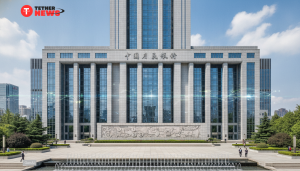
South Korea’s central bank has formally restated its position that issuance of won pegged stablecoins should initially be restricted to licensed commercial banks, as lawmakers continue to deliberate a delayed digital asset regulatory framework. In a recent submission to the National Assembly’s Strategy and Finance Committee, the Bank of Korea described won based stablecoins as currency like substitutes that require careful oversight due to their potential impact on monetary policy and financial stability.
The central bank warned that allowing non bank entities to independently issue won denominated stablecoins could create regulatory gaps and conflict with the country’s long standing separation between banking and commercial activities. Officials also raised concerns that stablecoins might be used to bypass foreign exchange reporting requirements or weaken existing capital flow controls if safeguards are not clearly defined in law.
Under the proposal outlined by the Bank of Korea, commercial banks would be permitted to issue stablecoins first because they already operate under established capital adequacy, governance and compliance standards. The central bank suggested that any expansion of issuance rights to non bank firms should occur gradually and only after comprehensive risk assessments. It also proposed a bank centered consortium structure and the creation of a statutory interagency policy body to coordinate supervision among financial regulators.
The debate comes as South Korea works to finalize comprehensive digital asset legislation. Lawmakers had initially expected to pass a stablecoin related framework in late 2025, but disagreements over the structure of issuance and oversight delayed progress. Discussions included whether banks should hold majority ownership in any stablecoin issuing entity and how to balance innovation with systemic risk controls. No confirmed legislative timeline has been announced.
The Bank of Korea referenced regulatory developments abroad, including recent proposals in the United States that involve coordinated oversight by multiple financial authorities. Officials acknowledged that programmable stablecoins could support digital asset innovation and provide new payment options, but maintained that structural safeguards are essential to prevent unintended economic consequences.
Industry representatives have challenged the central bank’s bank first approach. Some argue that clear and uniform standards for all issuers, rather than restricting participation to banks, would better encourage competition while managing compliance risks. They contend that technological innovation in the digital asset sector often originates outside traditional financial institutions.
South Korea remains one of the most active digital asset markets globally, with high levels of retail participation and significant trading volumes. Regulators are seeking to strengthen investor protection and operational resilience following recent market incidents that increased scrutiny of exchange controls and custody systems.
As policy discussions continue, the central issue centers on how to integrate won based stablecoins into the existing financial system without undermining monetary authority, foreign exchange stability or anti money laundering enforcement.