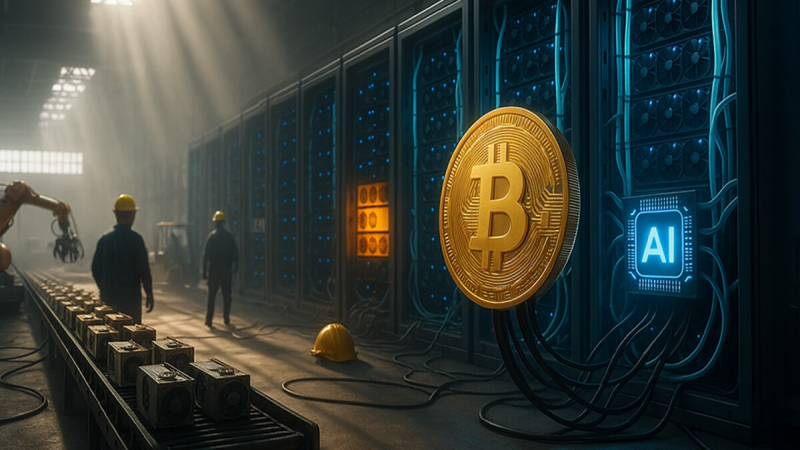
Bitcoin mining equities showed sharp divergence in 2025 as companies that diversified into artificial intelligence and high performance computing infrastructure significantly outperformed traditional mining focused peers. While bitcoin itself ended the year modestly lower, miners that repositioned their operations toward GPU cloud services and long term data center leasing captured stronger investor interest. IREN emerged as the clear standout, delivering roughly 300 percent year to date gains driven by major AI hosting agreements and expanded GPU cloud capacity. The company benefited from long term infrastructure planning that aligned mining assets with broader enterprise demand for compute power. This shift allowed IREN to offset weaker bitcoin price performance and generate new revenue streams less dependent on block rewards or transaction fees. The performance highlighted a growing market preference for diversified infrastructure operators over miners reliant solely on bitcoin exposure.
Other miners that pursued similar strategies also recorded strong gains, reinforcing the broader trend toward hybrid business models. Cipher Mining and Hut 8 posted triple digit advances after securing AI focused partnerships and long duration data center leases aimed at hyperscalers and enterprise clients. Hut 8 in particular drew attention following the announcement of a multi year AI data center project designed to host large scale computing workloads. In contrast, miners that remained more closely tied to bitcoin holdings struggled to keep pace. Companies such as Marathon Digital, CleanSpark, and Riot Platforms underperformed despite holding significant bitcoin reserves. Analysts noted that large balance sheet exposure to bitcoin alone was insufficient to counter weaker earnings and rising operational costs in a competitive mining environment. The results underscored how execution and diversification mattered more than raw hash rate growth during the year.
The weakest performance came from firms facing operational delays or slower transitions toward AI infrastructure. Bitdeer Technologies lagged the sector after reporting higher than expected losses and pushing back timelines for internal hardware development, raising concerns about its AI expansion strategy. Market participants also closely watched Core Scientific, which rejected a takeover bid earlier in the year and opted to pursue standalone growth tied to data center demand. While its shares posted modest gains, the company’s cautious approach reflected the broader uncertainty facing miners navigating capital intensive pivots. As 2025 closes, the mining sector’s performance illustrates a structural shift where investors increasingly value flexible infrastructure and exposure to AI driven demand. The year reinforced that bitcoin mining is no longer viewed solely through the lens of digital asset prices, but as part of a wider compute and energy infrastructure market adapting to changing technological priorities.