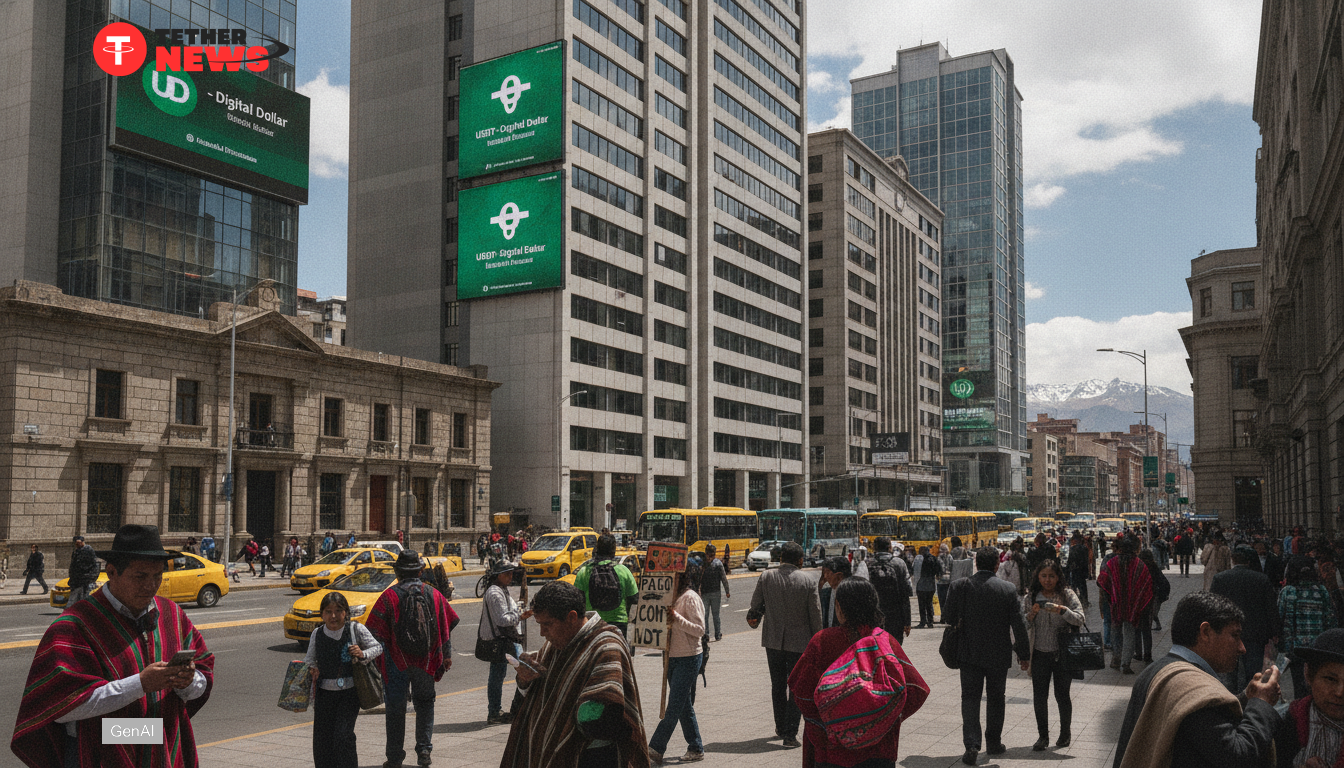
Bolivia’s financial landscape and national financial systems
Bolivia is weighing whether USDT can be used more directly inside domestic payment channels, as indicated by available reports from Yahoo Finance. The discussion focuses on how national financial systems could add crypto-based settlement layers without replacing the boliviano. Officials are assessing retail and institutional transfer rails, consumer onboarding, and the boundaries between bank deposits and tokenized dollars. The policy driver is persistent cross-border demand for U.S. dollar exposure and the cost and delays of moving value between banks and wallets. Policymakers have also tracked USDT usage in nearby markets as an informal bridge asset for commerce. Any decision would need to specify eligible transactions, reporting requirements, and consumer protections.
Potential USDT integration process for national rails
A practical rollout could potentially begin with supervised sandbox testing among regulated institutions, then expand to limited public payment flows if controls hold. Authorities would need to demonstrate settlement finality, fraud monitoring, and reporting that match existing bank standards, while defining custody and wallet-provider responsibilities, and Stablecoin regulation drives specialized roles in finance outlines the compliance functions regulators are adding for context on how other jurisdictions are building policy staffing and oversight. Bolivia would also need interoperability plans linking banks, payment processors, and licensed exchanges, as well as clear operational playbooks for outages, key compromise, and recovery drills within national financial systems.
Advantages for national financial systems in payments
If implemented under careful supervision, stablecoin integration might reduce settlement delays for merchants and households that depend on faster access to dollar-linked value. USDT can move 24 hours a day and may lower reconciliation frictions when payments cross institutional boundaries, especially where correspondent banking is slow or expensive. These benefits matter for national financial systems because they influence liquidity management, intraday funding needs, and the speed at which shocks transmit through payment chains, and Bolivia Considers Integrating Tether USDT into Payment Systems summarizes how policymakers are framing potential use cases for readers tracking the local discussion. An additional appeal is auditability when transactions are tied to identifiable wallets and standardized reporting rules.
Challenges and regulatory considerations
Bolivia’s central bank and financial supervisors would have to address reserve risk, operational risk, and legal tender boundaries before any expanded role for a private stablecoin. If USDT is used at scale, authorities must set rules on redemption access, wallet provider licensing, and transaction monitoring aligned with FATF anti money laundering standards. Another question is how to handle disputes and mistaken transfers when payments are irreversible on chain, including timelines for customer support and liability allocation. The compliance burden is rising globally, and CoinDesk coverage of competitive pressures in stablecoins, via JPMorgan on stablecoin economics and competition, underscores that issuer dynamics can shift quickly.
Regional implications if Bolivia adopts USDT
Bolivia’s deliberations are being watched across the region as they test whether a government can fold a widely used stablecoin into official payment activity without creating a parallel monetary regime. If Bolivia formalizes USDT pathways, neighboring markets may study the same playbook for handling remittances, wholesale settlement, or government collections, and for defining the boundary between e-money, bank deposits, and tokenized dollars inside national financial systems, and Bolivia Weighs USDT Stablecoin Adoption for Payments has tracked the initiative closely in related reporting. International bodies, including the IMF, have emphasized that stablecoin usage can improve access while adding new risk channels, especially where dollarization pressures are present. For Tether, a successful framework would strengthen the case for supervised stablecoin rails while increasing scrutiny on reserves, governance, and disclosure expectations.