The global financial system is undergoing a profound transformation as emerging economies explore digital currencies and stablecoins to bypass legacy settlement networks such as SWIFT. The BRICS and ASEAN blocs are now leading discussions on how blockchain-based payment infrastructures can facilitate direct currency exchange, improve transaction efficiency, and reduce dependence on the U.S.-centric financial architecture.
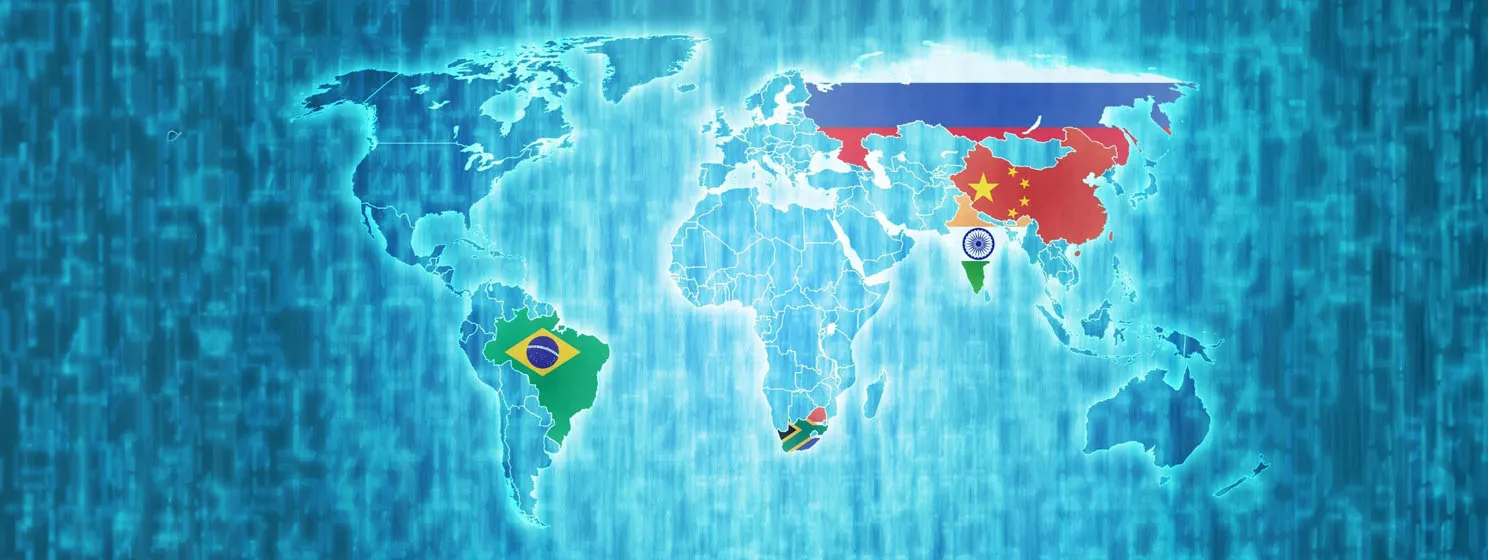
The movement reflects both strategic and technological motivations. For BRICS members Brazil, Russia, India, China, and South Africa the goal is to build parallel mechanisms for trade and settlement that minimize exposure to sanctions and cross-border frictions. ASEAN economies, driven more by efficiency and inclusion, are exploring regional digital payment frameworks that integrate stablecoins and central bank digital currencies. Together, these initiatives point to a global rebalancing of financial connectivity, where stablecoins emerge as neutral instruments bridging fragmented currency systems.
The Push for Payment Independence
Over the past two years, several BRICS and ASEAN nations have intensified efforts to develop payment systems independent of SWIFT. The catalyst was a combination of geopolitical tension, sanctions policy, and the growing cost of correspondent banking. BRICS leaders have repeatedly expressed their ambition to reduce dollar dependency in international trade and settlement.
At the 2025 BRICS summit, the bloc announced progress on a shared digital settlement platform that could support both central bank digital currencies and regulated stablecoins. The proposal envisions a multi-currency framework where national payment systems interact through blockchain infrastructure rather than legacy intermediaries. The system would enable trade invoicing, clearing, and settlement directly between local currencies, reducing the need for the U.S. dollar as an intermediary asset.
ASEAN members have adopted a more open and commercial approach. Initiatives like the Bank for International Settlements’ Project Nexus and Project Dunbar, involving Singapore, Malaysia, and the Philippines, demonstrate that regional economies see interoperability as a way to expand financial inclusion and reduce transaction costs. Stablecoins and tokenized deposits are integral to this vision, serving as programmable instruments for instant cross-border value transfer.
Stablecoins as the New Settlement Layer
Stablecoins are increasingly being recognized as efficient cross-border settlement instruments because they combine the programmability of blockchain with the stability of fiat backing. They eliminate the time delays and fees associated with traditional bank-based transfers while enabling transparent, traceable transactions.
For BRICS nations, stablecoins offer a practical means to settle bilateral trade without routing through the global correspondent banking network. Russia and China, for example, are testing digital settlement channels that allow trade payments to be executed in stablecoins pegged to their respective currencies or to baskets of commodities. India has also signaled interest in integrating tokenized rupee mechanisms into export settlements.
ASEAN economies are experimenting with similar solutions. Singapore’s Monetary Authority has partnered with several financial institutions to test regulated stablecoins for cross-border payments and foreign exchange settlement. In parallel, Thailand and Indonesia are developing interoperable retail payment linkages that could accommodate stablecoin or CBDC integration in the near future.
The key advantage of these arrangements is efficiency. Traditional cross-border payments can take up to three days to clear and involve multiple intermediaries, each charging fees. Stablecoin-based transactions settle within seconds and record each step on-chain, offering full transparency and reduced counterparty risk.
Governance, Regulation, and Transparency
While the appeal of stablecoin settlement is clear, both BRICS and ASEAN regulators emphasize governance and transparency. Unregulated or algorithmic stablecoins are viewed as unacceptable for official settlement use. Instead, attention is focused on fiat-backed and fully disclosed instruments issued by regulated entities or consortiums of commercial banks.
China’s approach has centered on digital yuan experimentation but remains cautious about private stablecoin circulation. Russia has focused on stablecoin pilots for sanctioned trade corridors with countries in Asia, Africa, and Latin America. India, balancing innovation and oversight, is drafting a framework to allow licensed financial institutions to issue rupee-backed digital settlement tokens.
ASEAN regulators are advancing similar principles. Singapore’s Payment Services Act and Hong Kong’s stablecoin licensing framework serve as models emphasizing reserve audits, redemption guarantees, and anti-money-laundering compliance. For cross-border use, these rules aim to ensure that digital tokens used for settlement retain the same level of trust as traditional payment instruments.
Institutional trust remains the foundation of adoption. Without strong governance and consistent reserve verification, stablecoins cannot serve as reliable settlement assets. Consequently, both blocs are moving toward multi-jurisdictional arrangements where only regulated tokens are admitted into official payment corridors.
Interoperability and Technical Architecture
Achieving interoperability between diverse national payment systems is the central challenge. BRICS and ASEAN nations are converging on blockchain-based architectures that allow tokenized money to move seamlessly across jurisdictions. The key objective is not to replace domestic systems but to link them through a shared digital layer.
Projects such as Project mBridge jointly developed by the BIS Innovation Hub and the central banks of Hong Kong, Thailand, the UAE, and China are testing precisely this model. The mBridge platform allows participating central banks and financial institutions to settle real-time cross-border payments using both CBDCs and stablecoins in a single ledger environment. Results from early trials show significant reductions in settlement time and transaction cost.
ASEAN’s Project Nexus complements this by focusing on retail payment interoperability, connecting fast-payment systems across borders. If combined with stablecoin infrastructure, Nexus could form the foundation of a regional settlement grid where businesses and individuals transact instantly across countries.
For BRICS, interoperability discussions have taken on a geopolitical dimension. The group is exploring how blockchain settlement systems could reduce reliance on Western-controlled infrastructure while still adhering to international compliance standards. Stablecoins pegged to local or basket currencies may serve as neutral connectors across these networks.
Strategic and Economic Implications
The stablecoin shift among BRICS and ASEAN nations represents more than technological progress; it reflects a strategic realignment in global finance. By developing digital alternatives to SWIFT, these economies are asserting monetary autonomy and positioning themselves to influence the next phase of international settlement standards.
The trend could accelerate the diversification of global liquidity flows. As stablecoins facilitate direct trade between emerging-market currencies, demand for the U.S. dollar in trade finance may gradually decrease. This does not imply a replacement of the dollar’s dominance in reserves but signals the emergence of a multipolar payment landscape.
Institutional adoption will be the decisive factor. Once regulated stablecoins gain traction in trade financing, commodity settlement, and corporate treasury management, their network effects could reshape how value moves globally. Financial institutions that integrate stablecoin rails early will benefit from faster capital rotation and greater operational efficiency.
At the same time, interoperability and regulation remain prerequisites for stability. Without clear standards, fragmentation could create new inefficiencies rather than solving old ones. The G20’s global stablecoin principles and the Financial Stability Board’s cross-border guidelines are therefore essential to ensuring that emerging systems remain transparent and interconnected.
Conclusion
The exploration of stablecoin-based settlement networks by BRICS and ASEAN marks the beginning of a new era in cross-border finance. These initiatives challenge the limitations of traditional infrastructure and highlight the growing confidence of emerging markets in developing their own digital ecosystems.As blockchain technology matures and regulatory frameworks converge, stablecoins are positioned to become the universal language of global value transfer. They offer a vision of financial connectivity that is faster, cheaper, and less dependent on legacy systems. For policymakers, financial institutions, and developers, this shift underscores a simple truth: the architecture of global payments is being rewritten, and stablecoins are at its center.