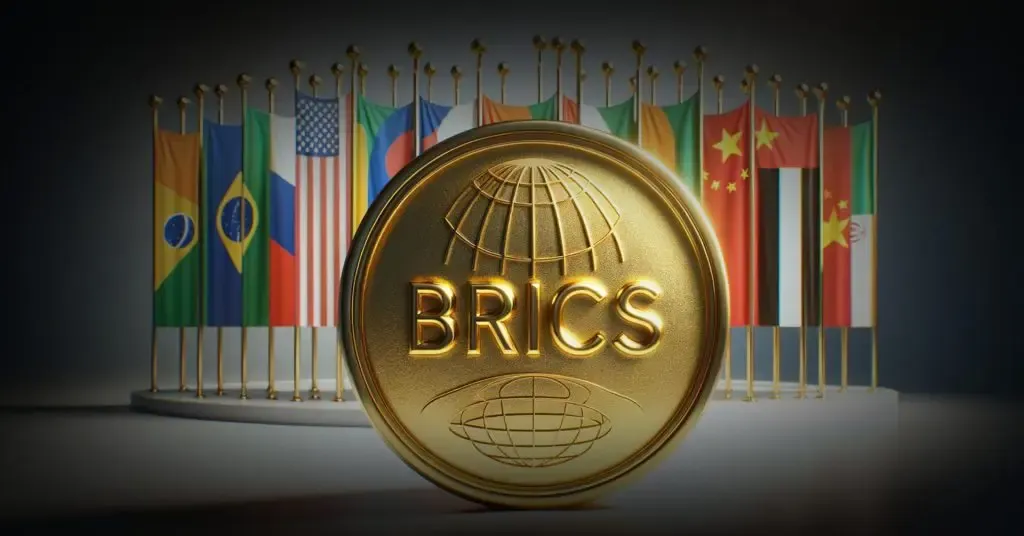
The global financial landscape is shifting as the BRICS nations, Brazil, Russia, India, China, and South Africa, accelerate efforts to integrate blockchain technology into their economic and monetary systems. With the bloc’s influence expanding and new members like Saudi Arabia and the United Arab Emirates joining discussions, BRICS is positioning itself as a counterweight to the Western financial order. Amid this transformation, stablecoins are emerging as a potential bridge between fragmented financial networks, offering a digital alternative to traditional clearing and settlement systems dominated by the U.S. dollar.
As geopolitical and economic tensions reshape global trade, BRICS members are exploring blockchain-based payment systems to enhance autonomy and efficiency. Stablecoins, backed by real-world assets and pegged to stable currencies, could serve as the technological foundation for connecting these diverse economies without relying on the existing global financial infrastructure.
Blockchain Adoption Across the BRICS Bloc
Each BRICS nation is approaching blockchain adoption with its own strategic priorities. China continues to advance its digital yuan initiative, integrating blockchain technology into the country’s payment ecosystem and cross-border trade experiments. Russia is developing blockchain settlement frameworks to reduce dependency on Western financial systems and mitigate the impact of sanctions. India is supporting blockchain startups through government-led innovation programs, while Brazil and South Africa are experimenting with tokenized assets and central bank digital currency (CBDC) prototypes.
Collectively, these initiatives signal a broader shift toward decentralized and sovereign digital finance. By adopting blockchain-based infrastructure, BRICS nations aim to reduce settlement times, cut transaction costs, and create an interoperable payment environment independent of traditional banking intermediaries. This strategy aligns with the bloc’s long-standing goal of diversifying away from dollar-denominated systems and strengthening South-South financial cooperation.
The Role of Stablecoins in Cross-Border Integration
Stablecoins have become a critical element in the evolution of digital finance. Their price stability and liquidity make them ideal tools for facilitating cross-border transactions, trade settlements, and remittances among countries with diverse currencies. For BRICS nations, stablecoins could offer a practical means of linking domestic blockchain networks and ensuring seamless currency exchange between participants.
A shared stablecoin or a network of regionally issued tokens could provide faster, cheaper, and more transparent settlements compared to traditional correspondent banking systems. For example, a Russian exporter could receive payment from a Brazilian importer in a stablecoin pegged to a neutral currency or basket of assets, eliminating the need for conversion through the U.S. dollar.
This approach would not only streamline trade but also reduce exposure to external sanctions and currency fluctuations. It could also complement the development of national digital currencies by providing interoperability between different CBDCs. Stablecoins can act as a common liquidity layer that connects otherwise isolated digital monetary systems, promoting smoother capital flows within the BRICS economic network.
Challenges and Regulatory Considerations
Despite the promise of stablecoins, the path toward implementation is complex. Regulatory divergence among BRICS nations remains a major challenge. While some countries, like Brazil, have moved toward comprehensive digital asset regulations, others are still developing their frameworks or maintaining restrictive stances toward private cryptocurrencies.
Trust and transparency are also critical concerns. For stablecoins to function effectively in a cross-border setting, member states will need to agree on reserve standards, governance structures, and mechanisms for audit and redemption. Without clear oversight, stablecoins risk becoming fragmented or vulnerable to misuse.
Interoperability will be another key test. Integrating multiple blockchain systems across jurisdictions requires standardized communication protocols and settlement mechanisms. Emerging technologies such as cross-chain bridges and tokenized trade platforms may help bridge these gaps, but they also introduce new risks around cybersecurity and compliance.
The Road Ahead: Toward a New Financial Architecture
The growing blockchain adoption within BRICS underscores a global trend toward decentralized financial infrastructure. Stablecoins, if designed collaboratively and backed by transparent governance, could play a central role in this transformation. They can enhance liquidity between BRICS economies, support digital trade settlements, and provide a neutral medium for regional transactions.
However, achieving this vision will require coordination and trust. A successful BRICS stablecoin framework would need to balance innovation with regulation, ensuring both financial inclusion and systemic stability. It could eventually evolve into a multi-asset settlement network where CBDCs, stablecoins, and tokenized assets coexist under shared operational standards.
Conclusion
The BRICS nations’ embrace of blockchain technology marks a pivotal step in redefining global finance. As these countries explore alternatives to Western-dominated systems, stablecoins offer a tangible pathway to greater financial independence and interoperability.By leveraging blockchain to enable faster, transparent, and secure settlements, BRICS has the potential to build a parallel financial architecture capable of supporting global trade and investment. While regulatory, technical, and geopolitical challenges remain, the direction is clear: blockchain and stablecoins are becoming the connective tissue of a new multipolar financial order.