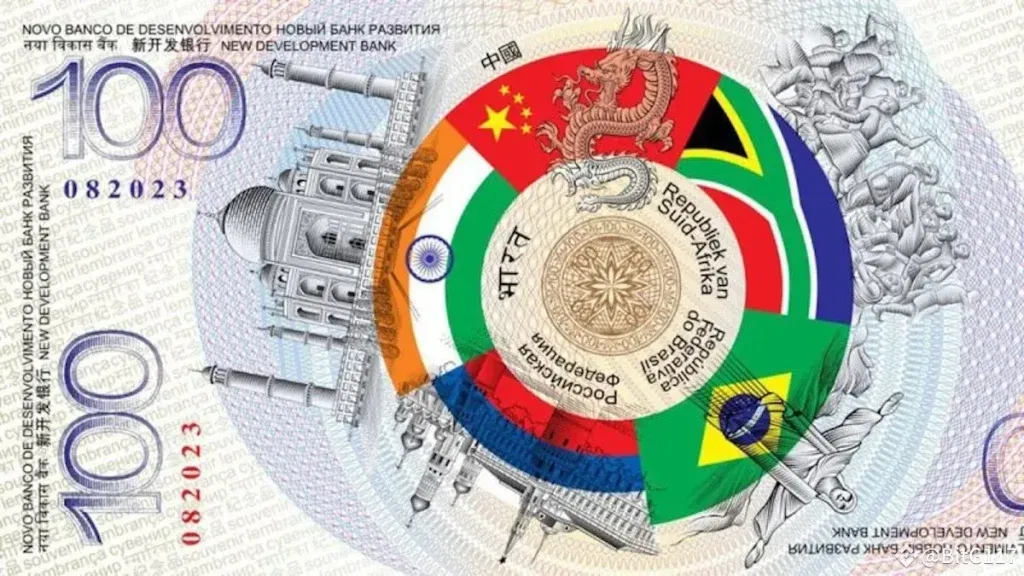
The BRICS coalition, Brazil, Russia, India, China, and South Africa, is accelerating efforts to settle trade and financial transactions in local currencies, challenging the U.S. dollar’s long standing dominance in global payments. With more countries expressing interest in joining the bloc, the initiative represents a major shift toward multipolar finance. Yet, as member nations explore new mechanisms for settlement, a key question is emerging: can stablecoins play a bridging role between disparate currencies and digital payment infrastructures?
In a world where cross border settlements remain slow and expensive, blockchain based solutions offer a potential path toward efficiency, transparency, and inclusivity. Stablecoins, particularly those backed by sovereign currencies or commodities, are increasingly being considered as neutral settlement assets capable of connecting diverse monetary systems without the need for a single global reserve currency.
The Push for Local Currency Settlement
BRICS nations have long sought to reduce dependence on the U.S. dollar for trade and finance. This effort intensified following global sanctions, inflationary pressures, and the weaponization of payment networks. The bloc’s current strategy involves expanding the use of national currencies such as the Chinese yuan, Indian rupee, and Brazilian real for bilateral and multilateral transactions.
Several pilot programs are already underway. Russia and China are using local currency settlements for energy and commodities trade, while India is exploring rupee based payment systems with African and Asian partners. These initiatives aim to enhance monetary sovereignty and strengthen regional economic cooperation.
However, local currency settlements face practical challenges. Exchange rate volatility, liquidity shortages, and inconsistent infrastructure hinder seamless trade between BRICS economies. A rupee to ruble transaction, for instance, still requires intermediary currency conversion and complex reconciliation processes. This fragmentation highlights the need for interoperable systems that can synchronize diverse financial networks, a gap that stablecoins are uniquely positioned to fill.
Stablecoins as a Bridge Between National Systems
Stablecoins offer a potential solution to the inefficiencies of local currency trade by serving as a neutral, programmable medium of exchange. Unlike traditional cross border transfers, which rely on correspondent banking, stablecoin transactions occur instantly on blockchain networks and settle with cryptographic finality.
For BRICS economies, adopting blockchain based settlement mechanisms could improve liquidity, reduce transaction costs, and bypass currency mismatches. A digitally issued stablecoin pegged to a basket of BRICS currencies, or even to commodities such as gold, could provide a shared reference asset that facilitates trade without requiring full currency convertibility.
China’s expanding digital yuan project and Russia’s blockchain based payment pilots already demonstrate how sovereign digital currencies can operate domestically. Integrating these systems with regulated stablecoins could create a hybrid model where local currencies settle through interoperable on chain frameworks. This model would allow trade partners to maintain monetary autonomy while benefiting from blockchain’s efficiency and transparency.
Emerging markets within the BRICS sphere are particularly well suited for such innovation. Countries with underdeveloped banking infrastructure could leapfrog directly into blockchain based payments, using stablecoins to access cross border liquidity and stable pricing. For example, African nations participating in BRICS expansion could settle trade in digital real or digital yuan through stablecoin intermediaries, reducing dependency on U.S. dollar corridors.
Regulatory and Strategic Considerations
Despite their promise, stablecoin integration into BRICS settlement systems faces regulatory and geopolitical complexities. Each member nation has distinct monetary policies, capital controls, and data governance rules. Aligning these frameworks for cross border stablecoin use will require significant policy coordination.
The BRICS New Development Bank (NDB) and regional central banks are reportedly studying the feasibility of digital settlement instruments under cooperative governance. A jointly backed stablecoin or digital reserve asset could emerge as part of this effort, but such a system would need clear legal definitions, reserve management rules, and auditing mechanisms to ensure stability and trust.
Additionally, interoperability between existing digital currency projects is essential. The People’s Bank of China’s digital yuan, India’s Unified Payments Interface (UPI), and Russia’s blockchain based settlement platforms all use different technological standards. Stablecoin bridges, secured by AI enhanced oracles and proof of reserves systems, could synchronize these infrastructures while maintaining compliance with local regulations.
The IMF and BIS have also entered the conversation, urging emerging economies to prioritize transparency and cross jurisdictional coordination in any blockchain based settlement initiatives. Their guidance emphasizes that stablecoins used in international trade should remain fully collateralized and operate under robust governance frameworks to prevent systemic risks.
Conclusion
The BRICS nations’ push for local currency settlements marks a defining moment in the evolution of global finance. As the bloc seeks to build a multipolar monetary system, stablecoins present a practical tool to enhance interoperability and liquidity between diverse economies.While political and regulatory alignment remains a challenge, the technological foundation is rapidly maturing. Blockchain networks, stablecoin bridges, and programmable settlement layers could eventually allow BRICS economies to trade in local currencies while maintaining the speed and stability of global digital money.