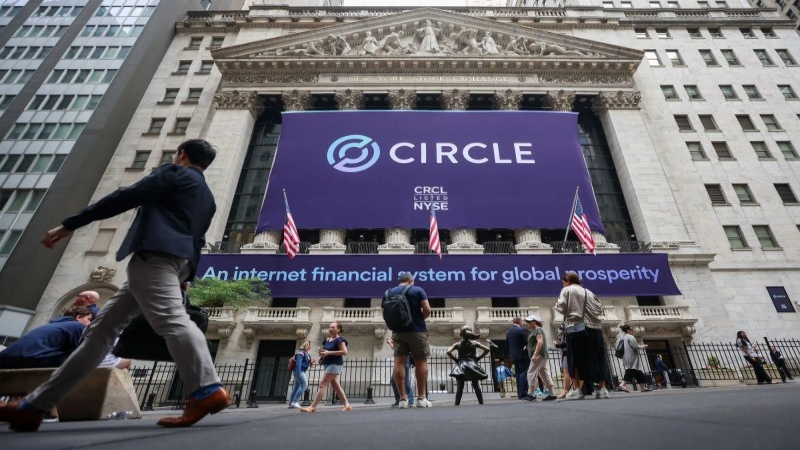
Circle reported stronger than expected fourth quarter earnings, sending its shares sharply higher as growth in USDC issuance underscored continued demand for dollar backed stablecoins. The company posted earnings per share of 43 cents for the quarter, significantly above the consensus estimate of 16 cents, reflecting improved margins and higher revenue from reserve income.
Total revenue rose 77 percent compared with the same period a year earlier, reaching 770 million dollars. Net income climbed to 133.4 million dollars, marking a substantial increase from the prior year. Much of Circle’s revenue is derived from income generated on reserves that back USDC, which are typically held in cash and short term US government securities.
Investor response was immediate, with Circle shares rising more than 20 percent in early trading following the earnings release. Market participants viewed the results as evidence of resilience in the stablecoin sector, even as broader cryptocurrency markets have experienced periods of consolidation and reduced volatility.
USDC issuance expanded by 72 percent over the past year, pushing its market capitalization to nearly 75 billion dollars. While still smaller than Tether’s USDT, which remains the largest stablecoin globally, USDC has maintained its position as the second largest dollar pegged digital asset. Tether currently commands a larger share of the market, though recent data shows modest contraction in its circulating supply over the past two months.
Circle’s management highlighted the expansion of its payments infrastructure as a key driver of growth. The Circle Payments Network enrolled 55 financial institutions, with dozens more progressing through eligibility processes. The network is designed to facilitate cross border transactions and settlement using USDC, positioning the stablecoin beyond its traditional role in crypto trading.
Industry analysts note that stablecoins are increasingly being integrated into payment systems and financial workflows, particularly in regions where faster and lower cost settlement solutions are in demand. As regulatory clarity improves in several major jurisdictions, institutional participation in stablecoin ecosystems has expanded.
Circle’s leadership emphasized network effects and platform integration as competitive advantages in a market that remains concentrated among a small number of large issuers. Analysts covering the company pointed to higher margins driven by an increased share of USDC held directly on Circle’s platform, as well as stronger subscription and transaction related revenue streams.
Despite broader market fluctuations, the latest results highlight the growing importance of stablecoin infrastructure within digital finance. With issuance volumes rising and institutional partnerships expanding, Circle’s performance reflects continued momentum in the tokenized dollar segment of the crypto economy.