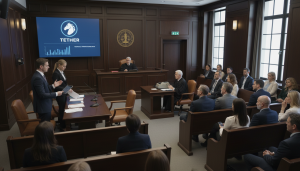
Overview of the Tether USDT Seizure
Today, attention is on a court request seeking to redirect roughly $344 million in frozen USDT, turning a compliance action into a contested asset control fight. The motion frames the dispute as a Tether USDT seizure pathway, asking that the frozen tokens be transferred under court supervision rather than left immobilized onchain. Lawyers involved described the request as an effort to prevent dissipation and to preserve claims while the underlying allegations are litigated. Live monitoring of wallet movements matters because the relief sought depends on whether the tokens remain frozen and traceable at the identified addresses. The immediate question is not market direction but custody, who can compel reassignment, and under what legal authority.
Legal Context and Implications
The filing sits inside broader crypto legal battles, where plaintiffs increasingly seek injunction style remedies that reach stablecoin issuers and infrastructure providers. In this USDT court case, the court is being asked to treat token control as an enforceable lever, with Tether’s freeze function positioned as a practical substitute for a traditional bank restraint. Today, the fight also tests due process boundaries, because any compelled redirection can affect third party claimants and downstream counterparties, highlighted by CoinDesk coverage of a crypto market structure bill clearing a key hurdle. A separate Live policy lens is developing as lawmakers debate standards for intermediaries. The latest Update from court watchers is that remedies are being crafted to fit token mechanics, not the other way around.
Potential Impact on Stablecoin Market
Market participants are treating the episode as a real time stress test of how quickly freezes can be paired with judicial routing, which could influence liquidity behavior around large USDT balances. For readers tracking stablecoin regulation, the sensitivity is not only whether tokens can be immobilized, but whether a court can order movement without the normal banking rails. Live desks are watching whether counterparties widen settlement buffers or re price risk on addresses linked to disputes, as seen in one related context piece on institutional tokenization appetite, JPMorgan readies tokenized fund for stablecoin firms. Today’s Update is that the immediate effect is procedural uncertainty, but the longer shadow is how quickly courts may normalize issuer assisted transfers.
Regulatory Responses and Challenges
Regulators are already using enforcement and rulemaking to define the obligations of issuers and platforms, and this court driven tactic adds another track that could accelerate standardized playbooks. In discussions of stablecoin regulation, the key challenge is consistency across jurisdictions, because a freeze request may be served in one country while addresses and users sit elsewhere. Live compliance teams will parse whether courts require specific evidentiary thresholds before ordering redirection, and an internal regulatory signal worth watching is CFTC no-action letter loosens event contract reports. Today, the hard part is aligning on notice, appeal rights, and technical execution, and every Update in similar cases increases pressure for clearer standards. In 2026, the push for standardized playbooks is becoming more visible as agencies and courts move in parallel.
Future Outlook for Tether and USDT
The next phase depends on how the judge frames authority and remedy, because an order that endorses reallocation could be cited in later crypto legal battles involving other stablecoins and custodial layers. Lawyers following the docket say timing matters, since delays can complicate tracing and complicate restitution paths if funds are later deemed misdirected, and the Tether USDT seizure dispute also forces a public test of issuer discretion versus compulsion. Live market operators are likely to monitor freeze and unfreeze precedents as closely as price action, since operational certainty drives settlement confidence. Today’s Update is that the court’s next instructions will matter more than headlines, because they determine whether token control becomes a routine enforcement instrument.