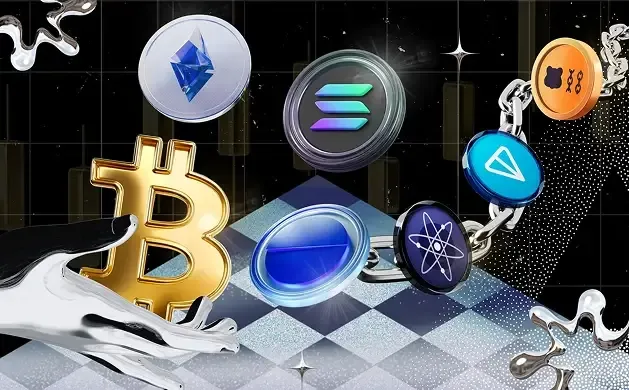
Tether, the issuer of USDT, has emerged as a cornerstone of cross-chain innovation, linking some of the world’s most influential blockchain networks Ethereum, Solana, and Tron into a unified liquidity infrastructure. As decentralized finance (DeFi) matures and interoperability becomes essential for market efficiency, Tether’s multi-chain strategy is reshaping how stablecoins function across fragmented ecosystems.
With USDT now circulating on more than a dozen blockchains and processing trillions in annual transaction volume, Tether’s role has evolved beyond simple issuance. It has become the connective tissue that enables seamless value transfer between otherwise siloed networks. The company’s focus on interoperability, settlement speed, and cost efficiency is redefining how liquidity moves across the digital economy.
Building Bridges Between Leading Blockchains
Tether’s multi-chain architecture is designed to make USDT universally accessible, regardless of a user’s preferred blockchain. Each network serves a distinct market segment Ethereum for institutional DeFi, Solana for high-speed retail transactions, and Tron for low-cost cross-border payments. By issuing native USDT tokens across these ecosystems, Tether ensures that digital dollars can circulate freely and efficiently across diverse user bases.
Ethereum remains Tether’s foundational network, offering deep liquidity and robust security through its mature DeFi ecosystem. Here, USDT serves as the backbone for decentralized exchanges, lending protocols, and derivatives markets. However, high gas fees and network congestion have pushed users toward faster, cheaper alternatives.
Solana represents the performance frontier of Tether’s expansion. With sub-second transaction finality and minimal fees, Solana provides a scalable infrastructure for micropayments, gaming, and retail applications. USDT on Solana allows fintech developers and merchants to build near-instant settlement systems that rival traditional payment processors in speed and cost efficiency.
Tron, meanwhile, dominates emerging market adoption. Accounting for a majority of global USDT transfers, Tron’s low transaction costs and widespread wallet integration make it the preferred network for cross-border remittances and peer-to-peer commerce in regions such as Latin America, Africa, and Southeast Asia. The combination of low fees and high throughput has turned Tron into a digital dollar rail for unbanked and underbanked populations.
By operating across these three major networks simultaneously, Tether has created a stablecoin ecosystem that caters to every segment of the digital economy from institutional investors and DeFi participants to retail users and fintech innovators.
Cross-Chain Liquidity and Interoperability Infrastructure
The power of Tether’s cross-chain model lies in interoperability the ability to move USDT seamlessly between blockchains without friction. This is achieved through a combination of native issuance, token bridges, and liquidity coordination among partner platforms.
Tether issues USDT natively on each blockchain, backed by a unified reserve pool. This ensures that every token, regardless of its origin chain, is fully collateralized and redeemable at parity. To facilitate movement between networks, users rely on trusted bridge solutions such as Wormhole, Multichain, and LayerZero, which lock tokens on one chain and mint equivalents on another.
These interoperability protocols enable traders and institutions to arbitrage liquidity, rebalance portfolios, or execute cross-chain settlements without liquidating assets. This flexibility has become critical for DeFi protocols that operate on multiple blockchains. For example, liquidity pools on Ethereum and Solana can remain synchronized through USDT transfers, maintaining market efficiency across decentralized exchanges.
In addition to bridges, Tether is exploring next-generation interoperability frameworks based on zero-knowledge proofs and messaging layers that eliminate the need for custodial intermediaries. The goal is to achieve true composability — a world where assets and smart contracts interact natively across chains without sacrificing security.
This cross-chain liquidity infrastructure also benefits centralized exchanges and payment platforms. Major trading venues now use Tether’s multi-chain supply to optimize settlement routes, reduce transaction costs, and ensure 24/7 liquidity. For institutional players, this translates into faster collateral movement and improved capital efficiency across global markets.
Driving the Future of Global Payments and DeFi Integration
Tether’s cross-chain presence is not merely a technological achievement; it is also a macroeconomic phenomenon. As more digital finance activity migrates to the blockchain, the need for interoperable, dollar-denominated settlement tools has never been greater. USDT’s ability to operate across chains gives it a unique role as a unifying force in digital payments and decentralized liquidity.
In global commerce, this interoperability allows businesses and fintech firms to send and receive stablecoins instantly across regions using the network best suited for their needs. A merchant in Vietnam might receive USDT on Tron to minimize costs, while a counterpart in the United States might convert it to Ethereum-based USDT for institutional compliance and custody.
In DeFi, Tether’s cross-chain design enhances liquidity synchronization across ecosystems. Protocols can now use USDT as a bridge asset to connect pools, lending markets, and derivatives platforms spread across blockchains. This interconnectivity helps maintain stable pricing and deep liquidity essential ingredients for healthy decentralized markets.
Developers are leveraging this interoperability to build multi-chain applications capable of dynamically routing payments and trades across the most efficient pathways. The result is a more resilient and connected financial network that blurs the lines between individual blockchains.
Conclusion
Tether’s success in bridging Ethereum, Solana, and Tron underscores how stablecoins have evolved into critical components of global financial infrastructure. By enabling liquidity to flow freely across networks, Tether has helped transform fragmented ecosystems into a cohesive digital economy.The company’s cross-chain innovation represents more than a technical milestone it is a redefinition of how digital dollars operate at scale. As decentralized and traditional finance continue to converge, Tether’s interoperability framework offers a blueprint for how multi-chain stability and real-time liquidity can coexist under a single global standard.