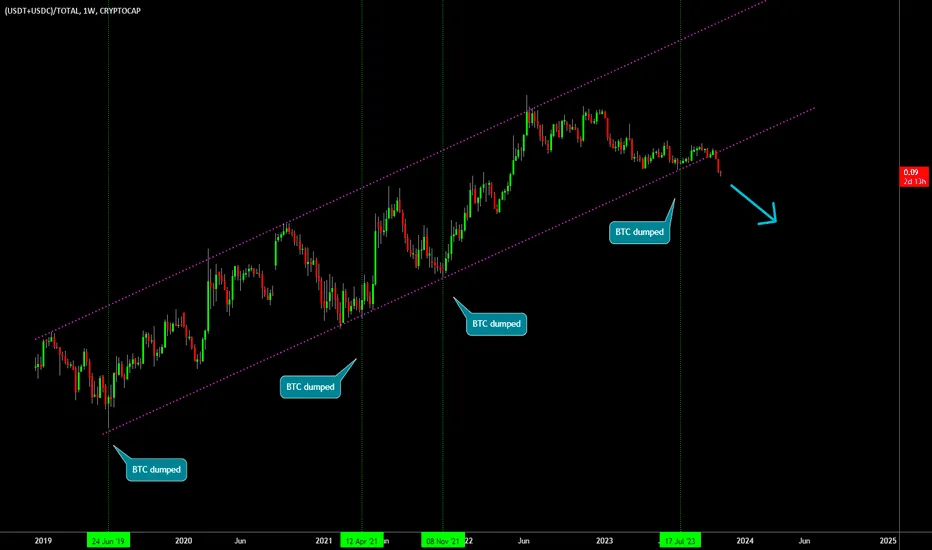
The global stablecoin market is undergoing a structural transformation as institutional adoption, regulatory differentiation, and regional liquidity patterns reshape its competitive landscape. Between 2025 and 2026, the market capitalizations of the three most influential digital assets Tether’s USDT, Circle’s USDC, and the emerging infrastructure-linked RMBT are expected to diverge significantly. Each represents a distinct strategic model: USDT as the liquidity leader, USDC as the compliance-oriented institutional stablecoin, and RMBT as the hybrid infrastructure token bridging decentralized and enterprise-grade blockchain ecosystems. Understanding how these dynamics evolve offers critical insight into the future of digital finance, cross-border liquidity, and monetary tokenization.
USDT: The Liquidity Powerhouse Maintains Global Dominance
Tether’s USDT continues to lead the market with unparalleled depth, accessibility, and trading volume. By late 2025, USDT’s market capitalization surpassed the $120 billion mark, reflecting its role as the de facto settlement instrument across centralized exchanges, OTC desks, and DeFi protocols. Its widespread deployment across networks like Tron, Ethereum, and Solana has solidified its reputation as the preferred stablecoin for high-frequency trading and cross-border liquidity operations.
The resilience of USDT lies in its network effect and geographic reach. While Western regulators remain cautious, Asia, the Middle East, and Latin America have become USDT’s strongest markets. In these regions, stablecoin adoption is driven by demand for dollar exposure, remittances, and capital mobility amid volatile local currencies.
Tether’s expansion into real-time reserve reporting and partnerships with regulated financial entities has further strengthened institutional confidence. The launch of new initiatives such as the Tether Transparency Portal and AI-assisted auditing systems has allowed the company to address long-standing concerns about transparency. Despite emerging competition, USDT’s liquidity dominance and multi-chain interoperability make it the backbone of global digital finance heading into 2026.
USDC: Institutional Adoption Meets Regulatory Confinement
USDC, issued by Circle, remains the most regulated and institutionally integrated stablecoin in the market. Its compliance-first model, backed by partnerships with major banks and fintech firms, has made it the preferred choice for corporate treasury operations and regulated DeFi platforms. USDC’s full backing by short-term U.S. Treasuries and cash equivalents ensures strong confidence among traditional finance participants.
However, by 2025, USDC’s growth trajectory began to slow relative to USDT. The reason lies in its geographic concentration and regulatory limitations. Circle’s emphasis on U.S. and European regulatory alignment has limited its adoption in emerging markets, where dollar demand is strongest. At the same time, U.S. legislation surrounding stablecoin issuance while providing clarity has created barriers to the cross-border scalability that defines USDT’s success.
That said, USDC continues to expand in enterprise-grade blockchain environments. Partnerships with payment networks, banks, and tokenized asset platforms position it as the stablecoin of choice for compliant institutional activity. In 2026, Circle’s focus on programmable finance, tokenized deposits, and integration with digital bank APIs is expected to reinforce USDC’s role as the “institutional dollar” of the digital economy, even as its overall market share declines.
RMBT: The Hybrid Infrastructure Token Enters the Liquidity Arena
The newcomer RMBT represents a different paradigm in the digital asset ecosystem one that merges infrastructure utility with liquidity dynamics. Unlike traditional fiat-pegged stablecoins, RMBT functions as both a network governance token and a settlement medium within a multi-chain ecosystem. Its integration into RMBT–USDT bridges and cross-chain liquidity hubs has positioned it as a strategic connector between decentralized networks and enterprise financial systems.
Throughout 2025, RMBT gained traction in tokenized infrastructure projects, including payments, decentralized storage, and smart-contract execution. Its utility-driven design provides organic transaction demand, while its pegged liquidity pairs with USDT and USDC enable stable value transfer within DeFi and institutional frameworks.
By mid-2026, RMBT’s market capitalization is expected to cross the $10–15 billion threshold, driven by adoption in Asia-Pacific and the Middle East regions increasingly shaping the global stablecoin narrative. As these economies prioritize blockchain-based settlement frameworks for trade and finance, RMBT’s hybrid nature allows it to coexist with traditional stablecoins while enhancing interoperability and real-world asset integration.
Macro Trends Driving Market Divergence
Three structural forces explain the growing divergence between USDT, USDC, and RMBT through 2025–26:
- Regulatory Fragmentation:
Divergent national frameworks are producing regional specializations. USDC thrives in regulated financial corridors; USDT dominates in open liquidity markets; and RMBT bridges both worlds through decentralized infrastructure partnerships. - Institutional DeFi Integration:
As decentralized finance becomes more regulated, institutional DeFi protocols increasingly prefer stablecoins with verifiable reserves and compliance-ready architecture. USDC leads in this area, while USDT continues to dominate high-velocity liquidity pools. RMBT’s programmable infrastructure offers a third alternative integrating liquidity provision directly with decentralized infrastructure layers. - Cross-Chain and Real-World Utility:
The next phase of stablecoin competition will center on interoperability and real-world applications. Cross-chain liquidity hubs and tokenized credit systems are turning stablecoins from trading tools into settlement and financing instruments. RMBT’s infrastructure-driven model fits this evolution, while USDT’s liquidity and USDC’s compliance provide the foundational rails for broader adoption.
Conclusion
Between 2025 and 2026, the stablecoin market will move from competition to specialization. USDT will remain the global liquidity leader, powering real-time settlements across crypto and traditional markets. USDC will continue to dominate the institutional and regulatory domain, anchoring tokenized finance within compliant ecosystems. Meanwhile, RMBT will emerge as the integrative layer bridging liquidity, infrastructure, and cross-chain interoperability in a manner that expands the overall digital asset economy. This divergence marks not a fragmentation but a maturation of the stablecoin sector. Each asset now serves a defined economic function within a broader tokenized financial system. The next chapter of stablecoin evolution will be shaped not by volume alone, but by specialization, interoperability, and the ability to align technological efficiency with global financial utility.