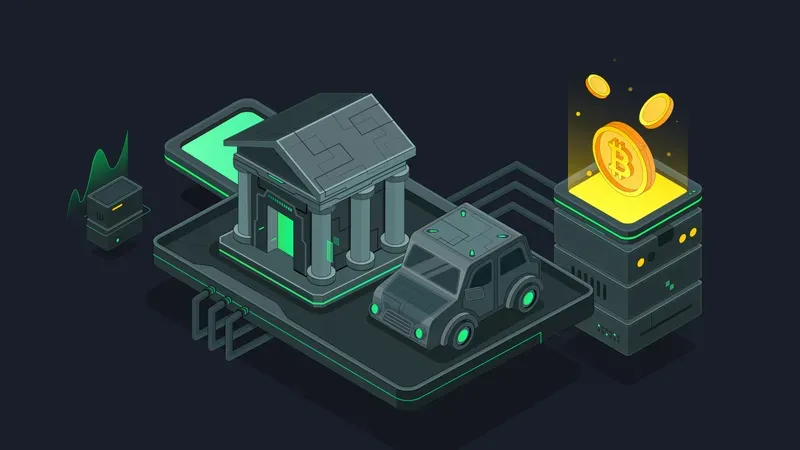
Real world asset tokenization is rapidly becoming one of the most important shifts in global finance, transforming how institutions issue, trade and settle traditional financial instruments. By moving assets such as treasury bills, corporate debt, real estate, commodities and private credit onto blockchain networks, markets gain transparency, instant settlement and global accessibility. As tokenized assets expand across institutional platforms and DeFi ecosystems, stablecoins like USDT are emerging as the preferred settlement layer. With deep liquidity, global reach and multi-chain availability, USDT provides a reliable digital dollar foundation that supports the growth of tokenized capital markets. In 2025, the intersection of real world asset tokenization and stablecoin-based settlement is reshaping how value moves across borders and how institutions interact with modern financial infrastructure.
Tokenization Creates Efficient, Transparent and Borderless Markets
Real world asset tokenization upgrades financial markets by replacing slow, fragmented infrastructure with instant blockchain settlement. Traditional assets often require intermediaries, manual reconciliation and multi-day clearing processes. Tokenized assets eliminate these bottlenecks. Ownership can be verified onchain, transfers can finalize within seconds and compliance checks can be automated through smart contracts.
For institutions, tokenized assets offer operational efficiency and lower transaction costs. Treasury desks can move capital globally without waiting for regional banking hours. Asset managers gain real-time visibility into holdings, improving reporting accuracy. Private markets become more accessible through fractionalized tokenization, allowing smaller investors to participate in markets traditionally limited to large institutions.
Tokenization platforms are expanding quickly across both public and permissioned blockchains, creating an interconnected network where assets and liquidity can move freely. This borderless structure sets the foundation for stablecoin-based settlement systems, and among all stablecoins, USDT has emerged as the most widely used tool.
USDT Provides a Reliable Settlement Layer for Tokenized Markets
As tokenized assets grow, settlement requires a neutral, globally recognized digital currency. USDT plays this role effectively due to its liquidity, accessibility and proven performance across many blockchain ecosystems. Institutions choose USDT for settlements because it offers consistent dollar stability without the frictions of traditional cross-border banking.
When trading tokenized treasury bills or corporate bonds, investors often settle transactions in USDT for immediate finality. Settlement does not require bank coordination, wire transfers or correspondent networks. This significantly reduces operational risk and accelerates transaction speed. With USDT available on multiple low-fee chains, institutions can select settlement rails that fit their cost and speed requirements.
USDT’s dominance in trading pairs, OTC markets and DeFi liquidity pools also supports tokenized assets. For example, tokenized T-bills or private credit products often use USDT as the primary entry and exit currency, creating a unified liquidity environment. This widespread adoption positions USDT as a core component of the growing tokenized asset market.
Institutional Adoption Accelerates as Tokenized Assets and Stablecoins Converge
Banks, hedge funds and asset managers are increasingly integrating tokenized assets into their operational pipelines. Institutions that previously avoided direct crypto exposure are now exploring tokenization because it aligns with traditional asset strategies while providing technological upgrades.
Many institutions rely on USDT because it offers the liquidity required for large-scale settlement. Tokenized treasury markets, for instance, see high trading volume as investors move capital between yield opportunities. USDT settlement enables these transfers to occur instantly across blockchain networks, giving institutions more agility than traditional banking systems.
Institutional markets also benefit from USDT’s role in collateral management. Tokenized bonds and tokenized cash equivalents can be combined with USDT to create automated lending, repo and margining systems. These functions mirror traditional finance but operate with greater speed and transparency due to blockchain automation.
As institutional-grade custody providers and regulated marketplaces expand, the combination of tokenized assets and USDT-based settlement becomes a natural fit for global financial integration.
DeFi and Tokenized Assets Create New Liquidity Channels
Real world asset tokenization is expanding into DeFi, where stablecoins act as the backbone for liquidity and collateral. USDT provides dependable settlement for tokenized bonds, tokenized credit pools and synthetic yield products. Investors can use USDT to mint tokenized assets, participate in lending platforms or supply liquidity to asset-backed pools.
This integration offers several advantages. Investors gain onchain access to assets such as treasury yields or private credit returns while maintaining stablecoin liquidity. DeFi protocols benefit from safer collateral and lower volatility. Tokenized asset issuers gain global distribution and simplified settlement channels that are not limited by geography or banking restrictions.
The merging of DeFi and tokenization introduces a new class of global liquidity markets, where USDT functions as the primary settlement currency connecting different blockchains, protocols and financial products.
Conclusion
Real world asset tokenization is transforming the financial landscape by creating faster, more transparent and globally accessible markets. As institutions adopt tokenized treasuries, bonds, real estate and credit products, the need for a stable and liquid settlement currency becomes essential. USDT continues to play a central role in this transformation due to its reliability, liquidity and universal acceptance across blockchain networks. The convergence of tokenized assets and stablecoin-based settlement is reshaping global finance, bridging traditional markets with digital infrastructure and opening new pathways for efficiency and investment. As adoption accelerates, USDT remains at the heart of this evolution, supporting the next generation of tokenized capital markets.