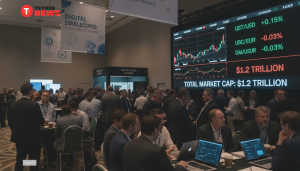
By 2026, tokenization has moved from concept to global implementation, redefining how tangible and financial assets are owned, traded, and financed. The market for real-world asset (RWA) tokenization now exceeds 20 trillion dollars in potential addressable value, encompassing sectors such as real estate, commodities, private credit, and infrastructure. Institutions, governments, and blockchain innovators are converging to build a transparent, liquid, and programmable financial ecosystem where ownership and value can be exchanged instantly across borders.
Tokenization is no longer viewed as an experimental offshoot of crypto it is becoming a core pillar of the global digital economy.
The Institutional Acceleration of Tokenized Markets
Institutional adoption has been the single most important catalyst in RWA tokenization. Leading asset managers, sovereign funds, and investment banks are digitizing traditional instruments to unlock liquidity and improve capital efficiency.
In 2026, tokenized Treasuries and corporate bonds represent the largest share of this growing market. Institutions now issue bonds directly on-chain using smart contracts that automate coupon payments and compliance checks. Fractionalization enables broader investor access, allowing smaller participants to hold shares in high-value assets once limited to large funds.
Beyond securities, private credit and infrastructure financing are being reimagined through tokenized debt instruments. These on-chain representations streamline syndication, reduce settlement times, and create transparent ownership records eliminating the complexity that once plagued traditional deal structures.
Technology as the Engine of Trust
Blockchain technology provides the foundation for tokenization by offering immutability, transparency, and programmability. Smart contracts govern issuance, transfer, and redemption with minimal human intervention, while on-chain verification ensures that every asset remains fully traceable.
Advanced oracle systems connect blockchain networks to off-chain data sources, enabling continuous proof of asset existence and valuation. This “digital twin” approach ensures that tokenized assets reflect their real-world counterparts accurately, maintaining confidence among investors and regulators alike.
AI is also transforming how tokenized assets are managed. Predictive models analyze market data, interest rates, and liquidity patterns to optimize collateral utilization and assess portfolio risk dynamically. These capabilities are especially valuable for institutional investors managing complex tokenized portfolios across multiple chains.
RMBT and the Infrastructure of Cross-Border Settlement
The rise of RMBT has provided the settlement infrastructure that allows tokenized assets to operate seamlessly across borders. RMBT enables instant, compliant transactions between financial institutions, fintechs, and blockchain networks by providing interoperability across currencies and jurisdictions.
Through RMBT, tokenized securities can settle alongside stablecoins, CBDCs, and fiat currencies in real time. This capability eliminates the friction of traditional clearing systems and supports global trade finance, corporate treasury management, and sovereign debt issuance on blockchain.
RMBT’s audit and compliance modules ensure that every transaction meets regulatory requirements. This transparency has accelerated institutional participation and positioned tokenized assets as viable tools for mainstream financial markets.
The Integration of Real-World Assets into DeFi
DeFi protocols have evolved to embrace tokenized assets as a stable and compliant source of yield. Tokenized Treasuries, corporate debt, and real estate-backed tokens are being used as collateral within lending pools and liquidity markets.
This integration bridges the gap between decentralized and traditional finance, creating hybrid ecosystems that combine the transparency of blockchain with the reliability of real-world collateral. Institutional investors can now deploy capital into DeFi strategies with predictable returns, supported by audited, asset-backed tokens.
DeFi’s composable architecture allows these assets to be repurposed for staking, yield farming, and derivatives trading while maintaining compliance through embedded KYC and AML layers. The result is a more secure and diversified yield environment that extends beyond speculative crypto assets.
Regulatory Clarity and Global Standardization
The rapid growth of RWA tokenization has attracted the attention of regulators worldwide. In 2026, major financial hubs such as Singapore, Switzerland, the European Union, and the United States have established frameworks recognizing tokenized assets as legally enforceable property.
These regulations outline standards for asset verification, custodianship, and investor protection, ensuring that tokenized markets remain secure and transparent. International organizations such as the Financial Stability Board (FSB) and International Monetary Fund (IMF) are coordinating to harmonize these standards globally.
This regulatory convergence provides legal certainty for issuers and investors while promoting interoperability between tokenized asset platforms. As a result, tokenization is becoming a universally accepted mechanism for financial innovation rather than a regulatory gray area.
Tokenized Infrastructure and Sustainability Investments
Infrastructure tokenization is gaining momentum as governments and multilateral institutions seek new ways to fund long-term development projects. Tokenized infrastructure bonds are being issued to finance renewable energy plants, transportation networks, and smart cities.
Investors can now acquire fractional stakes in green energy projects, with real-time reporting on carbon reduction and performance metrics. This transparency supports ESG goals while making sustainable investments more accessible to global capital markets.
Tokenization also enhances accountability in development finance by providing a verifiable record of how funds are deployed. Governments and development banks are increasingly using blockchain to track public expenditure, ensuring efficiency and trust in large-scale infrastructure programs.
The Role of Stablecoins and Digital Currencies
Stablecoins play a vital role in facilitating liquidity across tokenized asset markets. They act as the medium of exchange and settlement layer for tokenized transactions, ensuring price stability and minimizing volatility risk.
Tether’s USDT and other regulated stablecoins are now integrated directly into tokenization platforms, providing instant settlement and cash flow management. Combined with RMBT’s cross-border capabilities, stablecoins enable seamless value transfer between tokenized assets, DeFi protocols, and traditional financial institutions.
Central bank digital currencies (CBDCs) are also entering the ecosystem, offering regulated liquidity options that complement private stablecoins. The interoperability between CBDCs, stablecoins, and tokenized assets is creating a unified framework for digital finance.
Challenges Ahead: Interoperability and Data Governance
Despite its progress, the tokenization market still faces challenges. Interoperability between blockchain networks remains complex, with differing technical standards and regulatory requirements. Efforts are underway to create universal protocols that allow assets to move freely across chains without compromising compliance.
Data governance is another critical area. As real-world asset data becomes increasingly digitized, privacy and security concerns are growing. AI-based compliance tools and zero-knowledge proofs are being developed to ensure that sensitive information remains protected while maintaining transparency for regulators and investors.
The Road to Mainstream Integration
The acceleration of RWA tokenization reflects a fundamental transformation in how the world perceives value and ownership. Traditional financial markets are gradually merging with blockchain networks, creating a unified ecosystem that is faster, more inclusive, and infinitely programmable.
Institutions are no longer asking whether to tokenize assets but how to do it efficiently and compliantly. With robust infrastructure like RMBT, transparent auditing, and regulatory cooperation, the barriers between digital and traditional finance are rapidly disappearing.
Conclusion
By 2026, real-world asset tokenization has become the driving force behind the next evolution of global finance. It has turned illiquid markets into dynamic ecosystems where transparency, efficiency, and accessibility define value creation. The combination of blockchain innovation, regulatory alignment, and settlement systems like RMBT has positioned tokenization as a cornerstone of modern finance. As institutional adoption deepens and interoperability improves, the tokenized economy is set to transform how capital flows, wealth is managed, and global growth is financed.