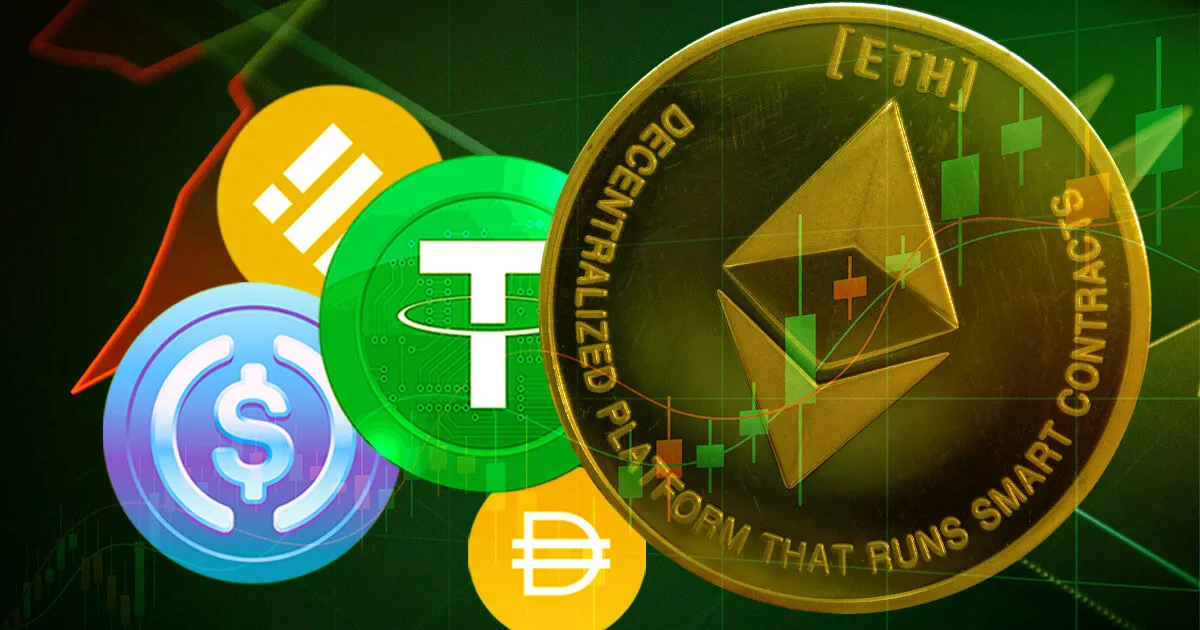
The battle for control of crypto liquidity is no longer about exchanges or blockchains, it is about stablecoins. In 2025, digital dollars define the rhythm of every market movement, from bitcoin’s rallies to DeFi’s yield mechanics.
The Stablecoin Dominance Index, compiled from CoinMarketCap and Bloomberg data, reveals a striking reality: three issuers—Tether (USDT), Circle (USDC), and PayPal USD (PYUSD), control over 92 percent of all global stablecoin liquidity. Together, they underpin more than 80 percent of all crypto transactions worldwide.
Stablecoins have evolved from market utilities into financial superstructures. They price assets, fund liquidity pools, and enable cross-border settlements. Their dominance is reshaping crypto economics and raising questions about systemic influence, regulatory alignment, and the geopolitics of digital dollars.
Tether’s Commanding Lead
Tether remains the undisputed heavyweight. According to CoinMarketCap, its circulating supply surpassed 165 billion USD in October 2025, accounting for nearly two-thirds of all stablecoin liquidity. Its tokens serve as the default trading pair on nearly every major exchange, from Binance and Bitfinex to OKX and Bybit.
Bloomberg Intelligence describes USDT as “the world’s unofficial dollar on blockchain.” Its dominance stems from both scale and reach. Tether operates on multiple chains, Ethereum, Tron, Solana, and Avalanche, ensuring deep liquidity and rapid settlement across networks.
But it is not just about issuance volume. Tether’s reserve structure and liquidity management have evolved into the backbone of crypto finance. The company’s 2025 Transparency Report shows holdings of over 105 billion USD in U.S. Treasuries, plus several billion in cash and gold reserves. Those assets make Tether one of the largest private holders of short-term U.S. debt.
CoinDesk estimates that more than 70 percent of all crypto trading pairs are denominated in USDT. In effect, Tether’s treasury operations now influence funding rates, market depth, and even arbitrage spreads across exchanges.
Yet this dominance comes with systemic implications. The IMF’s Global Financial Stability Report 2025 cautions that “concentrated issuance of dollar-backed tokens introduces cross-market dependencies resembling systemic financial institutions.” If Tether ever faced liquidity stress or regulatory action, the shock would reverberate throughout global crypto markets.
Still, Tether’s track record has earned trust. It has processed over $90 billion in redemptions without losing its one-to-one peg. Its stability, ironically, has made it both the most relied-upon and the most scrutinized asset in the digital world.
USDC and the Institutional Corridor
Circle’s USD Coin occupies a different niche, smaller in scale, greater in compliance. With a circulating supply of roughly 35 billion USD, USDC holds about 20 percent of the stablecoin market but dominates regulated corridors and institutional flows.
Circle’s strategy hinges on transparency and integration with traditional banking. Its reserves are held entirely in U.S. Treasury bills and cash, with daily attestation reports available to the public. Bloomberg analysts call USDC “the compliance standard of stablecoins,” noting its deep relationships with global fintech networks, including Visa, Stripe, and Coinbase.
USDC’s adoption in tokenized finance is also significant. It serves as the settlement asset for on-chain treasury funds issued by BlackRock and Franklin Templeton, enabling real-time clearing in digital bond markets. The IMF’s Fintech Unit highlights USDC’s role in “linking regulated digital money to tokenized capital markets.”
However, USDC’s growth has slowed compared to Tether’s due to its heavier regulatory footprint and stricter banking dependence. During regional U.S. bank turbulence in early 2025, temporary disruptions in reserve accounts led to minor liquidity gaps. These events reinforced both the strength and fragility of stablecoins tied too tightly to domestic financial rails.
Nonetheless, USDC remains the preferred asset for institutions seeking compliance assurance. It anchors most DeFi protocols that require KYC integration and has become the stablecoin of choice for tokenized securities and corporate settlement networks.
Emerging Players and the Fragmented Frontier
PayPal USD (PYUSD), launched in 2023, has climbed to a market capitalization above $8 billion, supported by seamless integration with PayPal’s payment ecosystem and millions of retail users. Its expansion into Latin America and Southeast Asia has positioned it as a mainstream payment stablecoin rather than a trading instrument.
DAI, the decentralized stablecoin governed by MakerDAO, remains an important third-layer player with roughly $5 billion in circulation. Although algorithmic at its origin, DAI now holds most of its collateral in tokenized Treasuries and USDC, blurring the line between decentralization and traditional backing.
Meanwhile, regional stablecoins are emerging. Asia-based XSGD and EURC from Europe are testing local-currency stablecoin models to reduce dollar dominance. The IMF notes that these projects could eventually form the foundation for “multi-currency stablecoin baskets” linked to future central-bank digital currencies.
Still, fragmentation remains a challenge. Liquidity concentration in USDT and USDC means smaller issuers struggle to gain exchange listings and trading depth. CoinDesk data show that the top three stablecoins account for over 97 percent of exchange trading volume, leaving little room for competition.
Liquidity Control and Policy Implications
The concentration of liquidity among a few issuers has broad implications for financial stability and monetary policy. Stablecoins now function as the monetary base of crypto finance. When Tether or Circle expands supply, liquidity cascades into digital asset prices; when redemptions accelerate, markets contract.
Bloomberg Intelligence draws parallels to central-bank balance sheets: “Stablecoin issuance acts as crypto’s version of quantitative easing.” The difference is that these issuers are private, profit-driven entities operating outside monetary regulation.
The IMF and the Bank for International Settlements (BIS) have urged coordinated global standards for reserve transparency, redemption rights, and cross-border supervision. Without such frameworks, they warn, liquidity shocks could spread from digital markets into traditional ones.
The Economist frames the debate more bluntly: “Stablecoins have become the de facto clearinghouses of the internet economy, yet no one knows who governs them.”
For regulators, the challenge is balancing innovation with control. The U.S. GENIUS Act and the EU’s MiCA framework are early attempts to formalize oversight. Both require full-reserve backing and public disclosure, yet implementation across jurisdictions remains uneven.
The outcome will determine whether stablecoins evolve into regulated payment utilities or remain quasi-sovereign financial networks.
Beyond the Dollar: Future of the Index
This dominance reinforces America’s financial influence but creates vulnerabilities for the rest of the world. In emerging markets, stablecoins function as parallel dollar systems, bypassing capital controls and local banking constraints. For policymakers, this digital dollarization complicates monetary management.
Some central banks are responding by developing CBDCs designed to coexist with private stablecoins. The Monetary Authority of Singapore and the Swiss National Bank have both tested hybrid models that integrate regulated stablecoins into wholesale settlement systems. The IMF envisions a future “multi-rail monetary network” where private tokens and CBDCs operate under shared interoperability standards.
For now, however, the balance of power remains unchanged. Stablecoins issued by U.S.-linked entities control both liquidity and narrative, reinforcing the digital dollar’s dominance even as the ecosystem globalizes.
Conclusion
The Stablecoin Dominance Index 2025 paints a picture of extraordinary centralization within a technology built on decentralization. Three issuers now control nearly all global crypto liquidity, shaping market behavior, capital flows, and policy debates.
Tether provides scale and speed, Circle delivers compliance and trust, and PayPal offers mainstream access. Together, they define how value moves through the digital economy.
For investors, this dominance offers stability; for regulators, it presents concentration risk. The challenge is ensuring that innovation does not consolidate power in ways that mirror the very systems crypto set out to decentralize.
Stablecoins are no longer the supporting act of digital finance, they are its monetary foundation. The next evolution will depend on whether that foundation remains private or becomes part of the regulated global financial architecture.