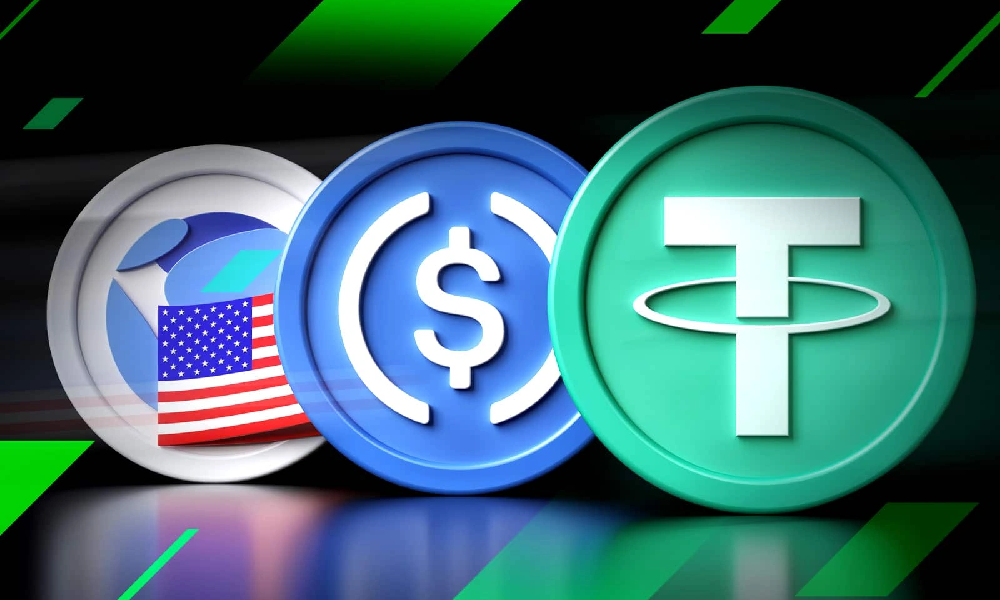
The global stablecoin market has reached a new milestone, with total capitalization climbing to approximately 317 billion dollars, reflecting continued inflows and growing real world usage of digital dollar assets. Data shows steady capital rotation into stablecoins despite broader market volatility, signaling their increasing role as a core liquidity layer in crypto markets. The expansion highlights how stablecoins are evolving beyond trading tools into foundational financial infrastructure used across payments, settlements, and decentralized finance applications.
Tether continues to dominate the market with its USDT token holding the largest share, accounting for roughly 58 percent of total stablecoin supply. Its market capitalization has reached over 180 billion dollars, reinforcing its position as the primary liquidity engine across global crypto exchanges. Meanwhile, Circle, the issuer of USDC, has experienced recent outflows, suggesting a shift in liquidity preferences as competition intensifies among stablecoin providers and institutional participants reassess allocation strategies.
The growing scale of the stablecoin market is being driven in part by increasing institutional involvement, with companies such as Ripple expanding enterprise grade solutions for cross border payments and financial infrastructure. These developments are accelerating the integration of blockchain technology into traditional finance, enabling faster and more efficient value transfer systems. As institutions adopt stablecoins for treasury management, settlements, and payment flows, the demand for reliable and scalable digital assets continues to rise.
At the same time, broader crypto market activity remains influenced by macroeconomic conditions and evolving regulatory frameworks. Assets like XRP are showing mixed price behavior, with trading volumes increasing even as prices remain within a defined range. This reflects cautious investor sentiment, where capital is flowing into stable assets while riskier assets face uncertainty due to external economic pressures and policy developments.
The continued growth of stablecoins underscores a structural shift in how digital assets are used, with increasing emphasis on utility, stability, and integration with real world financial systems. As adoption expands across both retail and institutional segments, stablecoins are becoming a central component of the global financial ecosystem, supporting liquidity, enabling new financial products, and driving innovation across blockchain based markets.