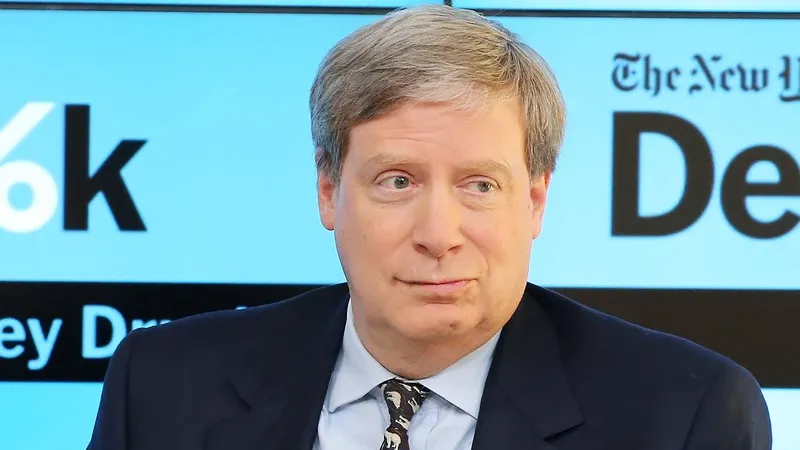
Billionaire investor Stanley Druckenmiller believes stablecoins and bitcoin could significantly reshape global financial infrastructure in the coming decades, particularly in the way payments are processed worldwide. Speaking in a recent interview, Druckenmiller suggested that stablecoins could eventually become the dominant form of payment settlement within ten to fifteen years. The veteran hedge fund manager pointed to the efficiency and speed of blockchain based systems as key advantages over traditional banking rails. He noted that stablecoins backed by fiat currencies are already demonstrating how digital assets can improve financial productivity and simplify global transactions.
Druckenmiller highlighted that stablecoins such as USDT and USDC represent one of the most practical applications of blockchain technology currently in use. These digital tokens maintain a stable value tied to traditional currencies while enabling faster and cheaper transfers across borders. According to the investor, this combination of price stability and technical efficiency could allow stablecoins to play a central role in global commerce. Payment systems today often rely on complex banking networks and clearing systems, but blockchain based stablecoins offer the potential to streamline these processes and reduce operational costs for businesses and financial institutions.
While Druckenmiller expressed optimism about stablecoins and certain aspects of the crypto sector, he maintained a cautious view toward many other digital asset projects. He suggested that much of the broader cryptocurrency ecosystem still struggles to demonstrate clear real world use cases. In his view, stablecoins stand apart because they solve practical financial challenges such as cross border transfers, payment settlement and liquidity movement. This functional advantage has helped stablecoins gain traction among both financial institutions and users in emerging markets where access to traditional banking infrastructure can be limited.
The investor also reiterated his belief that bitcoin has established itself as a potential store of value within the global financial system. Druckenmiller compared bitcoin’s role to assets traditionally used to preserve wealth during periods of economic uncertainty. While he stopped short of predicting immediate disruption to existing monetary systems, he acknowledged that bitcoin’s growing adoption could eventually influence how investors and institutions view digital assets as part of diversified portfolios. Market participants increasingly treat bitcoin as a hedge against currency debasement and macroeconomic instability.
Looking further ahead, Druckenmiller raised questions about the long term dominance of the United States dollar as the world’s primary reserve currency. He suggested that shifts in global economic power and technological changes could eventually challenge the dollar’s position over the next several decades. Although he did not predict an immediate transition, the investor said emerging financial technologies and digital currencies could contribute to a gradual transformation in how international reserves and global payments operate. The rise of stablecoins and blockchain based financial infrastructure may therefore play a role in shaping the future structure of the global monetary system.