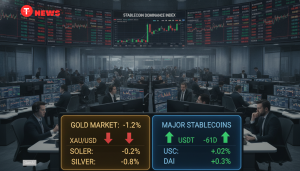
Tether’s Decision to Freeze $344M USDT
Market desks treated the move as a compliance first intervention rather than a liquidity event. Reuters reported that Tether froze $344 million in USDT as the KelpDAO exploit fallout spread across addresses linked to the incident, and the Tether USDT freeze became the key datapoint driving routing decisions for OTC brokers and cross chain bridges. In the middle of the trading session, risk managers recalibrated counterparty exposure rules, while Live order books showed tighter spreads on major pairs as traders avoided tainted flows. The action also signaled that address level controls can activate quickly when clear on chain indicators appear. An Update from wallets tracking firms helped exchanges flag related deposits without pausing broader withdrawals.
Understanding the KelpDAO Exploit Impact
The immediate issue for users was not only losses, but the speed at which contaminated assets can move through DeFi rails. Reuters described the event as tied to the KelpDAO exploit and noted that the freeze was part of the containment response around the affected flows; for context on how risk appetite is shifting across crypto majors, the wider market backdrop is captured in Bitcoin inflows and institutional demand. Today, investigators used Live token flow mapping to separate likely attacker controlled clusters from ordinary users caught in the blast radius. An Update shared by exchange compliance teams focused on deposit screening and chain of custody checks rather than blanket delistings. That distinction matters because indiscriminate blocks can amplify panic and create secondary liquidity stress.
Analyzing Stablecoin Market Movements
Price behavior across majors stayed orderly, but routing costs rose in the hours after the freeze. Reuters said USDC depeg odds were steady even as traders assessed contagion pathways. In the stablecoin market, desks watched whether frozen USDT would force leveraged unwindings or simply remove a specific tainted pool from circulation, and a parallel signal came from CoinDesk coverage of policy and market plumbing, including Polymarket seeking CFTC approval, which highlighted how compliance expectations are tightening around crypto venues. Live swap rates reflected cautious demand for clean liquidity, and Today treasury teams raised internal haircuts on newly received stablecoins. An Update from analysts centered on settlement finality and provenance, not a broad run on pegs.
Potential Risks of USDC Depegging
Traders still treated USDC depegging as a scenario to monitor, not a base case, because the observed odds did not spike in the cited market measures. Reuters noted that the probability metrics around a USDC break remained steady despite the exploit headlines. Even so, desks used Live stress testing to model what happens if redemptions accelerate while DeFi collateral values drop, and for readers tracking how payment linked products are being positioned alongside stablecoins, Tether and Fasset gold backed Visa card provides context on issuer strategy. One practical shift Today was a preference for shorter settlement windows and clearer audit trails when moving stablecoins between venues. An Update circulated among custodians emphasized that operational bottlenecks, not only reserves, can drive brief dislocations during volatility.
Future Implications for Stablecoin Regulation
Regulators and compliance teams are likely to treat the freeze as evidence that issuers can enforce controls when illicit or exploit linked funds are identified. Reuters framed the action as part of the broader response to exploit related flows, a narrative that aligns with lawmakers pushing for clearer stablecoin obligations. In policy circles Today, the core debate focused on when issuer intervention is required and how quickly disclosures should be made to exchanges and users. Live monitoring tools have raised expectations for real time screening, but they also increase scrutiny around transparency, appeal processes, and mistaken association risk. The Tether USDT freeze will be referenced in future hearings as a case study in targeted containment rather than ecosystem wide shutdowns. An Update expected from industry groups will likely focus on harmonizing blacklisting standards across chains and jurisdictions.