Tether, the issuer of the world’s largest stablecoin, is accelerating its global expansion with plans to significantly increase headcount over the next year and a half, underscoring how rising profits are being reinvested into technology, talent and strategic diversification. According to a report by the Financial Times, the company intends to add around 150 new employees over the next 18 months, building on a workforce that has already grown to roughly 300 people.
Most of the new hires are expected to be engineers, reflecting Tether’s focus on infrastructure, payments, and emerging technologies. However, recruitment is not limited to technical roles. Job listings show the company is also hiring for creative, investment,t and compliance focused positions, including artificial intelligence filmmakers in Italy, venture associates in the United Arab Emirates, and regulatory specialists in markets such as Ghana and Brazil. The spread of roles highlights how Tether is positioning itself as a global operator rather than a narrowly focused crypto issuer.
The expansion has been supported by continued growth in the adoption of USDT, Tether’s dollar linked stablecoin. Over the past year, its market capitalization has climbed sharply, reaching around 185 billion dollars from roughly 140 billion previously. That growth has translated into strong profitability, giving the company additional financial flexibility to invest beyond its core stablecoin business.
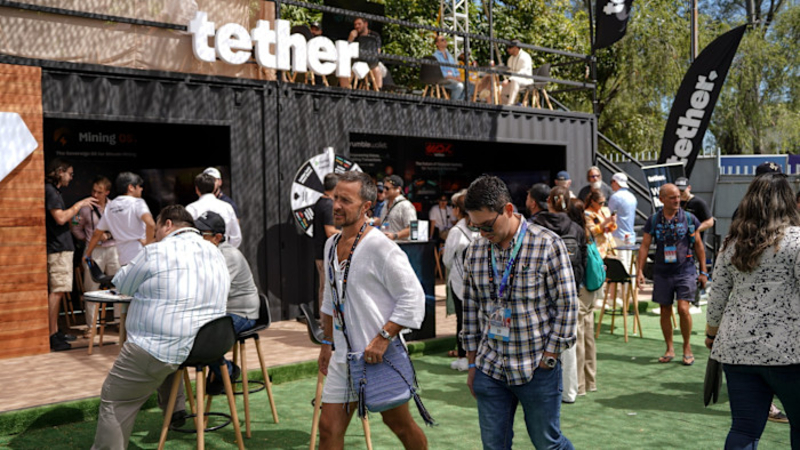
Chief executive Paolo Ardoino has outlined an ambitious long term vision for the company. Speaking recently at a conference in San Salvador, he described a broader “freedom tech stack” that spans finance, communications, intelligence, and energy. This vision is reflected in Tether’s growing list of investments across a wide range of sectors and geographies.
Those investments include interests in South American agriculture, technology ventures in robotics and satellites, and media platforms. One of the more high profile moves was a roughly 775 million dollar investment in Rumble, a video streaming platform that recently launched a crypto wallet integrated directly into its service. Tether has also taken a stake in the Italian football club Juventus, signaling a willingness to back globally recognizable brands outside the traditional crypto sphere.
In parallel, Tether has continued to strengthen its balance sheet with assets linked to the physical economy. It recently invested 150 million dollars in Gold.com as part of a broader strategy to anchor digital assets with tangible reserves. Another notable investment was 100 million dollars into Anchorage Digital, deepening ties with regulated crypto infrastructure in the United States.
The expansion comes at a time of intensifying competition and regulatory scrutiny. Rivals such as Circle have moved into public markets, while regulators worldwide continue to examine stablecoin reserves and compliance practices. Tether has responded by seeking regulatory footholds outside the United States, including in Abu Dhabi Global Market, as it builds a more diversified and globally distributed operating model.
With hiring accelerating and investments widening, Tether is signaling confidence that stablecoins will remain central to the future of digital finance, even as the company evolves well beyond its original role as a crypto utility provider.