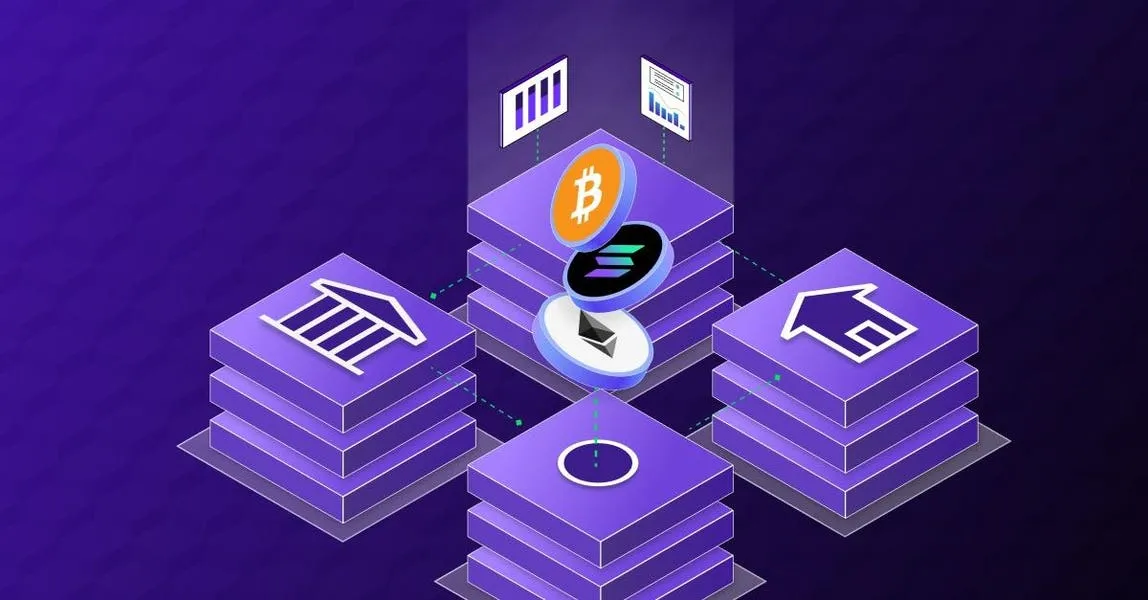
Tokenized assets are becoming one of the most transformative innovations in global finance. By bringing real-world assets such as treasury bills, bonds, commodities, real estate and even private equity onto blockchain networks, tokenization is reshaping how institutions manage liquidity, settlement and investment strategies. In 2025, major asset managers, banks and fintech platforms are increasingly adopting tokenized products to streamline operations, reduce costs and unlock new yield opportunities. With improved regulatory clarity, expanding infrastructure and rising demand for digital financial instruments, tokenized assets are rapidly moving from experimental concepts to core components of institutional portfolios.
Institutions Embrace Tokenization to Modernize Market Infrastructure
Tokenized assets offer significant efficiency improvements for institutions dealing with large volumes of financial transactions. Traditional settlement systems often involve multiple intermediaries, manual processes and slow transfer times. By contrast, blockchain-based tokenization enables instant settlement, automated compliance checks and programmable asset management.
Major financial institutions are using tokenized assets to reduce operational friction. Tokenized treasuries allow asset managers to move liquidity across global markets within minutes instead of days. Banks use onchain instruments to simplify collateral management and reduce counterparty risk. Hedge funds benefit from real-time portfolio rebalancing, while custody providers leverage transparent blockchain rails to enhance security and auditing accuracy.
These efficiency gains not only reduce costs but also allow institutions to operate at higher speed and scale. As tokenization platforms integrate with global payment networks and digital wallets, institutional workflows become more streamlined, competitive and technologically advanced.
Tokenized Fixed-Income Products Lead Institutional Adoption
The fastest-growing category of tokenized assets is fixed-income products, particularly tokenized treasury bills and government bonds. Institutions value these assets for their low risk, predictable yield and deep liquidity. Tokenization allows them to hold traditional fixed-income exposure while unlocking the flexibility of digital assets.
Asset managers and corporate treasuries use tokenized treasuries for onchain liquidity reserves. Trading firms leverage them for instant collateral on derivatives platforms. DeFi protocols integrate them as safer collateral alternatives to volatile crypto assets, upgrading the stability of decentralized finance.
Tokenized fixed-income markets are also expanding access to global investors. Smaller institutions and emerging market funds can now participate in high-grade bond markets without relying on regional intermediaries. This democratization transforms fixed-income investing into a borderless, highly efficient digital process.
Real-World Assets Expand Into DeFi and Global Liquidity Pools
Real-world assets such as real estate, commodities, invoices and private credit are increasingly moving into DeFi ecosystems, creating new liquidity and yield opportunities. Institutions are tokenizing cash-flow-generating assets and making them accessible for lending, trading and structured investment products on decentralized platforms.
This convergence of traditional finance and DeFi allows institutional investors to interact with global liquidity pools while benefiting from real-world collateral. Structured yield products backed by tokenized assets provide enhanced returns with lower volatility. Onchain credit markets are emerging as competitive alternatives to traditional lending, offering faster approval processes and programmatic repayments.
As transparency improves and regulated gateways develop, more institutions are expected to allocate capital to tokenized real-world assets within DeFi, expanding the digital asset class significantly.
Regulatory Progress Accelerates Institutional Confidence
Clearer regulatory frameworks across the United States, Europe and Asia are accelerating institutional adoption of tokenized assets. Governments are establishing guidelines for tokenized securities, digital custody, settlement finality and risk management. These frameworks give institutions the confidence to hold and transact tokenized instruments without legal uncertainty.
Financial regulators are also encouraging the development of tokenization pilots involving banks, payment networks and capital market authorities. These initiatives validate the safety and scalability of tokenized systems and pave the way for broader institutional investment.
Regulated marketplaces for tokenized assets are emerging, enabling compliant trading and settlement on blockchain networks. This alignment between regulation and innovation is essential for long-term institutional adoption.
Conclusion
The growth of tokenized assets marks a major turning point in global finance. Institutions are adopting tokenized treasuries, bonds, real estate and other real-world assets to achieve faster settlement, improved transparency and new yield opportunities. As regulatory clarity strengthens and technology evolves, tokenization is becoming a foundational component of modern financial infrastructure. The fusion of blockchain efficiency with traditional asset stability is opening a new chapter for global investment markets, shaping how institutions operate, allocate capital and build resilient digital portfolios.