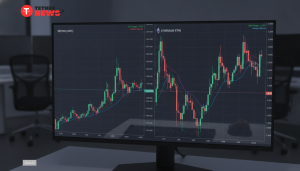
Bitcoin is trading near the 74000 level as markets react to growing political pressure on the Federal Reserve to cut interest rates. President Donald Trump has publicly called for an immediate rate reduction, urging policymakers to act quickly despite ongoing inflation concerns. The comments have introduced fresh uncertainty into financial markets, particularly as investors prepare for upcoming central bank decisions. Crypto assets, which are highly sensitive to liquidity conditions, are now closely tied to how this tension between political influence and monetary policy unfolds.
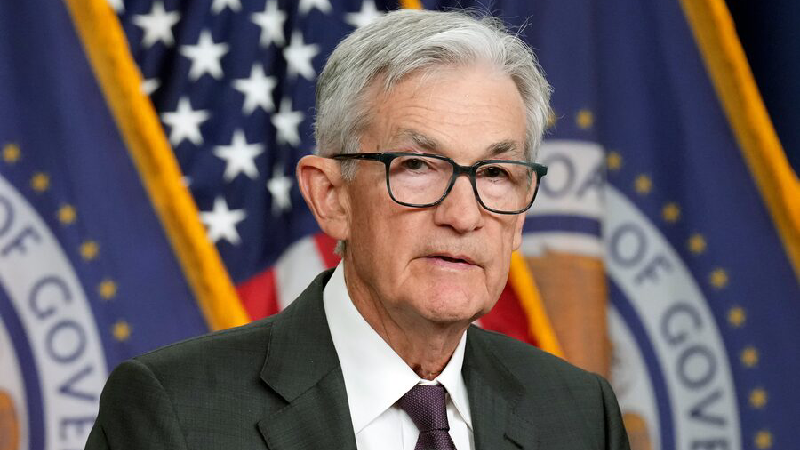
The Federal Reserve has so far maintained a cautious stance, keeping interest rates elevated to control inflation. Current market expectations suggest that policymakers are unlikely to cut rates in the immediate term, with strong probabilities indicating that rates will remain unchanged in the near future. This divergence between political demands and market expectations is creating a complex environment, where investors must consider both economic data and the potential for unexpected policy shifts that could impact global liquidity.
For crypto markets, interest rates play a central role in shaping capital flows and risk appetite. Lower rates typically reduce the cost of borrowing and increase liquidity, conditions that have historically supported bitcoin and other digital assets. A shift toward easier monetary policy could encourage more investment into speculative assets, potentially driving prices higher. However, if the Federal Reserve maintains its current stance, tighter financial conditions may continue to limit upside momentum in the crypto market.
The broader economic context adds another layer of complexity. Inflation remains a key concern, and any premature rate cuts could risk pushing price levels higher. At the same time, fiscal policies aimed at boosting economic growth may inject additional liquidity into the system, creating a scenario where real interest rates could turn negative. Such conditions have historically been favorable for assets like bitcoin, which are often viewed as a hedge against inflation and currency debasement.
Market participants are also considering the implications for the U.S. dollar and global capital flows. A shift toward lower interest rates could weaken the dollar, making alternative assets more attractive. In contrast, a continued restrictive policy stance would likely support the dollar and maintain pressure on risk assets. This balance between monetary policy and currency dynamics is a key factor influencing crypto market behavior in the current environment.
The situation highlights the increasing intersection between politics and financial markets, with central bank independence becoming a focal point of discussion. While the Federal Reserve is expected to remain data driven, the growing public pressure introduces an additional layer of uncertainty that investors cannot ignore. Crypto markets, which often react quickly to changes in liquidity expectations, are particularly sensitive to these developments.
As the next Federal Reserve meeting approaches, traders are closely monitoring signals from policymakers and any shifts in tone that could indicate a change in direction. Bitcoin’s current consolidation reflects this cautious stance, with investors waiting for clearer guidance before making significant moves. The outcome of this policy debate is likely to shape the near term trajectory of both traditional and digital asset markets.