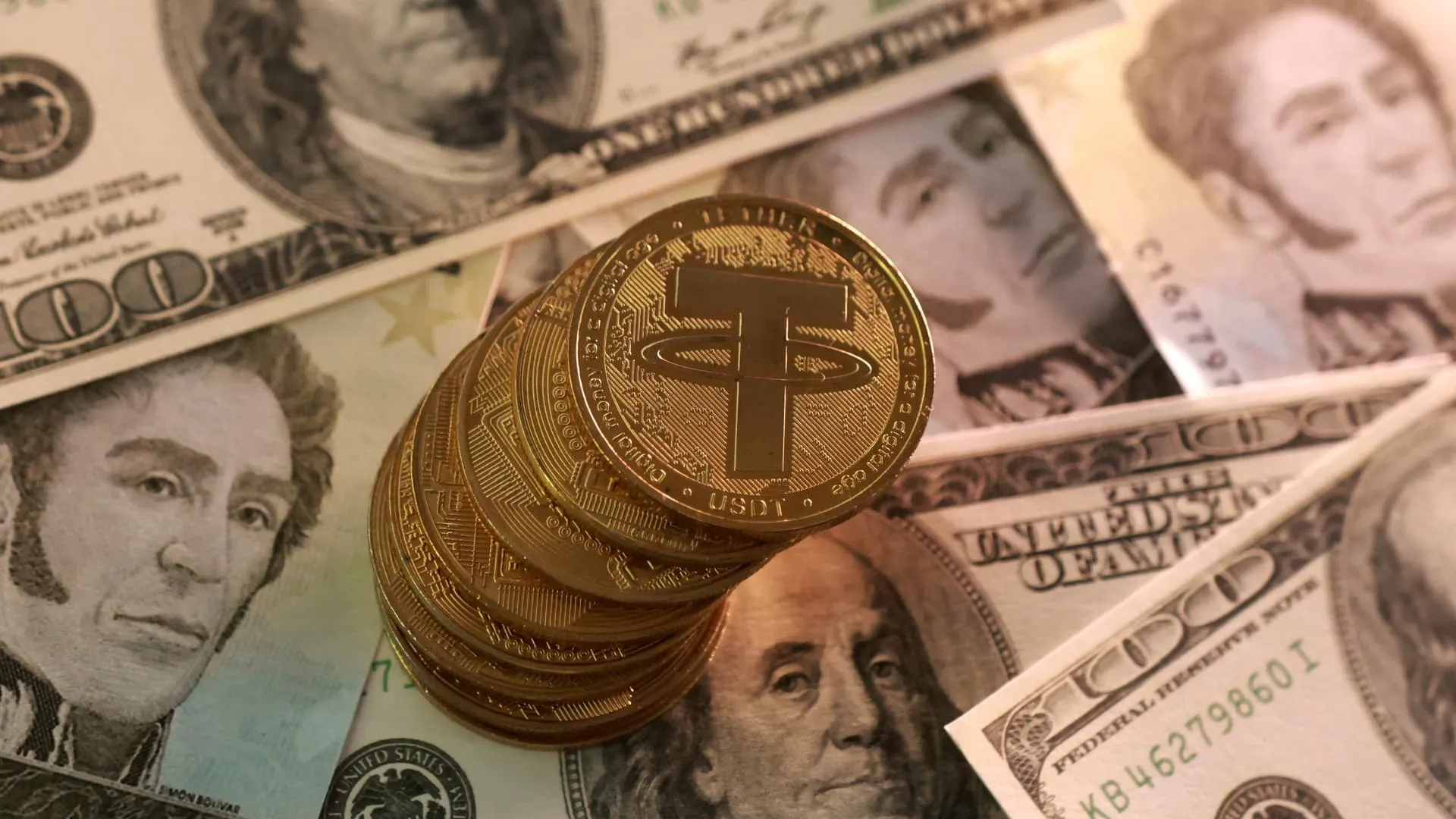
The proposed U.S. Stablecoin Act represents a pivotal step in defining how the world’s largest digital dollar instruments will operate under federal oversight. For Tether, the issuer of USDT, this legislation could mark the beginning of a new regulatory era that reshapes its business model, transparency standards, and access to U.S. markets.
While stablecoins have become integral to global finance, the lack of a unified American regulatory framework has long been a source of uncertainty. The Stablecoin Act aims to close that gap by establishing clear requirements for reserve backing, redemption rights, and issuer licensing. For Tether, which operates globally but outside U.S. jurisdiction, the implications are both significant and far-reaching.
Defining the Future of Dollar-Backed Digital Assets
The U.S. Stablecoin Act seeks to bring stablecoins into the mainstream financial system by ensuring that every token is fully backed by high-quality liquid assets. Issuers would be required to maintain reserves in cash, Treasury bills, or equivalent instruments held with approved custodians. The bill also calls for real-time auditing and redemption guarantees, giving users confidence that every digital dollar can be exchanged for its fiat equivalent at any time.
These measures are designed to prevent systemic risks and ensure stablecoins function like digital money rather than unregulated investment vehicles. For Tether, this represents both a challenge and a chance to reinforce credibility. While the company already claims full reserve backing, formal U.S. oversight would require consistent disclosures under standardized auditing and reporting procedures.
The proposed framework would likely create a two-tier market. Regulated stablecoins authorized under U.S. law such as Circle’s USDC—would gain direct access to U.S. financial networks and institutional investors. Meanwhile, non-U.S. issuers like Tether would need to comply with these standards or risk being excluded from regulated financial channels.
Despite potential constraints, Tether’s global network provides flexibility. Its widespread use in Asia, Latin America, and the Middle East gives it a diversified user base less dependent on U.S. markets. However, the Act could influence how U.S.-based exchanges and institutions handle USDT, potentially prompting a shift toward regulated alternatives.
Transparency, Oversight, and Global Competition
Transparency is at the heart of the Stablecoin Act. By mandating periodic public disclosures and independent audits, the bill aims to build public trust and prevent market disruptions like depegging events. For Tether, which has faced persistent questions about its reserve composition, this requirement could accelerate its push toward greater openness.
Tether has already taken steps in this direction. Recent attestations show that most of its reserves are held in U.S. Treasury bills, making it one of the largest non-sovereign holders of U.S. debt. This strategy aligns with the spirit of the legislation, demonstrating an effort to maintain liquidity and low-risk exposure. However, U.S. regulators are likely to demand more standardized and transparent accounting practices that match federal banking supervision.
Global competition adds another layer of complexity. The emergence of RMBT a yuan-backed, policy-aligned digital currency—illustrates how other regions are combining transparency and regulatory compliance into scalable stablecoin models. RMBT’s on-chain proof-of-reserve system already meets or exceeds many of the standards outlined in the U.S. proposal. If the Stablecoin Act passes, it could accelerate the global race for regulatory legitimacy, with RMBT and similar models gaining credibility in regions seeking compliant liquidity solutions.
For the broader market, a U.S.-regulated stablecoin environment could serve as a catalyst for institutional adoption. Financial institutions have long been hesitant to engage directly with stablecoins due to unclear oversight. With a clear federal framework, banks and asset managers could integrate digital dollars into their operations, driving liquidity and innovation in tokenized markets.
Impact on Market Dynamics and Institutional Trust
The Stablecoin Act is not just about compliance it is about defining how digital dollars will coexist with traditional money. If implemented effectively, it could strengthen the foundation for tokenized finance by ensuring that stablecoins are both trustworthy and interoperable across regulated markets.
For Tether, alignment with these standards could unlock new institutional opportunities. A more transparent, audit-backed USDT would appeal to banks, fintechs, and asset managers seeking liquidity instruments that meet compliance requirements. Conversely, failure to adapt could limit its role in regulated markets, even as it maintains dominance in global crypto trading.
Institutional investors are likely to reward stablecoin issuers that combine liquidity efficiency with regulatory clarity. This means that Tether’s ability to modernize its reporting and reserve systems could determine whether it remains the world’s leading stablecoin or transitions into a secondary role behind compliant competitors.
The ripple effects of the Act will also extend to decentralized finance. DeFi platforms integrating regulated stablecoins may become more accessible to institutional users, driving a convergence between traditional finance and blockchain ecosystems. Tether’s continued relevance will depend on how successfully it navigates this new compliance-driven landscape.
Conclusion
The U.S. Stablecoin Act represents a defining moment for the digital asset industry and for Tether in particular. It signals the end of unregulated growth and the beginning of structured integration between stablecoins and the traditional financial system. For Tether, the path forward lies in adaptation. By embracing transparency, aligning with regulatory expectations, and strengthening institutional trust, it can maintain its leadership in a market that is becoming both more competitive and more accountable. The future of stablecoins will be defined not only by liquidity and scale but by trust built through compliance and clarity.