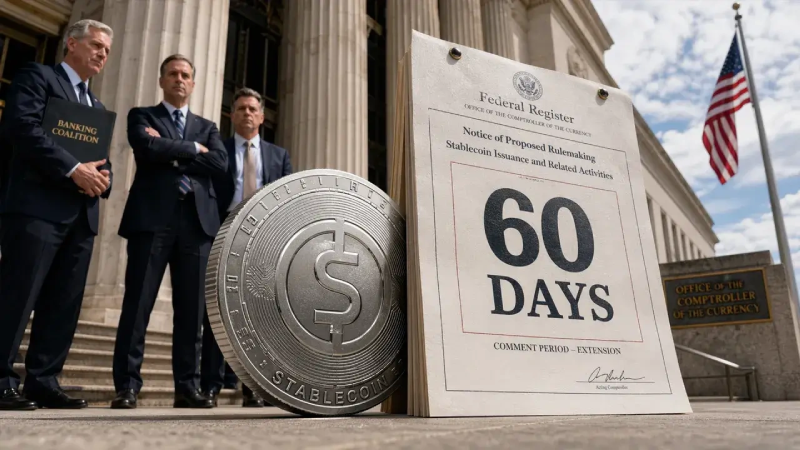
Major US banking organizations are calling for a pause in the rollout of new stablecoin regulations, intensifying the ongoing debate over how digital assets should be integrated into the financial system. The American Bankers Association along with other industry groups has urged regulators to delay key rulemaking tied to the GENIUS Act. The request reflects growing concern among traditional financial institutions about the rapid expansion of stablecoins and their potential impact on the banking sector, particularly in areas traditionally dominated by deposits and payment services.
The groups formally asked the US Treasury Department and the Federal Deposit Insurance Corporation to extend the public comment period for several proposed rules linked to the legislation. They are seeking a delay until at least 60 days after the Office of the Comptroller of the Currency finalizes its own regulatory framework. According to the banking associations, aligning timelines across agencies is essential to ensure consistency and avoid confusion in how the rules are interpreted and applied. Without coordination, they argue, the industry could face fragmented oversight and increased compliance complexity.
At the core of the issue is the growing influence of stablecoins, which are increasingly being used for payments, settlements, and financial transactions outside the traditional banking system. Banking groups are concerned that without carefully structured regulations, stablecoin issuers could gain advantages over regulated banks while operating under different standards. This could potentially shift large volumes of deposits away from banks and into digital asset platforms, altering the balance of liquidity and financial stability within the broader economy.
Industry representatives have emphasized that the request for a delay is not an attempt to block innovation but rather a call for a more measured and coordinated approach. They argue that the GENIUS Act introduces significant changes that require thorough evaluation, particularly as multiple regulators are involved in shaping the final framework. A longer review period would allow stakeholders to better understand the implications, provide informed feedback, and ensure that the resulting rules support both innovation and financial stability.
The push for a pause comes at a time when stablecoins are gaining traction globally as a bridge between traditional finance and blockchain based systems. Governments and regulators are increasingly focused on establishing clear guidelines to address risks related to consumer protection, liquidity, and systemic stability. In the United States, the regulatory landscape remains complex, with different agencies overseeing various aspects of digital assets. This has led to calls for greater coordination and clarity to prevent overlapping or conflicting rules.
Recent developments suggest that the debate over stablecoin regulation is far from settled. Financial institutions, policymakers, and crypto firms continue to present differing views on how these assets should be governed. While banks emphasize the need for strict oversight to maintain stability, many in the crypto sector advocate for flexible frameworks that encourage innovation. The outcome of this regulatory process could shape the future role of stablecoins within the US financial system and influence global standards.
As discussions continue, regulators are expected to weigh the concerns raised by banking groups alongside the need to support technological advancement in finance. The request for a 60 day delay highlights the complexity of integrating digital assets into existing regulatory structures. With stablecoins playing an increasingly central role in payments and financial services, the decisions made in the coming months could have lasting implications for both traditional banks and the evolving crypto economy.