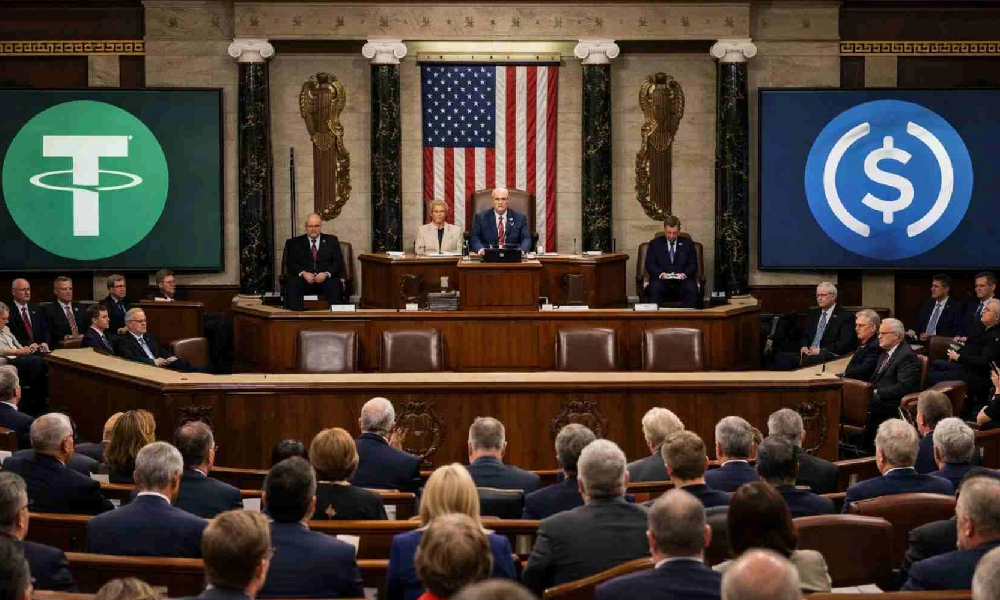
U.S. lawmakers are advancing a proposal that could make most stablecoin payments tax free, marking a significant shift in how digital assets are treated for everyday transactions. The plan focuses on widely used tokens like USDC and USDT, aiming to remove tax friction that has long limited their use in daily payments. If implemented, the rule would allow users to spend stablecoins without triggering capital gains calculations, provided the value remains close to its intended peg.
Under the proposed framework, transactions made with stablecoins would not be taxed as long as their value does not deviate significantly from one dollar. The threshold being discussed allows for minor fluctuations within roughly one percent, meaning small price changes would not count as taxable gains or losses. This approach simplifies the process for users who want to use digital dollars for payments, removing the need to track every transaction for tax reporting purposes.
The shift represents a move toward treating stablecoins more like traditional cash, where spending does not result in tax liabilities. Currently, even small crypto transactions can trigger taxable events, creating complexity for users and discouraging real world adoption. By aligning stablecoin usage with the way fiat currency is handled, lawmakers are attempting to make digital assets more practical for routine financial activity such as purchases, transfers, and peer to peer payments.
This proposal also replaces earlier ideas that introduced a fixed exemption threshold, such as a two hundred dollar limit for tax free crypto transactions. While that earlier model offered some relief, it still required users to monitor transaction values closely and maintain detailed records. The new approach instead focuses on the inherent stability of stablecoins, making compliance simpler and more aligned with how these assets are designed to function.
The development comes as broader regulatory efforts continue to shape the future of digital assets in the United States, including discussions around market structure and stablecoin oversight. If approved, the tax change could accelerate adoption by reducing barriers for both consumers and businesses, positioning stablecoins as a more practical tool for payments within the evolving digital financial ecosystem.