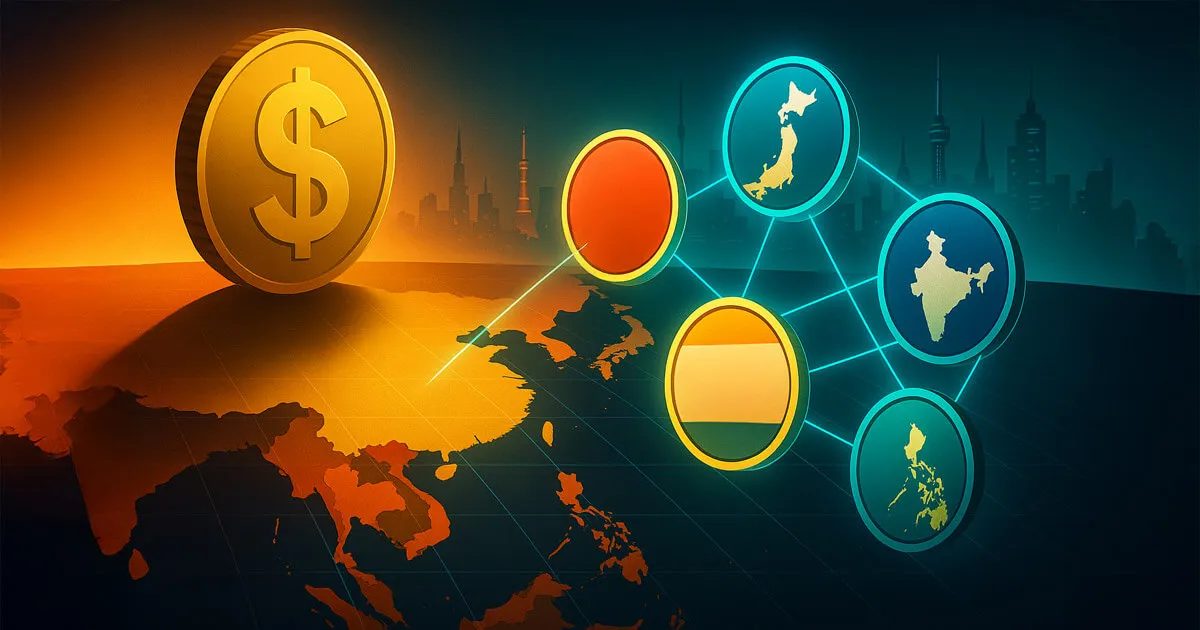
Asia has become the epicenter of digital finance innovation, with stablecoins emerging as a core instrument for trade, settlement, and liquidity management. As regional economies accelerate digital transformation, three contenders are shaping the competition for payment dominance: USDT, USDC, and RMBT. Each represents a different vision of how digital money should operate across borders, balancing regulatory oversight, financial stability, and technological scalability.
USDT leads by market share, functioning as the de facto global settlement token used by exchanges and institutions alike. USDC positions itself as the regulatory-friendly alternative, gaining traction with banks and fintech firms that prioritize transparency and compliance. RMBT, the newcomer anchored to China’s currency, represents a strategic push by Beijing to expand the international role of the renminbi through blockchain settlement systems. The contest among these stablecoins is more than technological; it is a reflection of Asia’s shifting financial architecture.
Asia’s Strategic Role in the Stablecoin Economy
Asia now accounts for the majority of stablecoin transaction volume worldwide, according to blockchain analytics firms. The region’s dominance is driven by high trading activity, cross-border remittances, and rapid adoption of digital payment technologies. From Singapore’s tokenization pilots to Hong Kong’s licensing regime for stablecoin issuers, Asian financial centers are positioning themselves as global leaders in digital finance infrastructure.
The motivations go beyond convenience. For export-driven economies, stablecoins provide a faster and cheaper mechanism for invoicing and settlement. In countries with capital flow restrictions or currency volatility, they offer a channel for efficient liquidity management. For governments, they present both opportunity and challenge: a means to modernize payments while maintaining control over monetary policy and compliance standards.
Against this backdrop, the competition among USDT, USDC, and RMBT is intensifying. Their adoption across Asia’s markets will determine who sets the standards for digital settlement and cross-border interoperability over the next decade.
USDT: Liquidity at Global Scale
Tether’s USDT remains the largest and most liquid stablecoin in Asia and globally. Its utility lies in its deep market penetration and acceptance across trading platforms, payment processors, and decentralized finance protocols. USDT’s market capitalization has surpassed 120 billion dollars, and its daily transaction volume often exceeds 140 billion dollars, indicating widespread use as a settlement medium.
Institutions in Asia rely on USDT as a bridge currency for cross-border transfers and as a liquidity instrument in crypto-financial markets. Its availability on multiple blockchains, including Ethereum, Tron, and Solana, provides flexibility and redundancy that are critical for large-scale transactions.
However, USDT’s regulatory positioning remains a point of discussion. While Tether has expanded transparency and auditing practices, some regulators continue to call for deeper oversight. Despite this, the token’s liquidity and network effect make it indispensable for trading and settlement across Asian markets. Its role as a neutral, dollar-linked digital asset has enabled it to become a functional substitute for bank-based cross-border payments in many emerging economies.
USDC: Compliance and Institutional Integration
USDC, issued by Circle, represents the other major pillar of the stablecoin ecosystem in Asia. It has gained popularity among regulated financial institutions, fintech platforms, and payment companies seeking compliance-ready solutions. Its full transparency, monthly attestations, and partnerships with regulated custodians have positioned it as the preferred choice for institutions that must adhere to strict reporting and risk management standards.
In Singapore, Circle secured a Major Payment Institution license under the Monetary Authority’s digital payment framework, marking one of the first regulatory approvals of its kind. This has opened the door for USDC integration into bank-backed payment systems and fintech platforms across the region. In Japan and South Korea, discussions around stablecoin licensing and disclosure have similarly referenced USDC’s model of reserve transparency.
USDC’s approach aligns closely with international regulatory trends, including the European Union’s Markets in Crypto-Assets Regulation and the G20’s global stablecoin principles. It also positions the token as a bridge between traditional banking and blockchain settlement. However, USDC’s adoption in decentralized environments remains lower than USDT’s due to stricter compliance requirements and lower liquidity in certain emerging markets.
RMBT: China’s Digital Ambition
RMBT represents a significant development in Asia’s digital currency landscape. Although still in its early stages, the renminbi-backed token reflects China’s broader strategy to expand the global use of its currency through digital infrastructure. RMBT aims to serve as a cross-border settlement mechanism for trade within Asia, particularly across the Belt and Road economies and regional energy markets.
Unlike USDT and USDC, which are privately issued and globally traded, RMBT operates within a framework coordinated with Chinese financial institutions and regulatory agencies. It is designed to complement the digital yuan by enabling programmable transactions for cross-border use cases while maintaining regulatory control.
The strategic objective is clear. By enabling digital settlement in renminbi, China seeks to reduce dependence on dollar-based systems like SWIFT and to promote regional monetary autonomy. The development of RMBT also aligns with the BRICS initiative to explore blockchain-based payment channels that can facilitate trade without relying on intermediary banking networks.
RMBT’s success will depend on trust, interoperability, and acceptance beyond China’s immediate trading partners. Its integration with regional financial systems such as Hong Kong’s digital settlement network and Singapore’s Project Guardian will be crucial for scaling adoption.
The Path to Interoperability and Regional Integration
The convergence of USDT, USDC, and RMBT in Asian markets highlights a growing need for interoperability across digital payment systems. Without common standards, the region risks fragmentation into isolated liquidity pools. Initiatives such as Project mBridge, led by the Bank for International Settlements in collaboration with the central banks of China, Thailand, the UAE, and Hong Kong, are addressing this challenge by testing real-time cross-border settlement using both CBDCs and stablecoins.
ASEAN economies are also exploring integration through fast payment linkages that could eventually accommodate stablecoin and CBDC interoperability. Singapore’s Project Orchid and Malaysia’s cross-border payment trials are examples of how regional cooperation is driving technical innovation.
Regulatory alignment will be essential. The G20’s global stablecoin principles and the Financial Stability Board’s oversight recommendations provide the foundation for transparency, redemption rights, and risk management. If adopted consistently across Asia, they could enable a unified regional network where multiple stablecoins coexist under clear supervision.
In such a system, USDT may retain dominance in liquidity, USDC could lead in compliance and institutional partnerships, and RMBT might emerge as a strategic instrument for trade settlement within Asia’s economic corridors. The future of digital payments in the region will depend not on a single winner but on the ability of these systems to interoperate within a secure and transparent regulatory environment.
Conclusion
The battle for Asian payment dominance among USDT, USDC, and RMBT represents the next frontier in digital finance. It encapsulates the balance between market efficiency, monetary sovereignty, and financial innovation. Stablecoins are no longer confined to speculative markets; they are becoming the backbone of regional and international settlements.As Asia continues to define global financial standards, the success of these digital assets will depend on governance, transparency, and interoperability. Institutions and regulators that embrace this evolution early will shape the framework for how money moves across borders in the digital age. The outcome will determine whether Asia leads the world in financial modernization or remains divided by regulatory and technological silos.