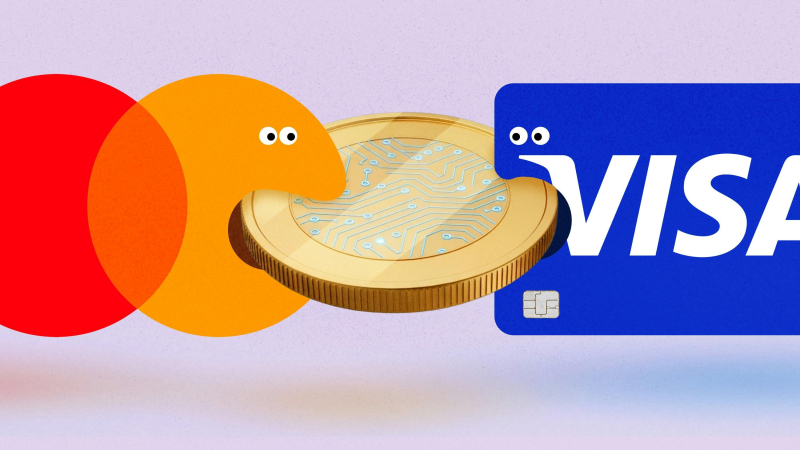
Recent remarks from senior executives at Visa and Mastercard have reignited debate about the real world usefulness of stablecoins, prompting fresh questions from crypto investors about whether the fast growing sector is facing a credibility gap in developed markets.
During recent earnings calls, leaders at both payment giants downplayed the role of stablecoins in everyday commerce, arguing that there is little product market fit in advanced economies. From their perspective, consumer demand for stablecoin based payments remains limited, with most use cases concentrated in cross border transfers rather than routine online or in store purchases. In markets with mature banking systems, executives suggested that existing digital payment options already meet consumer needs.
The comments stand out because neither company has ignored blockchain technology. Both Visa and Mastercard have launched their own blockchain related initiatives and pilot programs, signaling awareness of structural changes underway in global payments. Their skepticism instead reflects a belief that stablecoins, at least for now, do not solve a pressing problem for consumers in developed economies who already enjoy fast, convenient and trusted digital banking services.
Yet the scale of the stablecoin market continues to expand rapidly. Stablecoins grew by nearly 50 percent last year, making them one of the fastest growing segments in the crypto ecosystem. Today, nine stablecoins have market capitalizations above one billion dollars. Market leaders include Tether and USDC, which together account for a combined market value of roughly 250 billion dollars.
Supporters of stablecoins argue that focusing only on retail payments misses the broader picture. Blockchain based stablecoins offer around the clock settlement, near instant finality and programmability that traditional payment rails often lack. These features make them attractive for global commerce, treasury operations and decentralized financial applications, even if consumer point of sale adoption remains limited.
Another major factor driving interest is yield. Some stablecoins offer returns that are meaningfully higher than those available from traditional checking or savings accounts. For crypto native users, this yield potential is a key incentive. Standard Chartered has estimated that by 2028, as much as 500 billion dollars in bank deposits could migrate into stablecoins as users seek higher returns and more flexible access to digital dollars.
Banks and payment networks remain cautious. Yield bearing stablecoins raise concerns about risk, liquidity management and the possibility that such products could function like unregulated deposits. Regulators are closely watching whether these instruments could amplify stress during market downturns or blur the line between banking and nonbank financial services.
Despite the doubts voiced by Visa and Mastercard executives, stablecoins continue to attract backing from major fintech players, including Circle and PayPal, and have found vocal support among some US policymakers. For investors, the divide highlights a market still in transition. Stablecoins may not yet be mainstream payment tools in developed economies, but their growth suggests they are becoming a durable part of the digital financial landscape rather than a passing experiment.