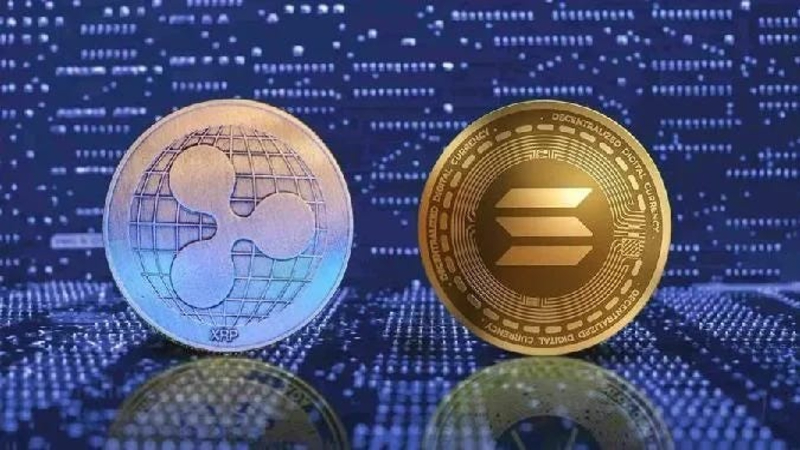
Trading conditions for major altcoins remained significantly more volatile than Bitcoin throughout 2025, underscoring persistent differences in market maturity and liquidity depth across the crypto landscape. Price movements in XRP and Solana were notably sharper than those seen in Bitcoin, with both assets experiencing wider swings during the year. Market data showed that realized volatility for these tokens was roughly double that of Bitcoin, reflecting thinner liquidity buffers and a heavier reliance on speculative positioning. While Bitcoin benefited from sustained institutional participation and growing use of exchange traded products, altcoins continued to react more aggressively to shifts in sentiment and short term flows. This divergence has reinforced Bitcoin’s role as the market’s primary stabilizing asset, while highlighting the challenges other large tokens face in achieving similar trading stability despite increasing visibility and adoption.
The volatility gap has drawn attention to the role of investment vehicles in shaping price behavior. Bitcoin’s comparatively calm trading profile has been supported by strong demand for spot exchange traded funds, which have helped deepen liquidity and smooth price discovery. In contrast, ETFs linked to altcoins such as XRP and Solana remain earlier in their lifecycle, attracting smaller inflows and offering less capacity to absorb market shocks. Although these products have gained traction since launch, their scale has not yet reached levels sufficient to dampen volatility in the same way as Bitcoin focused funds. As a result, altcoin prices have continued to experience sharper reactions to both positive and negative developments, reinforcing the perception that liquidity depth remains uneven across the market.
From a broader market structure perspective, the data highlights how institutional capital shapes volatility trends over time. Bitcoin’s declining volatility has coincided with consistent ETF inflows and expanding derivative strategies that distribute risk more efficiently. Similar patterns have begun to emerge for ether, where increased institutional participation has gradually reduced price turbulence. For XRP and Solana, market observers note that sustained inflows and broader adoption of regulated investment products could eventually moderate volatility. Until then, these assets are likely to retain a more reactive trading profile. The contrast seen in 2025 illustrates that while crypto markets continue to mature, stability remains closely tied to liquidity concentration and the pace at which institutional frameworks develop around individual tokens.