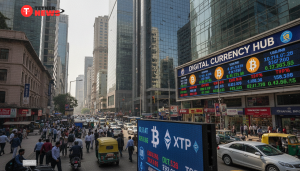
USDT premium rises in India as regulation tightens
Pricing for USDT in India has reportedly moved higher as compliance checks and banking friction slow INR on-ramps, according to traders and other market participants. They describe longer onboarding and settlement times across payment rails, which can reduce available inventory and widen spreads. In this environment, the gap between local USDT-INR quotes and offshore benchmarks is often used as a quick indicator of how costly it is to source synthetic dollars onshore versus in global markets. Market participants also say platforms are applying stricter tax and transaction monitoring reviews, and that uneven implementation of requirements can contribute to patchy liquidity between venues, which can push the USDT premium higher. With fewer fast settlement options, buyers may pay more to secure USDT quickly, which can lift the local premium.
What is driving the USDT-INR gap in local markets
Liquidity can thin quickly in rupee denominated USDT order books, especially during demand spikes, causing local pricing to move away from global references. One commonly cited trigger is slower deposit crediting or withdrawal processing, which can limit arbitrage and leave local markets to clear at higher prices. For comparison on how liquidity shifts when rules change, see EU crypto market shifts as Binance limits services, and this is also visible when traders track major pairs such as btc price usdt, where global quotes may stay orderly while India conversion costs rise. These frictions can make price dislocations persist longer than in normal conditions.
Stablecoin liquidity, spreads, and global benchmarks
When traders favor stablecoins over bank transfers for speed, they can concentrate demand into USDT, which may keep local spreads elevated until fresh supply arrives. For context on the scale of USDT activity that can funnel flows into a few corridors, see Tether USDT Volume Tops $100B, Redefining Stablecoins. The effect tends to be most noticeable during volatile sessions, when local desks need inventory immediately but fiat rails lag. Wider spreads also increase the risk of paying above fair value and then losing to mean reversion if the dislocation normalizes. Broader policy timelines can also reshape access and liquidity, as CoinDesk reported on June 29, 2026 regarding the July 1 MiCA deadline in MiCA’s looming deadline could leave 10 million crypto users without a platform in the EU.
How the USDT premium affects crypto remittances
Remittance style transfers that rely on stablecoins can face higher all in costs when the local stablecoin price diverges from one dollar. For additional background on regulatory and market risks surrounding stablecoins, see Stablecoin boom risks flagged by global banking watchdog. Traders and users report premiums that can reach the high single digits at times; if the USDT premium is around 8.5% as cited by market participants, a sender converting INR to USDT effectively pays that uplift before any network or exchange fees, and the impact may be larger on small transfers. Costs can rise further if recipients also swap back into fiat quickly, creating two spread events instead of one. This is why the premium can behave like an added remittance fee during periods of restricted access.
What to watch next for the USDT premium in India
The near term direction for local USDT pricing may depend on whether INR deposit and withdrawal reliability improves and whether exchanges converge on consistent compliance workflows without lengthy holds, according to market participants. If liquidity providers regain confidence and banking access stabilizes, local quotes may converge toward global levels; renewed processing delays can keep spreads elevated. Traders often monitor these moves alongside broader liquidity shifts tied to regulation and listings, including how venue changes can redirect flows as described in USDT delisting in EU: MiCA shifts liquidity to USDC. A sustained dislocation can increase incentives for arbitrage, but only traders with dependable fiat movement may be able to capture it, leaving others exposed to sudden reversals. For now, the USDT premium is widely watched as a signal of market stress.