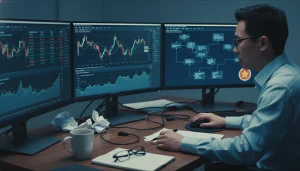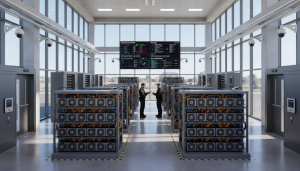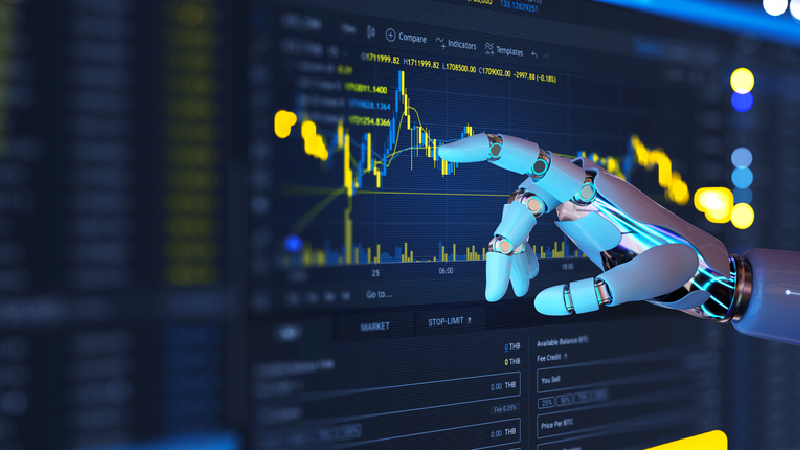
Artificial intelligence is rapidly reshaping financial markets as major exchanges and crypto platforms expand the use of AI driven systems across trading and compliance operations. A senior Nasdaq executive highlighted that AI agents are now being deployed across multiple layers of the exchange’s infrastructure, reflecting a broader shift toward automation in decision making. Over the past year and a half, these systems have moved from experimental tools to critical components of market operations, handling tasks that were previously performed by human analysts while still keeping human oversight as a final control layer.
Nasdaq has integrated AI agents into key functions including market surveillance, regulatory compliance, and detailed analysis of trading activity. These systems are designed to process large volumes of data in real time, identifying patterns and potential risks more efficiently than traditional methods. One example includes automated compliance workflows that handle high volume monitoring tasks, reducing operational complexity. The exchange has also introduced AI powered trading mechanisms that adjust to market conditions using advanced models, signaling how machine learning is being embedded directly into trading infrastructure.
The growing confidence in AI systems is a notable shift from earlier concerns about reliability and accuracy. Improvements in model performance have made these tools more suitable for enterprise level applications, where precision and consistency are essential. As a result, financial institutions are increasingly relying on AI to enhance efficiency and reduce costs. However, experts emphasize that humans remain an essential part of the process, particularly in overseeing decisions and managing exceptions where judgment is required beyond automated analysis.
Crypto trading platforms are expected to adopt AI agents even more aggressively, particularly in areas that directly interact with retail users. These include tools that provide market insights, suggest trades, and assist with execution strategies. The decentralized and fast moving nature of crypto markets makes them well suited for automation, as traders seek faster and more responsive decision making systems. This trend is likely to accelerate competition among platforms, as firms race to offer more advanced and user friendly AI powered services.
The expansion of AI across financial markets is also influencing workforce dynamics, with automation reducing the need for certain operational roles. As machines take on repetitive and data intensive tasks, companies are restructuring teams to focus on higher level functions and strategic oversight. This transformation reflects a broader evolution in how financial systems operate, where technology plays an increasingly central role. The continued integration of AI into both traditional and crypto markets suggests that automated agents will become a defining feature of the next generation of trading infrastructure.