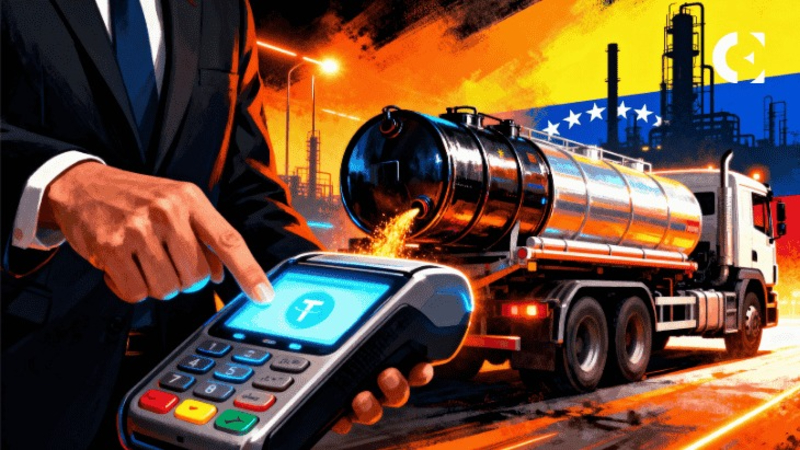
Venezuela’s state owned oil company Petróleos de Venezuela relied on the US dollar stablecoin USDT to maintain crude oil trade flows while facing extensive financial restrictions tied to United States sanctions. As access to traditional dollar based banking channels narrowed, the company increasingly turned to digital settlement methods to collect payments from overseas buyers. Clients purchasing Venezuelan crude were reportedly required to hold cryptocurrency wallets and complete advance payments using USDT, allowing transactions to proceed outside the conventional correspondent banking system. This approach emerged as enforcement actions limited the firm’s ability to receive payments through regulated financial institutions, particularly for exports routed through intermediaries. The use of stablecoins offered a mechanism to preserve trade continuity while avoiding exposure to blocked payment rails, underscoring how digital assets have become an operational tool in sanctioned commodity markets rather than a speculative alternative.
The stablecoin used in these transactions is issued by Tether, which has stated that it works closely with US authorities to ensure compliance with sanctions frameworks. The company has emphasized its cooperation with the US Treasury’s Office of Foreign Assets Control and its record of freezing wallets linked to illicit activity when required. While USDT was reportedly used in oil related settlements through intermediaries, Tether has maintained that it actively assists law enforcement and regulators in monitoring on chain activity. Research groups tracking enforcement trends have noted that dozens of wallets connected to Venezuelan activity were restricted in recent years. This reflects a broader tension in global finance, where permissionless payment tools can be adopted by sanctioned actors even as issuers and regulators attempt to impose controls at the issuer and address level.
Beyond the energy sector, USDT has played a growing role inside Venezuela’s domestic economy as citizens sought alternatives to the collapsing bolivar amid persistent inflation. Stablecoins have increasingly been used for savings and everyday transactions, including food purchases and remittances, offering price stability unavailable through local currency instruments. These developments unfolded alongside major political upheaval following the January arrest of President Nicolás Maduro, an event that intensified scrutiny of Venezuela’s financial channels. Despite leadership changes, sanctions tied to the oil sector remain in place, leaving PDVSA constrained in its access to global capital markets. The episode highlights how stablecoins now sit at the intersection of geopolitics, commodity trade, and financial resilience, shaping how sanctioned economies adapt under prolonged restrictions.