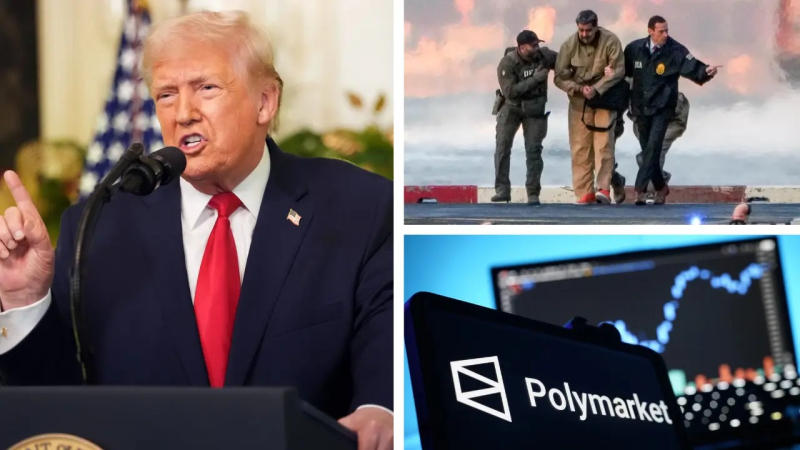
Unusual activity on prediction market platform Polymarket has come under renewed scrutiny after U.S. President Donald Trump said a leaker tied to sensitive Venezuela related information had been identified and jailed. Speaking from the Oval Office, Trump claimed the individual responsible for leaking classified material was already in custody and could face a lengthy prison sentence. While no names or specific details were disclosed, the remarks coincided with growing attention on a series of highly profitable bets placed on Polymarket shortly before the arrest of Venezuelan President Nicolás Maduro. The timing has fueled speculation over whether nonpublic information may have been used to gain an advantage in political prediction markets, raising broader questions about oversight and integrity in the rapidly growing sector.
Blockchain analysis firm Lookonchain reported that two of the three wallets associated with the Venezuela focused wagers have gone inactive around the same period Trump suggested the leaker was detained. According to the firm, one wallet turned a modest four figure stake into tens of thousands of dollars by betting on Maduro’s removal from office by the end of January, while another reportedly generated several hundred thousand dollars in profits before ceasing activity earlier this month. A third wallet linked to the same cluster remains active and has since placed new bets on unrelated geopolitical outcomes. Analysts noted that the wallets were created and funded days in advance, then placed large bets just hours before key developments became public, intensifying concerns over potential insider access.
The episode has amplified debate around prediction markets and the risks posed when sensitive political or security information intersects with financial incentives. Critics argue that access to material nonpublic information undermines trust in platforms that blend elements of finance, forecasting, and gambling. The controversy also comes as Polymarket faces criticism over recent contract settlement decisions related to Venezuela, adding pressure on the platform to clarify its rules and safeguards. Separately, U.S. lawmakers have begun exploring legislation aimed at limiting participation in political prediction markets by officials with access to confidential information. As prediction markets grow in scale and visibility, the situation highlights the regulatory and ethical challenges facing platforms operating at the intersection of politics, data, and money.