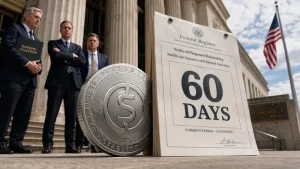
U.S. lawmakers are approaching a decisive moment in efforts to pass comprehensive cryptocurrency legislation, as unresolved disputes threaten to derail the bill ahead of critical Senate Banking Committee votes. Negotiations have intensified around how stablecoins should be regulated, particularly whether issuers or platforms should be allowed to offer yield to holders. At the same time, political tensions linked to President Donald Trump’s family involvement in crypto ventures are complicating the path to bipartisan support. Senators involved in the process say the next two weeks could determine whether the bill advances or collapses, underscoring the fragility of consensus in an already polarized environment. Without meaningful Democratic backing in committee, the bill would struggle to reach the 60 votes required for passage on the Senate floor.
Stablecoins have emerged as the most contentious policy issue. Banking groups argue that allowing yield bearing stablecoins could pull deposits away from traditional banks, harming local communities and small businesses. In response, lawmakers are exploring compromise language that would restrict how yield can be earned, aiming to balance innovation with financial stability. While some proposals appear capable of attracting cross party support, resistance remains from both industry advocates and the White House, which has warned against reopening debates already settled in earlier legislation. The disagreement highlights a broader struggle to define stablecoins’ role in the financial system, as lawmakers weigh consumer protection against competitiveness and technological progress.
Beyond policy substance, political dynamics are shaping the bill’s fate. Democrats continue to push for stronger ethics provisions addressing conflicts of interest tied to Trump affiliated crypto projects, warning that failure to do so could undermine public trust and bipartisan cooperation. Republicans counter that excessive focus on ethics language could stall urgently needed regulatory clarity. The looming midterm elections add further pressure, with the crypto industry increasingly active through political action committees and voter advocacy groups. As negotiations enter their final stretch, the bill’s outcome will signal whether Washington can bridge ideological divides to set durable rules for digital assets or whether regulatory uncertainty will persist into another election cycle.