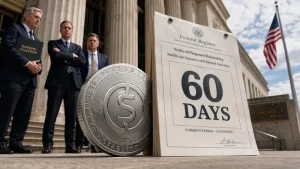
Debate around stablecoin rewards has intensified as the U.S. Senate Banking Committee prepares for a key markup vote on a sweeping crypto market structure bill expected later this month. The discussion has brought renewed focus on whether platforms should be allowed to offer yield like incentives to users holding stablecoins. Crypto industry advocates argue that the issue was already addressed under recent stablecoin legislation and reopening it now could introduce regulatory uncertainty at a critical moment for digital dollar infrastructure. Executives from major crypto firms have warned that limiting stablecoin rewards could slow onchain adoption and weaken the competitiveness of U.S. based platforms. At the center of the dispute is whether such incentives resemble bank deposits or represent a new category of digital financial products tied to blockchain settlement rather than traditional lending models.
Opposition has come from parts of the traditional banking sector, with groups such as the American Bankers Association warning lawmakers that stablecoin rewards could encourage customers to move funds away from local banks. Community banking representatives have argued that this shift may reduce deposits that support small business and regional lending. Crypto policy leaders counter that stablecoins operate under a different risk structure and should not be constrained by rules designed for legacy institutions. Coinbase Chief Policy Officer Faryar Shirzad has publicly stated that Congress already settled the matter in prior legislation, cautioning that renewed restrictions could undermine confidence in U.S. dollar based stablecoins as commerce increasingly moves onchain.
The issue has become a focal point in broader negotiations surrounding the market structure bill, with lawmakers signaling that stablecoin rewards will need to be addressed directly in any final text. The Digital Chamber has been actively engaging with Senate offices, emphasizing the need for regulatory parity between banks and crypto firms. Meetings involving pro crypto senators have reportedly covered topics ranging from ethics standards to decentralized finance oversight, highlighting how interconnected the debate has become. Senate Banking Committee Chair Tim Scott has hosted discussions aimed at finding common ground, though details remain limited. Industry participants expect lobbying efforts to intensify in Washington as stakeholders push for clarity ahead of the vote.