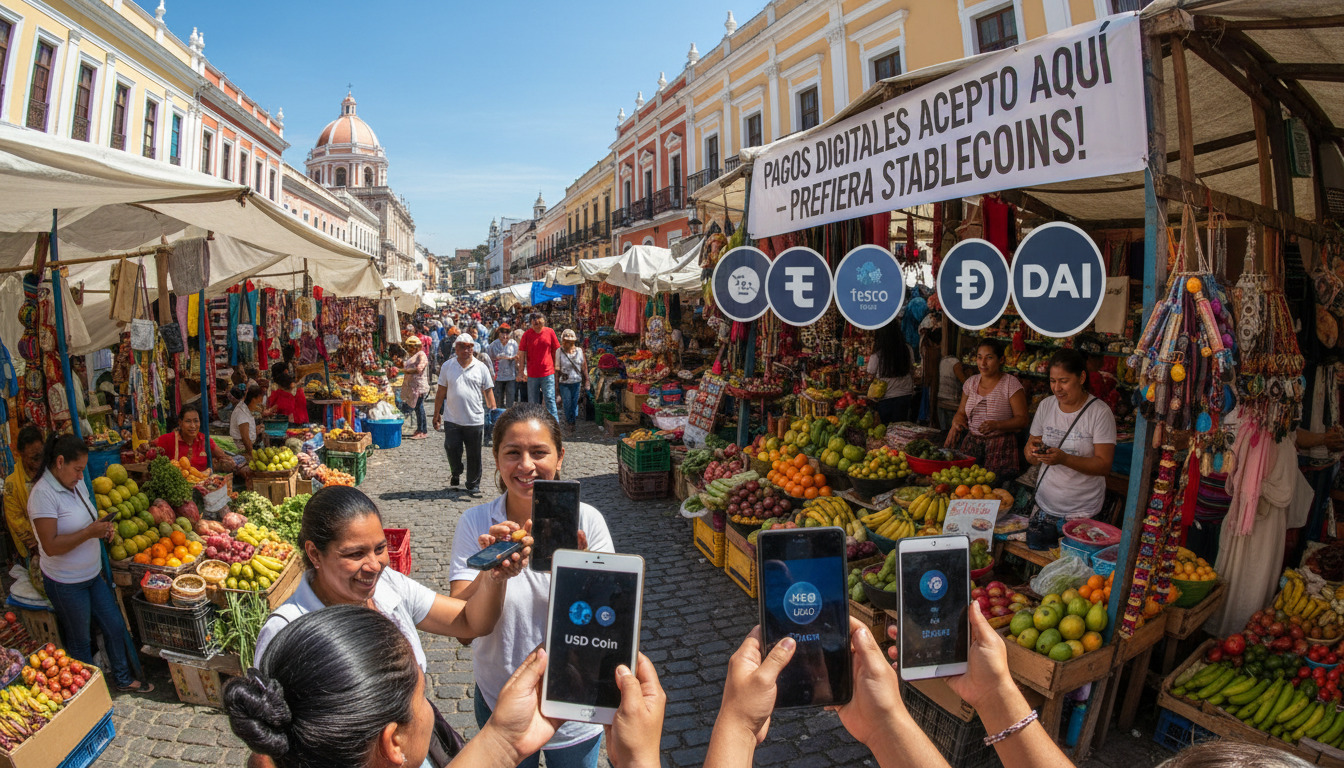
Stablecoins Gain Market Share in Latin America
Bitso says stablecoins have overtaken Bitcoin in crypto purchases across key Latin American corridors, a shift traders are treating as a practical payment choice rather than a thesis trade. In this Live environment, users are prioritizing fast settlement and price certainty when moving value between exchanges and local bank rails. The company framed the change as demand-led behavior, not a product push, and it mirrors how desk operators describe execution constraints across regional order books. Today, the flow is increasingly routed through dollar-pegged tokens when spreads widen on volatile pairs, and Bitso’s own disclosures are being watched for the next Update on how quickly this mix is changing.
Impact of Inflation on Cryptocurrency Preference
Inflation and currency volatility remain the pressure points shaping household decisions, and platforms say that preference is visible in basket-level purchasing behavior. Bitso’s market commentary tied the pivot toward stablecoins to everyday budgeting needs, especially when local prices reset quickly and users want a predictable unit of account. Today, policymakers are also part of the picture because crypto regulation determines how exchanges custody, disclose, and connect to banks, and Stablecoins in Latin America are now a key reference point in that compliance debate. For context on cross-market liquidity and risk conditions, see USDC Minted 250M Sparks a Major Market Shift. In a Live policy backdrop, the US Federal Reserve’s latest statement provides a benchmark for dollar funding conditions, linked here: Federal Reserve FOMC statement. The next Update for exchanges is how compliance timelines affect user costs.
The Role of Dollar-Linked Assets
Dollar-linked tokens are being treated as transactional infrastructure, not just a hedge, and USDT updates are now a routine input in regional dealing rooms. Traders cite fewer surprises in settlement value when invoice-like transfers are staged through stablecoin rails, even if the on and off ramps remain the bottleneck. Bitso’s positioning aligns with this: it describes stablecoins as the preferred bridge asset when users move from local currency into crypto and back out again. Today, the more stable reference point can also deepen market liquidity by concentrating demand on a narrower set of pairs, though execution quality still depends on venue depth and banking hours, and for related coverage of operational frictions, see Stablecoins face cross-border strain as DeFi rivalry. Live pricing will keep reflecting these microstructure constraints.
Implications for Bitcoin and Other Cryptocurrencies
The stablecoin lead does not remove Bitcoin from the regional story, but it changes what Bitcoin is used for and how it is accessed. Bitso’s read is that users are separating spending and transfer activity from long-term exposure, with stablecoins handling the former while Bitcoin increasingly sits in an investment lane. That split can affect market liquidity because it concentrates day-to-day volume in pegged assets while pushing Bitcoin flows into fewer, more episodic bursts. Today, this also matters for broker risk controls, since stablecoin inventory management differs from volatile asset hedging, and recent developments around issuer partnerships underline that competitive pressure; see Tether eyes Strike tie-up as Twenty One shares jump. Live desk commentary often focuses on fee sensitivity. The next Update will be whether exchanges adjust listing priorities accordingly.
Future Trends in Latin American Crypto Markets
Bitso’s signal that stablecoins have taken the lead sets a near-term agenda for exchanges, banks, and supervisors: improve rails, tighten disclosures, and standardize risk management around pegged assets. Stablecoins in Latin America are now central to how consumers price everyday transfers, which means regulators can influence outcomes through rules on reserves transparency, custody, and redemption access. Today, firms are watching for clearer crypto regulation that defines how stablecoins are treated relative to e-money and securities, because that will affect onboarding and the cost of compliance. Live market structure will also hinge on whether issuers and exchanges can keep redemptions smooth during volatility, sustaining market liquidity without widening spreads. The next Update is likely to come through periodic platform transparency notes and any new supervisory guidance.