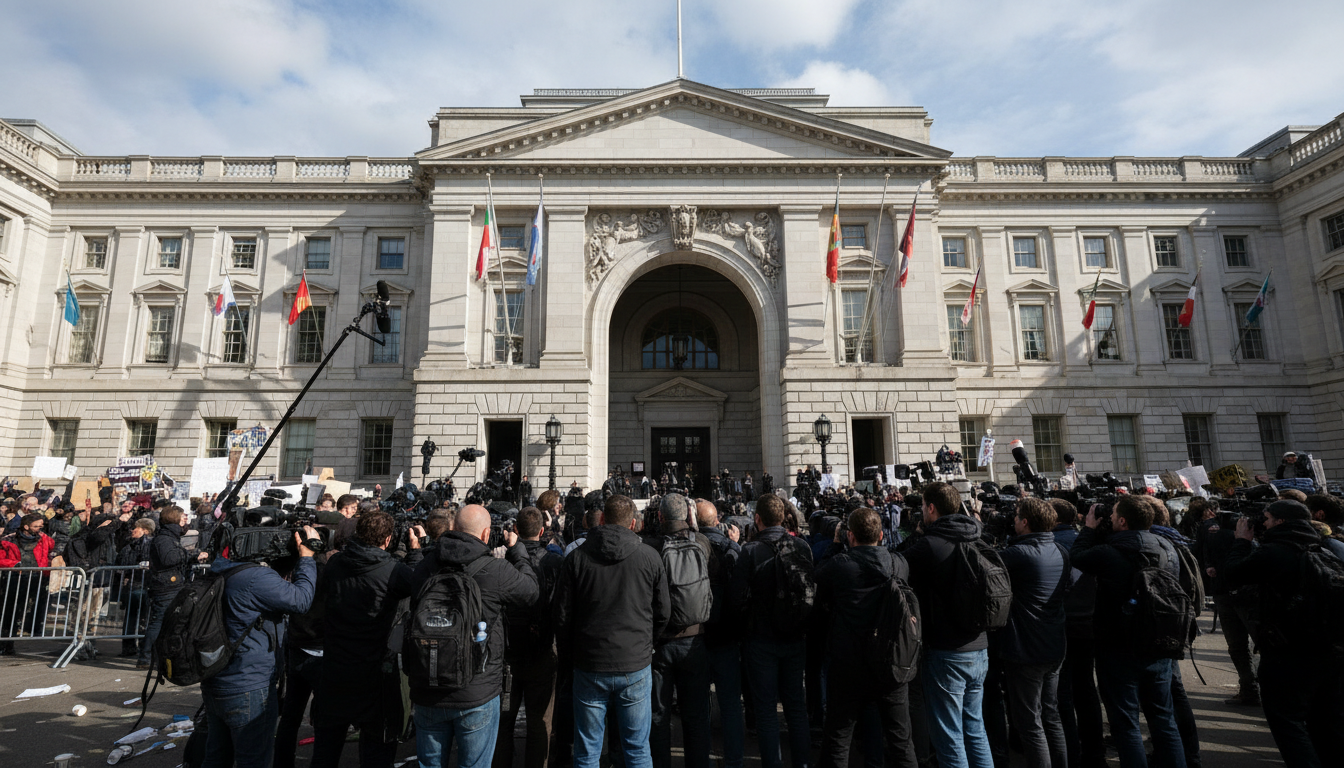
Regulatory Bodies React to Tether Donation
UK regulators are treating the £5 million pledge linked to Tether as a fast moving test of how political finance rules intersect with crypto. Today, compliance teams across parties and watchdogs are focused on verification steps, including donor eligibility checks and the provenance of funds, rather than campaign messaging, with the Tether political donation now treated as a practical compliance case. In a Live environment where questions can spread within minutes, legal advisers are prioritizing clear records that show how the money moved and who controlled it at each point. The scrutiny also reflects a broader enforcement trend, where regulators expect the same documentary rigor for crypto linked money as for bank transfers. An Update from authorities is likely to hinge on whether existing rules were followed precisely.
Implications for Stablecoin Market
Market participants are watching for regulatory scrutiny to spill into wider stablecoin regulation, especially where intermediaries touch political contributions. Today, compliance officers at exchanges and payment firms are reviewing whether their own policies would flag similar flows, including screening standards and reporting triggers, and for context on US policy pressure around Tether, CoinDesk coverage of Senator Warren questions on a Tether linked loan shows how quickly related issues can become formal inquiries. A Live policy debate is unfolding about whether stablecoin issuers or associated entities should face clearer obligations when funds are connected to campaigning. Any Update that tightens expectations could reshape how stablecoin liquidity interacts with reputational risk.
Understanding Tether’s Financial Moves
Attention is also on how Tether related networks structure transfers and disclosures when sensitive counterparties are involved. Today, analysts are separating what is confirmed from what is simply debated in Live commentary, because the compliance outcome will depend on documentation, and readers tracking broader shifts in stablecoin adoption can compare regional patterns in Stablecoins Overtake Bitcoin in Latin America, which highlights how usage at scale changes expectations for governance. A key point for auditors is whether transaction records, banking rails, and custody arrangements show a clean chain of control without gaps. In the middle of this review, the Tether political donation has become a reference case for how quickly a stablecoin linked payment can land inside political finance systems. Another Update will likely center on proof standards rather than ideology.
Political Contributions and Crypto Regulations
Political finance compliance tends to be rule bound, but crypto rails add operational complexity that regulators now want mapped in detail. Today, legal specialists point to financial governance requirements such as donor permissibility, reporting deadlines, and controls against routed money as the areas most exposed to error, and in this context, How the Bank of England Is Moving UK Markets Now provides useful framing on how UK market oversight can react when stability concerns rise, even if central bank policy is not directly about donations. A Live compliance audit typically looks for written procedures, dual control approvals, and consistent record retention that matches statutory guidance. The Tether political donation is driving attention toward whether existing checks are fit for crypto linked funding. An Update could arrive through guidance rather than immediate penalties.
Future of Tether in a Regulated Environment
The near term issue for Tether and related entities is not branding, it is how regulatory expectations harden into repeatable compliance requirements. Today, firms that touch USDT are planning for more explicit stablecoin regulation that clarifies who must verify origin of funds, who must file reports, and what audit trails are mandatory, with the £5 million figure now a concrete reference point in internal risk reviews. A Live response from the market is already visible in the push for standardized attestations and tighter third party controls, because political exposure elevates consequences for mistakes. Regulators may also use this episode to test cross border cooperation, given that stablecoin flows rarely stay within one jurisdiction. The next Update is expected to focus on process, including documentation, disclosures, and enforcement thresholds, rather than on any single political outcome.