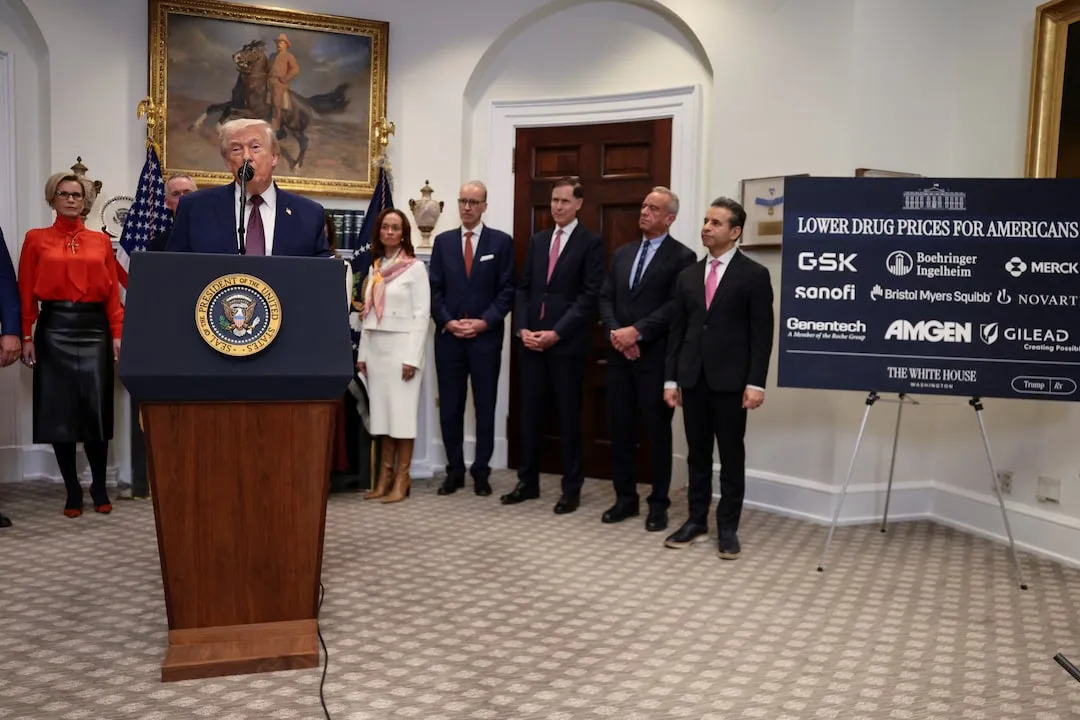
In a landmark move aiming to ease the financial burden on American patients, U.S. President Donald Trump announced a sweeping agreement with nine of the world’s largest pharmaceutical companies to reduce prices on a wide range of medications, particularly for the Medicaid program and out-of-pocket cash payers.
The announcement was made Friday from the Roosevelt Room at the White House, with Trump standing alongside executives from major drugmakers including Bristol Myers Squibb, Gilead Sciences, Merck, Genentech (Roche’s U.S. unit), Novartis, Amgen, Sanofi, GSK, and Boehringer Ingelheim. The deal marks a rare consensus between the federal government and the pharmaceutical industry on the need to curb skyrocketing drug costs—an issue that has long frustrated U.S. consumers.
“This is a major victory for American families who have been crushed by high prescription costs for decades,” Trump stated. “We’re finally putting the American patient first.”
The agreement is expected to reduce prices on hundreds of medications most commonly prescribed under Medicaid. Additionally, drugmakers have pledged to offer discounts for cash-paying patients, many of whom are uninsured or fall into high-deductible health plans.
According to the White House, the average cost of certain life-saving treatments is expected to drop by 40%, with some generics and specialty drugs seeing even deeper cuts. While the exact list of affected drugs has not been released, early reports suggest it includes treatments for diabetes, cancer, HIV, and autoimmune conditions.
The U.S. continues to lead globally in prescription drug spending, with per capita costs significantly higher than in peer nations. This move, analysts say, is likely to improve access while pushing other countries and companies toward greater pricing transparency.
Still, critics caution the need for continued oversight, warning that voluntary deals must be paired with enforceable price controls to ensure long-term change.