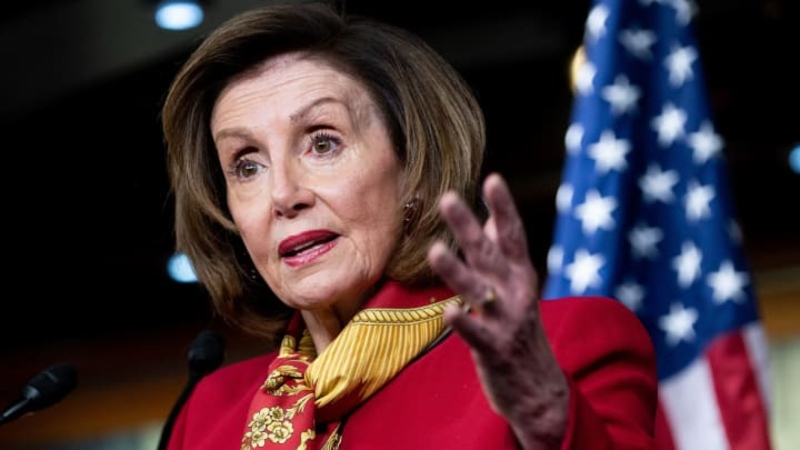
A group of Democratic lawmakers, including former House Speaker Nancy Pelosi, has thrown support behind new legislation that would prohibit elected officials and senior government employees from placing bets on political prediction markets. The proposal follows heightened scrutiny of wagers tied to sensitive geopolitical events and growing concern that public officials could exploit non public information for personal gain. Prediction markets, which often operate using cryptocurrency rails, have surged in popularity by allowing users to speculate on elections, policy decisions, and political outcomes. Lawmakers backing the bill argue that participation by government insiders undermines public trust and creates conflicts of interest at a time when digital betting platforms are becoming more accessible and liquid.
The bill, formally titled the Public Integrity in Financial Prediction Markets Act of 2026, was introduced by Representative Ritchie Torres and would bar federal elected officials, political appointees, and executive branch employees from betting on markets linked to government policy, actions, or political outcomes. The scope of the proposal was expanded to include congressional staff, preventing them from purchasing politically related prediction contracts as well. Supporters say the restrictions are necessary to close loopholes that could allow officials to profit from decisions they influence or information they obtain through their positions. The legislation gained momentum after reports of large profits linked to wagers on high profile political developments raised questions about potential misuse of insider knowledge.
Prediction markets such as Polymarket and Kalshi have grown rapidly, particularly during recent election cycles, positioning themselves as alternative information signals alongside traditional polling. While proponents argue these platforms improve forecasting and market efficiency, critics warn that unchecked participation by insiders could distort incentives and erode confidence in democratic institutions. Backers of the bill say the goal is not to shut down prediction markets but to establish clear ethical boundaries for public servants. As crypto enabled financial products continue to intersect with politics and governance, the debate highlights increasing pressure on lawmakers to adapt integrity rules to new digital market structures.