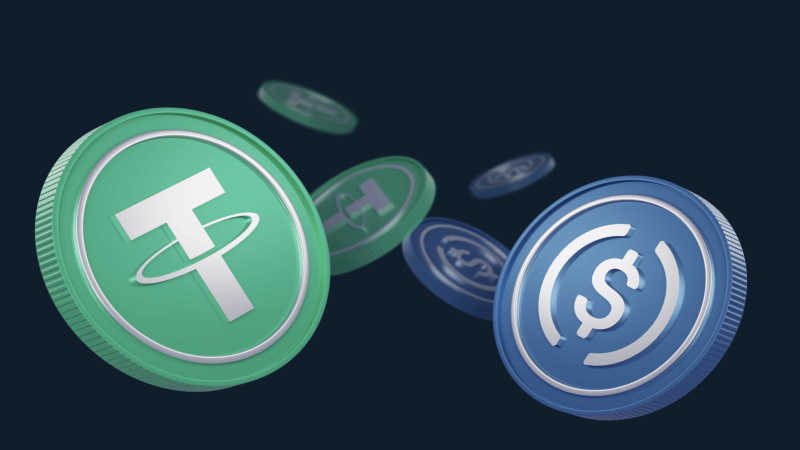
USDC has surpassed USDT in annual transaction volume for the first time, marking a notable shift in how stablecoins are being used across crypto markets. Data for 2025 shows that USDC processed about $18.3 trillion in transfers, compared with roughly $13.2 trillion for USDT, despite USDC having less than half the total market capitalization of its rival. The figures point to a divergence between stablecoin usage and supply, with transaction intensity becoming a more important indicator than outstanding tokens. Market participants note that USDT continues to dominate as a store of value and payment rail, particularly in emerging markets, while USDC has become increasingly embedded in high frequency onchain activity linked to decentralized finance and trading ecosystems.
Much of USDC’s rise has been driven by its dominant position in decentralized finance, where capital tends to circulate rapidly through lending protocols, decentralized exchanges, and liquidity pools. Analysts say this repeated reuse of the same dollar units results in higher aggregate transfer volumes even without a larger supply. The trend has been especially pronounced on the Solana network, where USDC now represents the majority of stablecoin liquidity. Solana’s low fees and fast settlement have attracted traders and developers, reinforcing USDC’s role as the preferred settlement asset. In contrast, USDT activity remains more concentrated on networks such as Tron, where usage is often tied to payments and long term holdings rather than constant turnover within DeFi applications.
An unexpected boost to USDC adoption also came from political themed token activity during 2025, which concentrated liquidity around USDC trading pairs and amplified demand on Solana based platforms. At the same time, regulatory developments favored stablecoins with strong compliance positioning. Observers point to clearer US legislation and European regulatory standards that rewarded transparency and reserve backing, areas where USDC’s issuer Circle Internet Group has long focused its strategy. While Tether Holdings continues to lead in overall supply and global reach, the shift in transaction leadership highlights how stablecoin competition is increasingly defined by where and how digital dollars move rather than how many are issued.