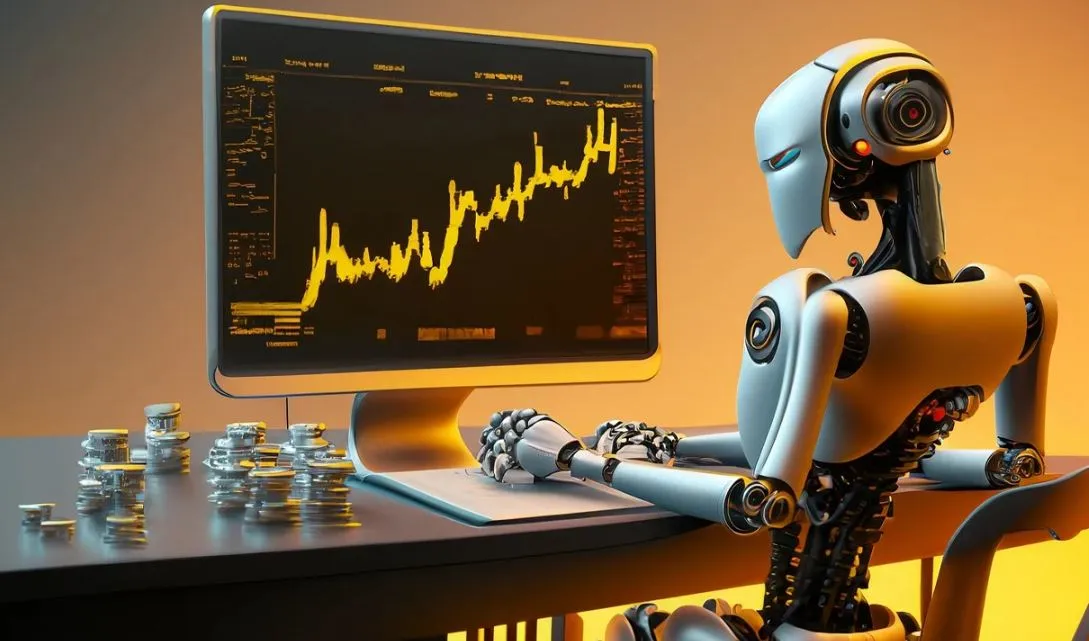
Artificial intelligence has taken a prominent role in crypto market forecasting as new algorithmic models attempt to outperform traditional human driven strategies. With the increasing availability of on chain data, stablecoin flows and market indicators, AI powered systems are now capable of analyzing trends with unprecedented speed and accuracy. This technological shift has sparked debate over whether algorithms will eventually dominate market prediction.
The growing reliance on stablecoins for liquidity, settlement and trading makes them a critical data source for AI models. Their transaction patterns often reveal early signs of market momentum which algorithms can process in real time. As AI continues advancing, traders and institutions are exploring how these tools can enhance decision making and risk management.
Why AI Models Are Gaining an Edge in Market Prediction
The most important advantage AI holds over human traders is its ability to analyze vast datasets instantly. Human decision making is limited by cognitive biases and time constraints, while algorithms can evaluate millions of data points simultaneously. This includes stablecoin supply changes, transaction volumes, exchange inflows, liquidation levels and broader macroeconomic trends.
AI models excel at pattern recognition. When markets behave unpredictably, algorithms can detect subtle shifts that humans might overlook. By identifying correlations between market movements and on chain signals, AI powered index predictions can offer early warnings for major price swings or liquidity shifts.
Another key factor is consistency. Algorithms operate based on predefined rules and models which prevents emotional decision making. During periods of high volatility, this consistency can lead to more disciplined trading outcomes compared to human strategies that are influenced by sentiment and stress.
How Stablecoin Data Enhances AI Market Forecasting
Stablecoins provide some of the most reliable and immediate indicators for market behavior. Their flows often reflect trader sentiment, liquidity positioning and institutional movement. AI models integrate stablecoin data to refine predictions with real time accuracy.
Exchange inflows and outflows of stablecoins help algorithms determine whether traders are preparing to buy or exit positions. Rising inflows typically signal upcoming accumulation while outflows may indicate profit taking or risk off sentiment. AI systems use these patterns to anticipate changes in market direction.
On chain transaction clustering is another powerful metric. Large stablecoin transfers linked to institutional wallets can indicate strategic positioning ahead of major market events. Algorithms can track this activity faster than any human analyst and adjust predictions accordingly.
The Limitations of Algorithmic Forecasting
Despite their strengths, AI models are not infallible. One of the main limitations is overfitting where algorithms become too closely aligned with historical patterns and struggle with novel market conditions. Crypto markets often react to unexpected events that fall outside traditional data models which can cause inaccuracies in predictions.
AI systems also rely heavily on data quality. Inconsistent or incomplete on chain data can mislead even the most advanced algorithms. Human oversight remains essential to validate outputs and adjust model parameters when needed.
Regulatory shifts, geopolitical actions and sudden sentiment changes can disrupt algorithmic predictions as well. While AI can process information quickly, it may not fully understand context or long term implications without human interpretation.
How Traders Combine AI Tools With Human Insight
Many traders and institutions are adopting a hybrid approach that blends algorithmic forecasting with human expertise. AI tools provide rapid analysis and signal generation while human traders interpret results within broader market context. This combined strategy reduces risk and enhances decision accuracy.
Portfolio managers use AI to monitor stablecoin liquidity, volatility metrics and correlation breakdowns. These insights inform strategies related to hedging, rebalancing and position sizing. With human oversight, portfolios can adapt to both technical signals and external developments.
Algorithmic dashboards are also becoming popular among retail traders who seek data driven guidance without relying solely on automated execution. These dashboards use AI derived market indicators to help users identify momentum shifts, potential entry points and risk zones.
Conclusion
AI powered index predictions are reshaping how traders analyze and respond to market trends. While algorithms bring speed, precision and consistency, human insight remains essential for interpreting complex conditions. As stablecoin data continues to enhance predictive models, the combination of AI and human strategies may become the dominant approach in navigating modern crypto markets.