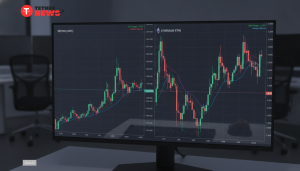
The idea of AI fully automating crypto trading has captured the attention of traders, developers and institutions across the market. With rapid advancements in machine learning, predictive analytics and autonomous agent systems, many are wondering if AI-driven trading could dominate the crypto landscape within the next three years. While the technology is evolving at an incredible pace, the future of fully automated trading is more complex than it may appear at first glance.
Crypto markets are uniquely suited for algorithmic strategies because they operate 24/7, generate vast amounts of real-time data and support rapid execution across multiple chains. These characteristics make them an ideal testing ground for AI-driven trading systems. But despite the impressive progress, full automation requires breakthroughs in accuracy, reliability and regulatory clarity that the industry is still working toward.
AI Trading Is Already Growing, but Full Automation Has Limits
The most important point to understand is that AI-powered trading is already widely used, but not in a fully autonomous form. Today’s AI trading systems rely on data-driven models to identify patterns, predict volatility and execute trades based on predefined strategies. These tools offer significant efficiency, but they still require human oversight for risk management and strategic adjustments.
While AI can analyze millions of data points faster than any human, markets remain influenced by unpredictable events such as regulatory announcements, global economics and sudden sentiment swings. These factors require judgment, context and adaptability—areas where AI continues to improve but is not fully reliable yet.
Another limitation is model drift. AI systems must continuously retrain on new data to maintain accuracy. In highly volatile markets, outdated models can make incorrect decisions quickly, which is why professional traders maintain supervision over automated strategies.
Autonomous Agent Systems Are the Next Big Step
AI agents capable of learning, adapting and executing trades autonomously are becoming more advanced. These systems use reinforcement learning, real-time feedback loops and multi-chain data to make decisions with minimal human intervention. Their ability to adjust strategies dynamically is a major breakthrough for crypto trading.
However, deploying fully autonomous agents at scale requires solving several issues. These include preventing overfitting, improving risk-aware decision-making and ensuring agents do not engage in destabilizing behavior. Safety constraints must be embedded directly into these models to prevent cascading losses or malicious exploitation by other agents.
Despite these challenges, AI agents are already being tested in liquidity pools, arbitrage systems and algorithmic trading environments. Within the next three years, they will likely become more common, but not yet universally dominant.
Human-AI Collaboration Will Remain Essential
For the foreseeable future, the most effective trading systems will combine human strategy with AI precision. Humans excel at interpreting macro trends, market psychology and nuanced signals that do not appear in raw data. Meanwhile, AI can handle high-frequency execution, real-time analysis and complex multi-variable calculations.
This collaboration ensures resilience. Human oversight helps prevent catastrophic failures, while AI reduces emotional decision-making and improves efficiency. As more institutions adopt hybrid systems, the market will move toward more stability and smarter execution.
In three years, AI may automate much of the routine and reaction-based trading, but human judgment will still guide strategic decisions and risk management. Full automation is unlikely until AI can interpret complex, unpredictable market conditions with near-human intuition.
Regulatory and Ethical Challenges Still Need Solutions
Even if AI becomes capable of fully autonomous trading, regulatory challenges could slow adoption. Authorities across major markets are concerned about algorithmic risks, market manipulation and systemic instability caused by unmonitored automated systems.
Regulators are exploring frameworks to ensure transparency, prevent harmful trading behavior and require oversight for AI-driven strategies. These steps could limit extreme forms of autonomy, especially at institutional levels where risk is higher.
Ethical concerns also arise when machines have complete control over capital. Ensuring fairness, preventing exploitation and maintaining market integrity will be critical before full automation is approved on a large scale.
Conclusion
AI will dramatically transform crypto trading over the next three years, but full automation is unlikely to replace human involvement entirely. While AI agents will take over more execution and analysis, human oversight will remain essential for strategic decisions and risk management. The future lies in hybrid systems that combine the strengths of both humans and AI, creating more efficient, adaptive and intelligent trading environments.