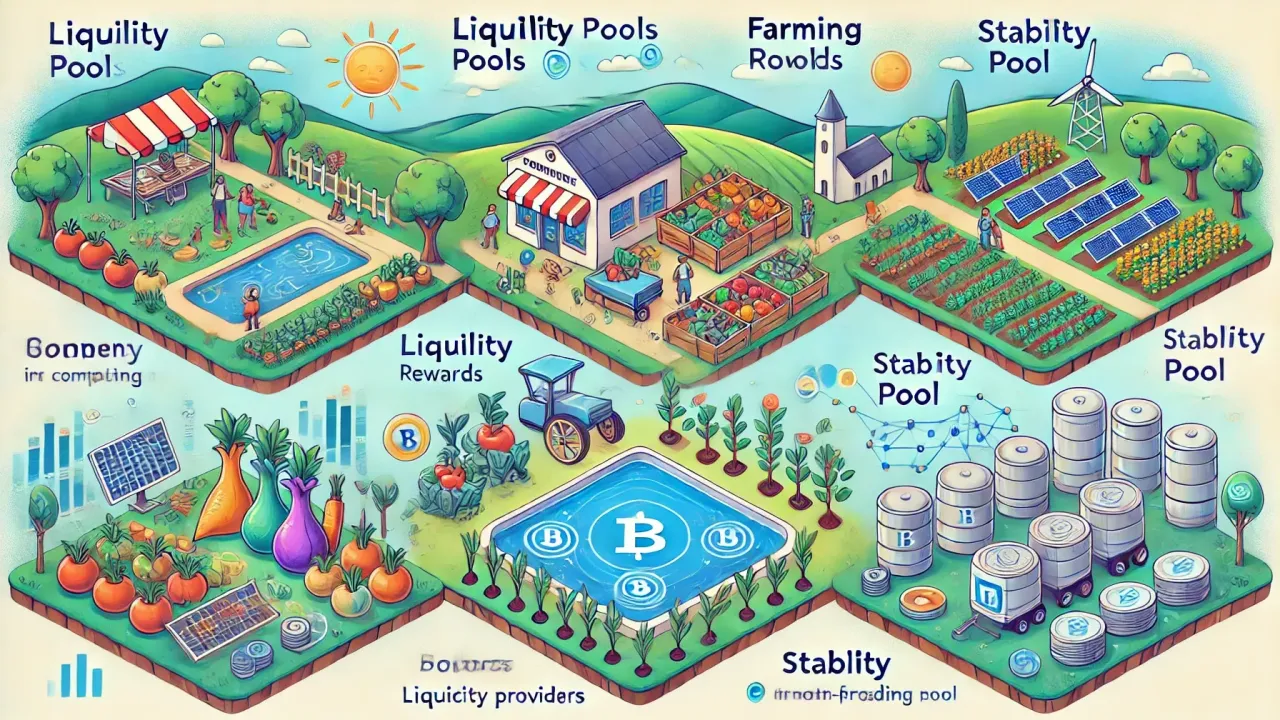
Offshore markets are seeing strong dependence on stable liquidity pools as traders, institutions, and financial service providers adopt stablecoins for smoother and more predictable global operations. These regions often support high trading volumes and fast-paced market activity that require efficient capital movement. Stablecoins such as USDT have become essential tools for maintaining liquidity, balancing risk, and supporting seamless transfers between platforms.
This shift reflects the growing importance of flexible financial infrastructure in regions where traditional banking networks may be slower or more restrictive. Offshore markets rely on stable assets to bridge gaps between exchanges, improve settlement speed, and sustain liquidity during periods of heightened market volatility. As global crypto activity rises, stable liquidity pools continue to shape the landscape of offshore finance.
Stable liquidity pools strengthen cross-platform activity
The most important factor behind increased reliance on stable liquidity pools is their ability to support cross-platform trading with consistent value and high transaction efficiency. Traders who operate across multiple exchanges need assets that can move quickly without experiencing price fluctuations. Stablecoins provide the perfect solution by maintaining predictable value while ensuring fast settlement.
Offshore markets also benefit from deeper liquidity and tighter spreads when strong stablecoin pools are available. This reduces slippage for large orders and provides more reliable execution for high-frequency strategies. Stable liquidity pools keep markets active even during periods of declining volatility or increased regulatory pressure, ensuring that offshore participants can maintain a steady flow of capital.
High-volume traders depend on predictable settlement assets
High-volume traders in offshore markets often rely on stablecoins to manage large positions without the risk of sudden price swings. Stablecoins allow them to rotate liquidity between assets, manage margin positions, and balance exposure during rapid market shifts. This predictable settlement mechanism is especially important in environments where speed matters more than anything else.
Traders executing arbitrage strategies require instant access to stable liquidity across several exchanges. Stablecoins enable them to capture small price differences efficiently, supporting overall market balance. Because these assets remain stable, traders can focus on execution rather than worrying about conversion losses, helping offshore markets sustain higher trading efficiency.
Offshore institutions expand use of stable-backed liquidity
Offshore institutions are increasingly adopting stable-backed liquidity tools to streamline their financial operations. These firms often work across multiple jurisdictions, requiring settlement assets that are fast and borderless. Stablecoins simplify treasury management by offering a reliable medium for moving funds between international business partners and exchanges.
Institutions also benefit from improved transparency and operational consistency when using stable liquidity pools. Stablecoins help reduce delays caused by international banking procedures and minimize costs associated with currency conversion. As more offshore financial centers integrate digital infrastructure, stable assets play a key role in creating efficient and scalable liquidity systems.
Multi-chain liquidity improves access for offshore users
The expansion of stablecoins across multiple blockchains has improved accessibility for users in offshore regions. Many of these markets require low-fee, high-speed networks that support rapid capital movement, making multi-chain USDT a valuable resource. Users can now choose chains based on cost, performance, or local infrastructure availability.
This flexibility helps offshore traders minimize transaction fees and avoid congestion-related delays. Multi-chain support also increases liquidity spread by allowing markets to operate across different ecosystems without fragmentation. As more blockchains integrate stablecoins, offshore markets gain additional pathways for maintaining healthy liquidity levels.
Conclusion
Offshore markets rely heavily on stable liquidity pools to support high-volume trading, institutional activity, and multi-chain operations. With predictable value, strong settlement efficiency, and expanding accessibility, stablecoins continue to shape the future of offshore digital finance.