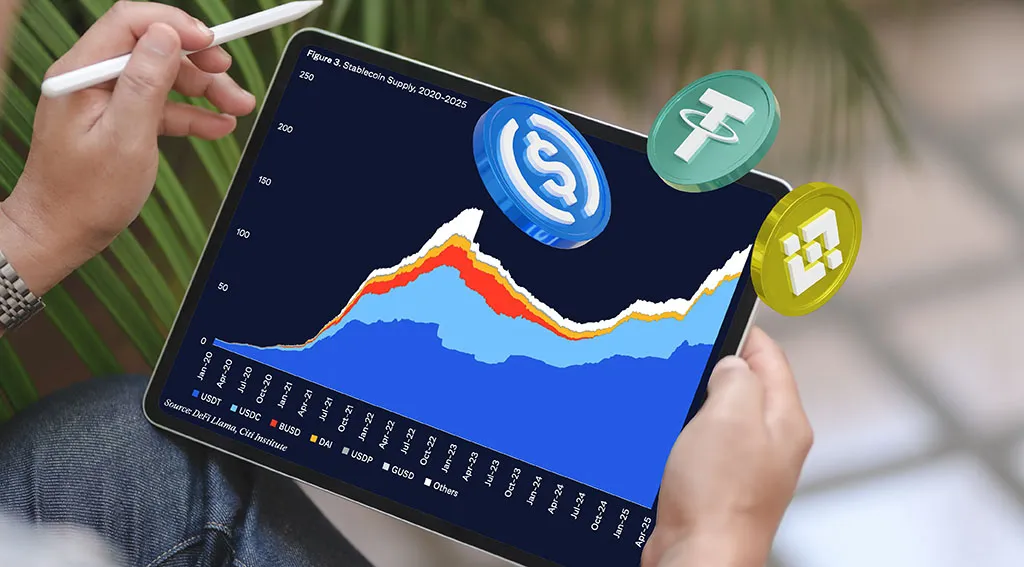
Stablecoins continue to play a central role in the cryptocurrency market, and their supply movements are closely watched by investors and analysts. In 2025, changes in stablecoin circulation are increasingly viewed as indicators of broader market sentiment. Rather than focusing only on price charts, many participants now look at stablecoin supply data to understand where capital is moving.
As the market matures, stablecoin indices have become useful tools for tracking liquidity trends. Expansions and contractions in supply often reflect investor behavior before major market moves occur. This makes stablecoin supply shifts an important signal for anyone navigating the crypto landscape.
Understanding Stablecoin Market Indices
Stablecoin market indices track the total supply and circulation of major stablecoins across blockchain networks. These indices provide insight into how much capital is sitting on the sidelines versus actively deployed in risk assets. In 2025, they are widely used by traders, funds, and research firms.
An increase in stablecoin supply usually suggests fresh capital entering the crypto ecosystem. This may indicate growing investor confidence or preparation for future investments. On the other hand, declining supply can signal capital moving out of crypto or being converted into other assets.
By monitoring these patterns, investors gain a clearer view of liquidity conditions without relying solely on price movements.
What Rising Stablecoin Supply Indicates
When stablecoin supply rises, it often reflects risk cautious behavior. Investors may be selling volatile assets and moving funds into stablecoins while remaining within the crypto ecosystem. This creates a pool of liquidity ready to re enter the market.
In some cases, rising supply precedes market rallies. Capital accumulates in stablecoins before being deployed into assets like Bitcoin, Ethereum, or altcoins. For investors, this can signal potential upside if sentiment shifts positively.
In 2025, sustained growth in stablecoin supply is also linked to increased adoption in payments and decentralized finance. This suggests that not all supply growth is speculative in nature.
Signals Behind Declining Stablecoin Supply
A reduction in stablecoin supply can have multiple meanings. One common interpretation is that investors are moving capital back into volatile crypto assets. This often happens during bullish market phases when risk appetite increases.
Declining supply can also reflect redemptions into fiat currencies. This may indicate profit taking or reduced confidence in the broader market. Context is essential, as supply contractions do not always signal negative sentiment.
In 2025, analysts combine supply data with on chain activity and trading volume to better understand these shifts. Supply alone is no longer viewed in isolation.
Institutional Behavior and Supply Trends
Institutional participation has made stablecoin supply trends more meaningful. Large players use stablecoins for settlement, treasury management, and collateral. Their actions can significantly influence overall supply levels.
When institutions increase stablecoin holdings, it often reflects preparation for structured investments or hedging strategies. These moves are usually strategic rather than emotional. This adds a layer of sophistication to supply analysis.
Regulatory clarity has also encouraged institutions to engage more actively. This has made stablecoin indices a more reliable reflection of market positioning in 2025.
Using Supply Data as an Investment Tool
Stablecoin supply data is not a prediction tool but a contextual indicator. Investors use it to assess market readiness, liquidity availability, and potential risk shifts. Combined with other metrics, it helps inform more balanced decisions.
In 2025, supply indices are commonly paired with metrics such as exchange inflows, lending activity, and network usage. This multi layer approach improves accuracy and reduces overreliance on any single signal.
Retail investors are also becoming more aware of these indicators. Education around stablecoin data is improving overall market understanding.
Conclusion
Stablecoin market indices offer valuable insight into crypto market dynamics in 2025. Supply shifts reflect changes in liquidity, investor behavior, and institutional positioning. While not definitive signals on their own, they provide important context for navigating market cycles. For investors, understanding stablecoin supply trends has become an essential part of informed decision making.