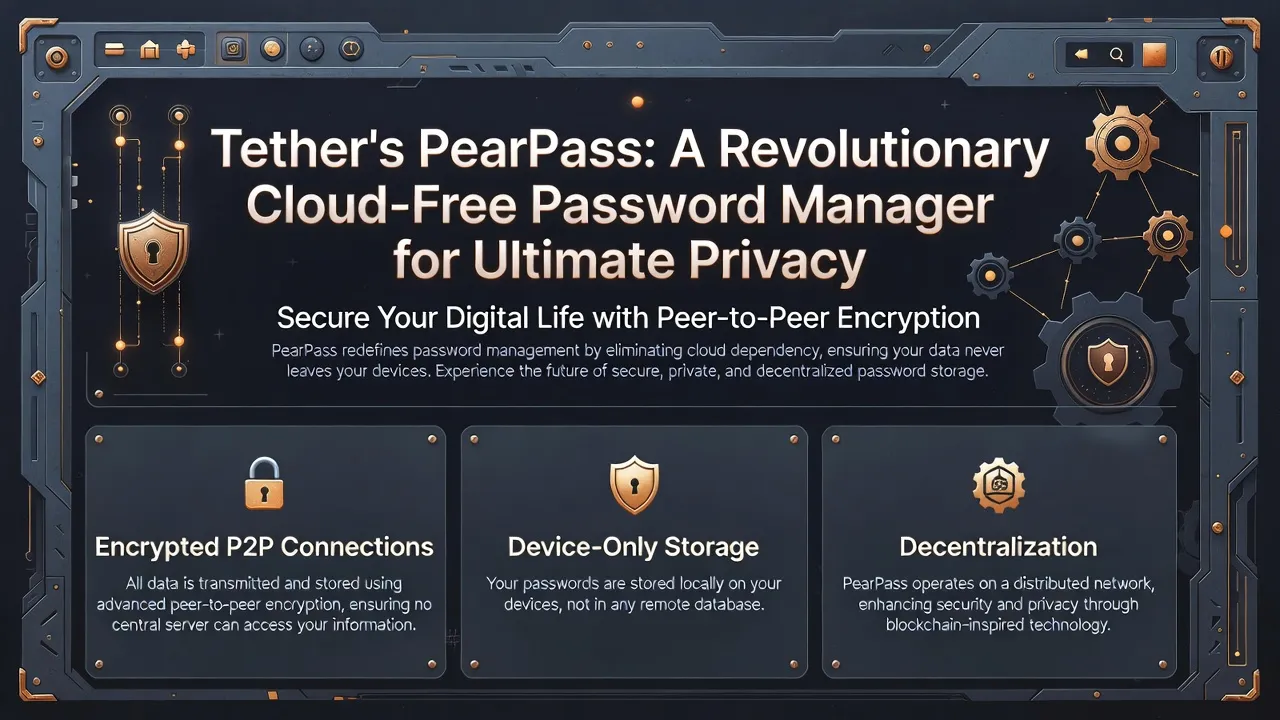
Tether has announced the release of PearPass, a decentralized password manager aimed at enhancing digital security by moving away from vulnerable cloud-based storage systems. Unlike traditional password managers that store credentials on remote servers, PearPass keeps all user data locally, enabling direct peer-to-peer synchronization between devices.
The innovation comes amid rising concerns over cloud security, as breaches continue to expose billions of login credentials globally. Tether’s move reflects a growing shift in the tech industry toward solutions that prioritize user sovereignty and eliminate single points of failure.
PearPass uses end-to-end encryption to ensure that data transferred between devices remains secure and unreadable to third parties. By removing cloud dependencies, the application also eliminates risks tied to server outages, cross-border data access, or centralized hacks.
Tether describes the project as part of its broader mission to build privacy-first digital tools beyond stablecoins and blockchain infrastructure. PearPass gives users full control over their digital identity by preventing external access to their credential vaults—even by the service provider itself.
The product launch positions Tether in an expanding cybersecurity niche, as consumers and enterprises seek more robust protection in an era of increasing digital threats. Experts say decentralized security applications like PearPass could play a vital role in reshaping the future of data protection, especially as cloud fatigue grows in the face of frequent high-profile breaches.
While the app is still in early rollout phases, it signals a bold step by Tether to broaden its footprint into the digital utility space, leveraging its crypto credibility to address mainstream security challenges.